


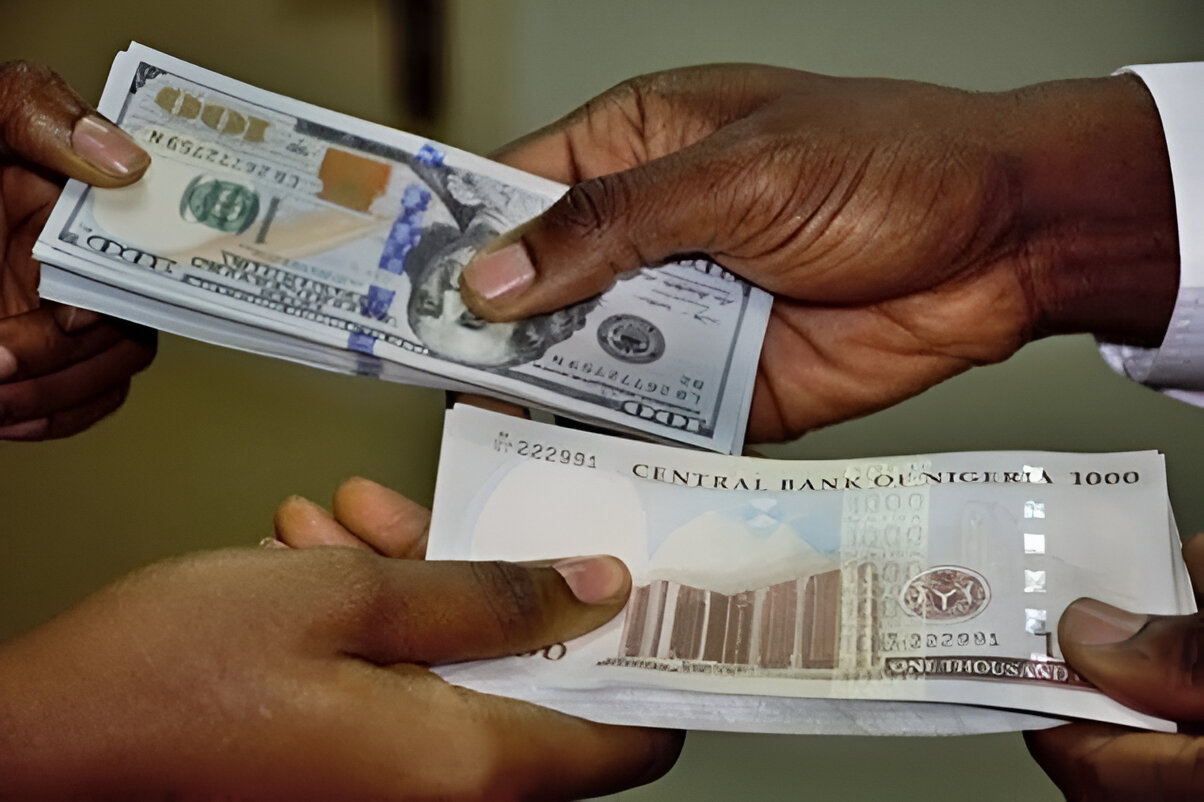

In a surprising turn of events for Nigeria’s financial sector, the naira demonstrated resilience and strength across all foreign exchange markets this Monday, defying a noticeable dip in weekly forex inflows. This development comes as a positive signal for the currency’s stability as the new trading year begins to unfold.
At the Nigerian Foreign Exchange Market (NFEM), the official trading window, the local currency appreciated marginally. Data released by the Central Bank of Nigeria (CBN) indicated that the dollar was quoted at N1,429.30 on Monday, a strengthening of N1.54 compared to the N1,430.84 rate recorded on the previous Friday. This slight but significant uptick suggests a stabilization of the official exchange rate mechanism, which has been a focal point for monetary policy adjustments in recent months.
The parallel market, often referred to as the black market, mirrored this positive trend. The naira gained 0.7 percent, appreciating by N10 to close at N1,490 per dollar, up from N1,500 the previous week. The convergence of gains in both the official and parallel markets is often interpreted by analysts as a sign of improved market sentiment, even if the underlying supply dynamics present a mixed picture.
The context for these gains is particularly intriguing given the volume of foreign currency entering the system. According to a weekly report by Coronation Merchant Bank, foreign exchange inflows into the NFEM window actually declined by 20.67 percent week-on-week, dropping to $593.70 million from $748.40 million the week prior. This contraction in liquidity was largely attributed to a slow start to market activities for the year and a marked reduction in participation from offshore investors.
Detailed scrutiny of the inflow sources reveals that local contributors remain the backbone of the market’s liquidity, accounting for a substantial 82.95 percent of the total. Individuals led this contribution with $165.1 million, followed by the Central Bank itself, which injected $128.00 million. Exporters and importers also played a crucial role, contributing $115.6 million.
Conversely, external sources of forex weakened significantly. Foreign portfolio investments saw a sharp decline of 72.91 percent, falling to just $46.00 million. Even more drastically, foreign direct investments plummeted by over 81 percent to a mere $7.00 million. These figures highlight the current hesitancy of international capital to enter the market aggressively at the start of the year, potentially due to global economic uncertainties or a wait-and-see approach regarding Nigeria’s fiscal outlook.
Despite the reduction in flow, the nation’s gross external reserves showed a positive trajectory. The reserves edged up by 0.58 percent, adding roughly $264.56 million to reach $45.50 billion at the start of the year, with further marginal gains bringing the total to $45.56 billion by January 2, 2026. This accumulation provides the CBN with improved ammunition to defend the naira and smooth out volatility in the exchange rate.
Looking ahead, analysts at Coronation Research remain cautiously optimistic. They project that in the near term, the naira will likely trade within a relatively stable range at the official window. This stability is expected to be buoyed by continued interventions from the Central Bank and a seasonal easing of demand for dollars, which typically spikes towards the end of the year for festive imports and travel. As the market settles into the new year, the interplay between local liquidity provision and the potential return of foreign investors will be critical in determining whether this upward trend for the naira can be sustained.


