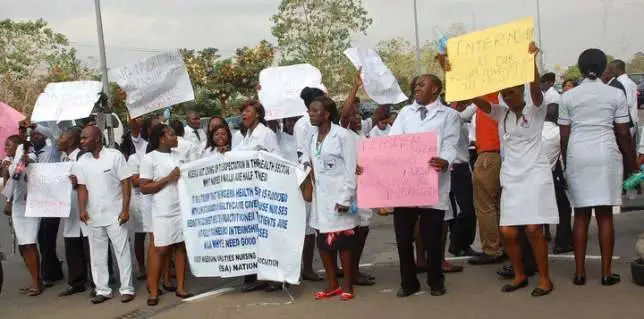

The Nigerian healthcare system is teetering on the brink of collapse following a stern 14-day ultimatum issued to the Federal Government by organized labor. In a joint declaration released on Friday, January 23, 2026, the Trade Union Congress (TUC) and the Nigeria Labour Congress (NLC) warned that they are prepared to mobilize workers across both public and private sectors for a comprehensive nationwide strike if the government fails to implement the adjusted Consolidated Health Salary Structure (CONHESS). This escalation marks the boiling point of months of unrest, as the Joint Health Sector Unions (JOHESU) and the Assembly of Healthcare Professional Associations (AHPA) have already been on strike for over two months regarding salary disparities and the government’s failure to honor a 2021 technical committee report.
The crisis deepened significantly earlier in January when the Ministry of Health attempted to enforce a “No Work, No Pay” policy, a move TUC President Festus Osifo condemned as “reckless, authoritarian, and confrontational.” The unions contend that the government acted in bad faith by adjusting salaries for medical doctors under the separate CONMESS structure while ignoring other essential health professionals, a disparity they describe as a “conscious act of injustice” that has shattered industrial harmony. Consequently, the ultimatum—effective immediately from January 23—demands not only the long-awaited salary adjustment but also the complete withdrawal of punitive circulars stopping workers’ pay. If the deadline passes without resolution, the unions plan to shut down all health institutions, picket government offices, and launch mass protests.
A nationwide shutdown of the healthcare sector would inflict devastating economic consequences on Nigeria. A sick workforce cannot drive an economy, and the closure of facilities would lead to massive absenteeism and productivity losses across all industries. Furthermore, the persistent instability and poor remuneration are accelerating the “Japa” syndrome, causing skilled professionals to flee abroad and stripping the nation of its human capital investment. The financial strain would also shift to households; with public hospitals shut, citizens would be forced to seek care at expensive private facilities or unregulated providers, pushing vulnerable families deeper into poverty. Ultimately, the government’s “No Work, No Pay” strategy may backfire, as the loss of revenue from public hospitals and the cost of managing resulting health emergencies could far exceed any funds saved from withheld salaries.