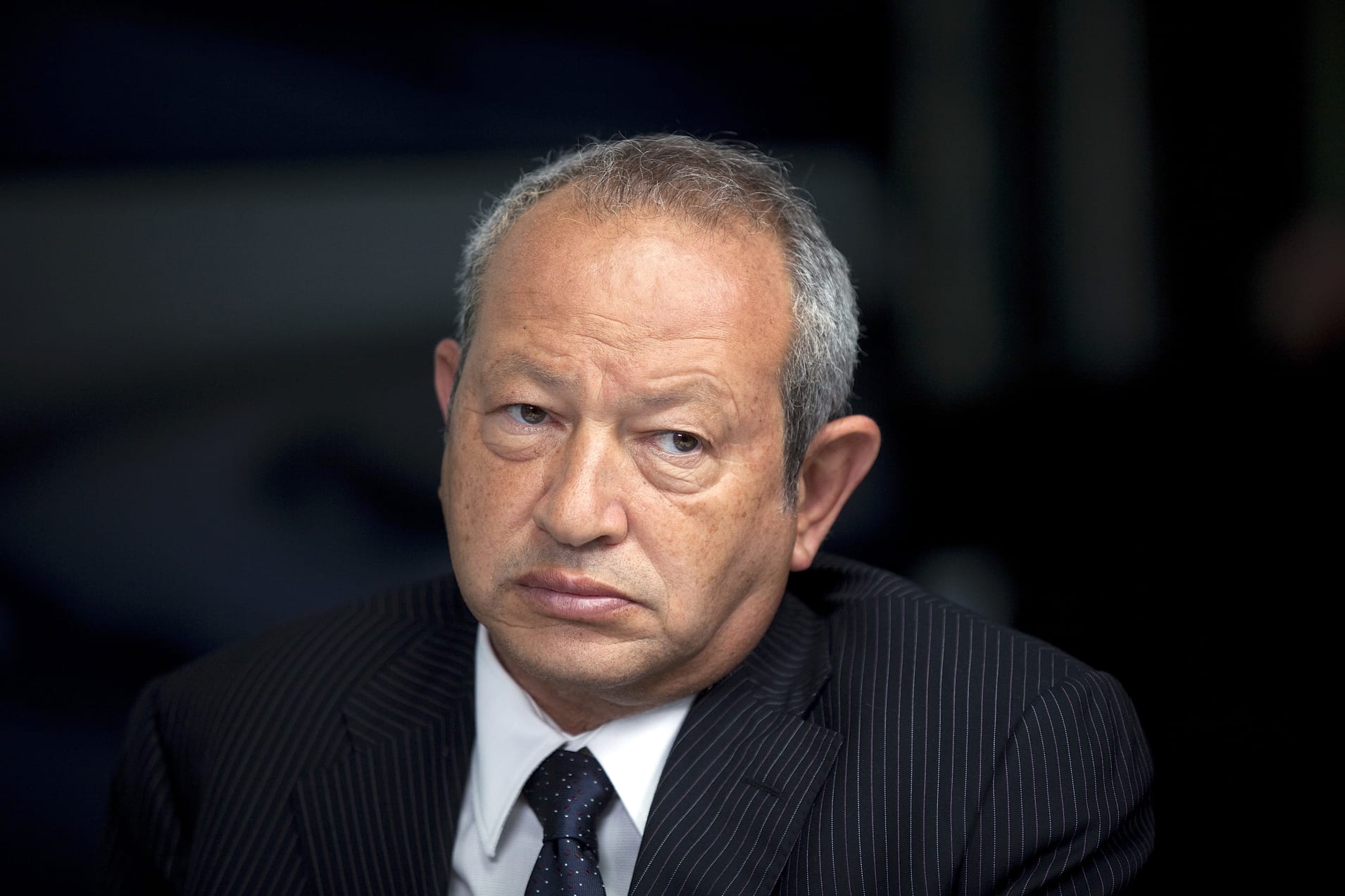

Egyptian billionaire Naguib Sawiris has set his sights on the country’s aviation sector, saying he plans to bid for the management and operation of up to three airports as Egypt moves to attract private operators in a bid to modernise infrastructure, improve service quality and strengthen tourism growth.
Sawiris disclosed his intentions while speaking at the Conference on the Competitiveness of the Egyptian Economy in Cairo, where policymakers and business leaders discussed reforms aimed at boosting investment and productivity. He said one of his companies is considering forming a consortium with an Italian partner to pursue the management of Hurghada International Airport, one of Egypt’s busiest tourist gateways and among the facilities recently opened to private participation.
In addition to Hurghada, Sawiris identified Luxor and Sohag airports as priority targets for potential bids. He argued that professional management, combined with upgraded infrastructure and international operating standards, could significantly improve passenger experience and help Egypt capture a larger share of global tourism flows. According to him, airports play a critical role in shaping visitors’ first impressions, making efficiency and service quality central to the country’s competitiveness as a destination.
The airport initiative forms part of a broader regional expansion strategy outlined by Sawiris. He said his group is actively pursuing new investments across Egypt, the United Arab Emirates and Iraq. In the UAE, he noted that the strong performance of his first development there has encouraged plans to acquire additional land, with total investments in the country estimated at about $15 billion.
Sawiris also highlighted plans to extend his group’s electric mobility projects beyond Egypt. After replacing traditional petrol-powered tuk-tuks with electric vehicles in parts of Egypt, he said the model could be adapted for other North African markets, including Morocco, by shifting from diesel-powered motorcycles to electric alternatives, reducing emissions while lowering operating costs.
Within Egypt, Sawiris said his future expansion would focus more on tourism than on launching new real estate projects. He revealed plans to develop three hotels, including properties near the Giza Pyramids and in Minya and Sohag, while concentrating on completing existing developments already underway. The strategy reflects his belief that tourism-linked assets offer stronger long-term returns as Egypt seeks to rebuild visitor numbers and diversify its economy.
Sawiris, the eldest son of the late industrialist Onsi Sawiris, built his fortune through telecommunications and mining. A defining moment in his career came in 2010 with the sale of major telecom assets, followed by further transactions that added billions of dollars to his wealth. Today, he ranks as Egypt’s richest man, with an estimated net worth of $10.4 billion, according to the Bloomberg Billionaires Index.
In recent years, his focus has shifted increasingly toward gold mining and high-end real estate. Through La Mancha Resources, Sawiris holds stakes in major gold producers including Endeavour Mining and Australia-based Evolution Mining. He also chairs Ora Developers, a company he founded in 2016 that develops luxury real estate and hospitality projects across the Middle East, Africa and Europe.
With his latest push into airport management, Sawiris is positioning himself at the intersection of infrastructure, tourism and private sector reform, sectors the Egyptian government sees as central to economic growth. If successful, his bids could place one of the country’s most influential businessmen at the helm of key gateways into Egypt, reshaping how millions of travellers experience the country each year.