
The World Bank and the African Development Bank (AfDB) have announced a major achievement under their joint electricity project known as Mission 300, revealing that more than 50 million people across 40 African countries have gained access to electricity since the initiative began in 2024.
The announcement was made in a joint statement released on Tuesday, highlighting the rapid progress made toward the programme’s ambitious target of providing electricity to 300 million Africans by 2030.
According to the two financial institutions, Mission 300 is helping African nations improve electricity access through investments in power infrastructure, financial support, and energy sector reforms. The initiative aims to tackle one of Africa’s biggest development challenges, as millions of people across the continent still live without reliable electricity.
World Bank President Ajay Banga described the programme as a powerful tool for accelerating development. He said Mission 300 is enabling countries to move faster in connecting households and businesses to power while creating long-term energy systems that can continue to grow even after the programme ends.
Banga noted that electricity access goes beyond simply lighting homes. He explained that reliable power helps create jobs, supports businesses, improves healthcare services, strengthens education systems, and contributes to overall economic growth.
Similarly, AfDB President Sidi Ould Tah said the initiative should serve as a foundation for broader development across Africa. He stressed that increased electricity access can improve food production through affordable irrigation systems, enhance healthcare by enabling proper storage of medicines and vaccines, and promote social and economic inclusion.
The banks stated that the 50-million-person milestone represents nearly 20 percent of Mission 300’s overall target. If the programme achieves its full objective, it will provide electricity to more than half of the estimated 565 million Africanswho currently lack access to power.
Africa remains the region with the largest electricity access gap in the world, accounting for more than 80 percent of people globally who live without electricity. Countries such as South Sudan, Burundi, and Chad continue to have some of the lowest electrification rates worldwide.
To support the initiative, Mission 300 is working to mobilise at least $90 billion from public institutions, private investors, and development partners. So far, the World Bank and AfDB have committed nearly $15 billion, while around $4.5 billion has been secured through co-financing arrangements. Additional development partners have pledged more than $7 billion to support the programme.
Several countries have already benefited significantly from the project. The banks reported that approximately 7.5 million people in Tanzania, 4.6 million in Ethiopia, and a similar number in Nigeriahave gained access to electricity through Mission 300 initiatives.
The programme has also encouraged governments to implement reforms aimed at improving their energy sectors. As part of these efforts, 30 African countries have developed National Energy Compacts, which are country-led plans designed to expand affordable electricity access and strengthen power systems.
More countries, including Burkina Faso, the Central African Republic, Djibouti, Gabon, Rwanda, and Uganda, are expected to unveil similar plans soon.
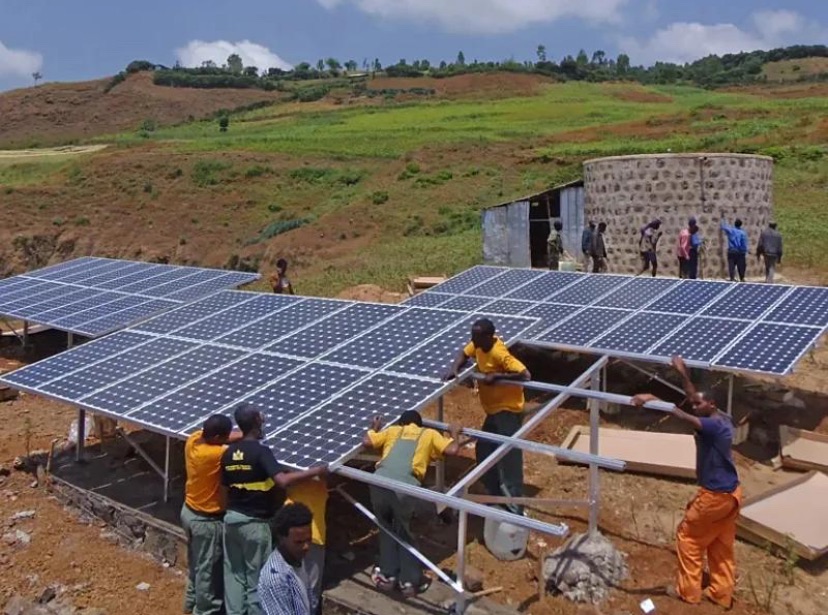
Nigeria remains a key focus of the initiative. Earlier this year, Mission 300 announced plans to provide electricity access to 17.5 million Nigerian households as part of its wider electrification strategy. In January 2026, the AfDB approved a $3.9 million project to support Nigeria and 12 other African countries in implementing their energy plans. During the same period, the World Bank approved $50 million to expand solar-powered agricultural projects in Nigeria and five other African nations.
The banks also recalled that in January 2025, they jointly committed $40 billion to Mission 300, demonstrating strong international support for Africa’s energy transformation.
With continued investment, policy reforms, and partnerships, Mission 300 is expected to play a crucial role in delivering reliable and affordable electricity to millions more Africans while driving economic growth and improving living standards across the continent.