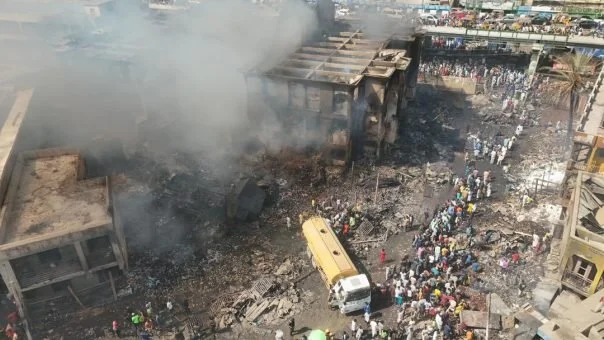

A devastating fire at Singa Market in Kano, Nigeria’s northern commercial hub, has wiped out billions of naira in assets, underscoring the severe “structural risk” embedded in the nation’s traditional commercial hubs. The inferno, which raged for over 48 hours starting February 15, destroyed dozens of shops in the Gidan Glass plaza and hundreds of motorcycles, effectively resetting the economic progress of countless small-scale traders. For the Nigerian economy, this disaster highlights the fragile state of the informal sector—the backbone of non-oil GDP—where a single incident can dissolve decades of hard-earned capital that is rarely backed by insurance or institutional safety nets.
The Singa Market fire is the latest in a chronic cycle of market blazes that have become a routine threat in Kano. In just the first two months of 2026, the metropolis has recorded at least five major fire incidents. Research indicates that these outbreaks peak during the dry Harmattan season, but the primary ignition sources are systemic: illegal electrical connections, overloaded circuits, and obsolete urban planning. From a business journalism perspective, the recurring nature of these fires represents a “governance failure” in safety enforcement and infrastructure investment. The narrow, congested access routes in markets like Singa hinder emergency response, effectively turning manageable sparks into multi-day economic catastrophes.
The fiscal response to the disaster has been swift but highlights a reactive rather than proactive policy approach. The Federal Government has approved a ₦5 billion intervention fund, complemented by a ₦3 billion donation from the Progressive Governors’ Forum. While these injections provide immediate liquidity, they are often insufficient to cover the total losses of a sector that operates largely outside the formal financial system. For institutional investors and regional planners, the “Kano model” of trade—characterized by high density and low regulation—needs a radical “safety-led modernization.” Without transitioning these markets into fire-resistant, properly wired, and insured industrial zones, public relief funds will continue to be a “recurring expense” rather than a growth-oriented investment.
Furthermore, the fire exposes a critical gap in Nigeria’s emergency infrastructure. Despite repeated announcements regarding the acquisition of firefighting helicopters and modernized aerial equipment, the response at Singa Market relied on ground-based trucks that struggled to navigate the market’s tight core. This “infrastructure deficit” limits the state’s ability to protect its most productive economic anchors. For the banking and insurance sectors, the Singa tragedy is a call to action. There is a massive untapped market for micro-insurance products tailored to informal traders, which could provide a private-sector hedge against these risks and reduce the fiscal burden on the state during future disasters.
The human toll, exemplified by traders losing life savings and family inheritances, translates into long-term “human capital erosion.” When a trader’s capital is incinerated, the ripple effects extend to school fees, healthcare access, and regional purchasing power. For Kano to maintain its status as the commercial nerve center of the Sahel, the government must move beyond humanitarian pledges toward structural reform. This includes mandatory electrical audits, the creation of clear emergency lanes, and the formalization of trader inventories. Securing the informal economy is not just a social imperative; it is a fundamental requirement for protecting Nigeria’s macroeconomic stability in the face of rising environmental and operational hazards.