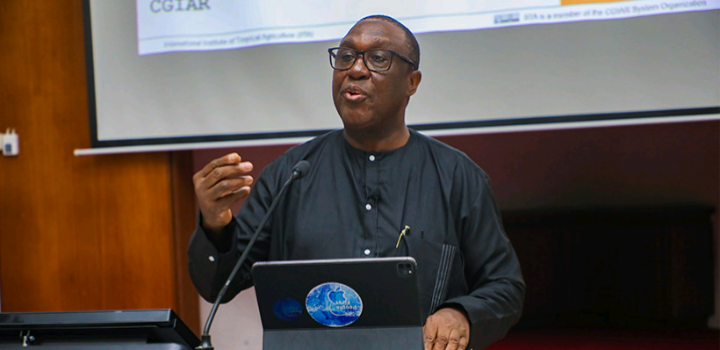

The African Development Bank Group (AfDB) and the International Institute of Tropical Agriculture (IITA) have formalised a $16.61 million grant agreement to launch TAAT-III, the latest phase of the Technologies for African Agricultural Transformation programme aimed at expanding climate-resilient agriculture in Africa.
This agreement was signed in Abuja as part of a concerted strategy to modernise agriculture across the continent by scaling proven technologies, reinforcing seed systems, and deepening cooperation among research bodies, governments, and private sector actors.
TAAT-III builds on the successes of earlier phases, which have extended climate-smart farming practices across more than 35 million hectares and delivered measurable gains in productivity. Since its inception in 2018, the programme has reached nearly 25 million farmers and contributed significant economic value by boosting staple crop yields and resilience to climate shocks.
According to the AfDB, TAAT has increased yields by up to 69 percent in some areas and generated over $4 billion in additional agricultural value through partnerships with national agricultural systems and international research networks.
Officials emphasise that the third phase will accelerate technology deployment and strengthen systems that deliver innovations to farmers more efficiently. “TAAT-III underscores the Bank’s commitment to ensuring that proven, climate-resilient agricultural technologies reach farmers faster and at scale,” said Abdul Kamara, Director General of the AfDB’s Nigeria Country Department.
At the same time, Simeon Ehui, Director General of IITA, noted that “TAAT-III allows us to deepen the delivery of science-based solutions that improve farmers’ yields and livelihoods,” reinforcing Africa’s capacity to compete and thrive under climatic stress.
The grant is financed through the African Development Fund, the bank’s concessional lending window. TAAT-III is structured to consolidate past gains while introducing a sustainable, private sector-driven delivery model that reinforces distribution systems, engages governments and agribusinesses, and expands access to digital tools and real-time monitoring.
TAAT-III is expected to extend its reach to an additional 14 million farmers across 37 low-income and climate-vulnerable countries served by the African Development Fund, expanding support for adaptation, productivity, and resilience.
The programme’s emphasis on climate resilience aligns with broader continental priorities to transform food systems and withstand climate shocks. Evidence from participating countries like Sudan, Ethiopia, Zambia, Zimbabwe, and Nigeria shows notable improvements in staple crop productivity and adaptation outcomes.
In Nigeria, for example, the TAAT-supported Wheat Compact saw farmers more than double wheat yields by adopting heat-tolerant varieties, a concrete indicator of the programme’s impact on food security and climate adaptation.
Analytically, this grant’s structure reflects a strategic shift toward scaling proven climate-smart agricultural solutions while embedding them in national investment frameworks. It prioritises efficiency, deeper private sector engagement, and technology delivery systems that can respond to climate risks at scale.
In summary, the AfDB-IITA agreement represents a measured yet ambitious effort to strengthen agricultural resilience, expand productivity, and build lasting infrastructure for climate-adaptive food systems across Africa.