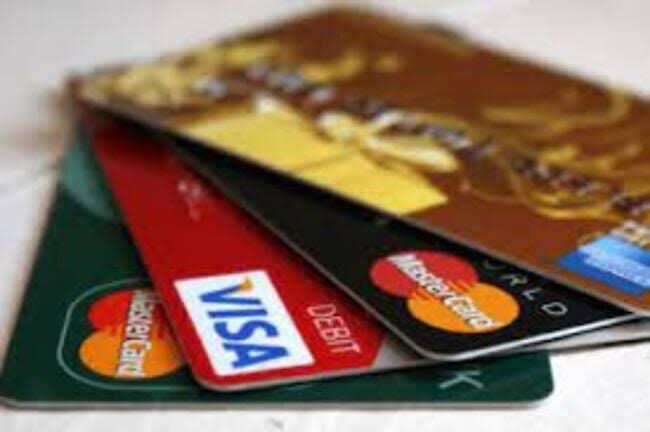

For years, Nigerians paying for foreign services online had to work around a simple problem, naira cards often did not work internationally. That picture has changed, but the return of international transactions has not made virtual dollar cards irrelevant.
Instead, the real question for freelancers, students and small businesses is now which option gives them more value, a bank-issued naira card or a virtual dollar card.
Nigerian banks have sharply increased the amount customers can spend internationally with naira cards as foreign exchange liquidity has improved.
GTBank, for instance, raised its international spending limit to $40,000 per quarter in August 2026, doubling the $20,000 limit that had been introduced just two days earlier. The bank had previously raised the limit from $6,000 in May. GTBank also said on August 11 that its FX rate for international naira-card payments was ₦1,367 to the dollar.
FirstBank’s Naira Mastercard currently supports international POS and web transactions up to a cumulative $10,000 quarterly, while ATM withdrawals are capped at $1,000 daily, according to the bank’s website.
UBA’s standard naira debit card has a $1,000 monthly limit for international online and POS transactions, according to the bank’s published transaction limits.
The changes represent a major departure from the restrictions that followed Nigeria’s foreign exchange crisis. Banks began restoring international naira-card transactions in 2025 after a period when many customers could no longer use their cards for foreign payments.
But higher limits do not automatically make bank cards the cheapest option.
For someone spending $100 or $200 a month on subscriptions, software or other online services, a bank card may now be sufficient. A freelancer paying for Adobe, ChatGPT, cloud services and a few other subscriptions may no longer need a separate dollar card simply because of a spending ceiling.
The calculation changes for heavier users.
A trader paying foreign suppliers, a business running international advertising campaigns or a freelancer with several large software bills can still run into a bank’s monthly or quarterly limit. And beyond the limit itself is another cost that is easier to overlook, the exchange rate applied when the naira is converted for the transaction.
That means comparing only card fees can give a misleading picture.
The better test is the actual naira cost of obtaining the dollars needed for a payment. A customer can compare the amount of naira debited by a bank for a fixed dollar purchase with the amount required to fund the same dollar value through a virtual-card provider at roughly the same time.
Virtual cards have their own charges. Cardtonic, for example, lists a $1.50 creation fee for its regular virtual dollar card and a 2% funding fee, while Grey currently lists a $5 creation fee for its Visa card.
Chipper’s Nigerian USD card carries a $5 creation fee, a $1 monthly maintenance charge and a $0.90 fee on successful USD card transactions, according to its current help centre.
Those fees are visible. The more difficult cost to compare is the FX conversion rate.
This is where virtual dollar cards can still appeal to users who want more flexibility or higher effective spending capacity. Grey, for example, says its virtual card has a daily spending limit of up to $10,000, while Chipper’s Nigerian USD card allows funding of up to $20,000 monthly and $30,000 quarterly.
But virtual cards are not guaranteed to work everywhere. Grey itself notes that some international platforms can reject cards because of country or billing-address mismatches.
So the idea that Nigerian naira cards are now useless abroad is outdated. But the opposite claim, that banks have completely solved the problem, is also too simplistic.
For low-dollar users, a bank naira card may now be the easiest option. For heavier users, a virtual dollar card may offer greater flexibility. The deciding factor should not be the advertised fee alone.
It should be the actual naira cost of getting the dollars you need, the spending limit and whether the card works on the platform you are trying to pay.
The dollar cap is no longer the whole story. For many Nigerians, the bigger question is now how much each dollar actually costs.