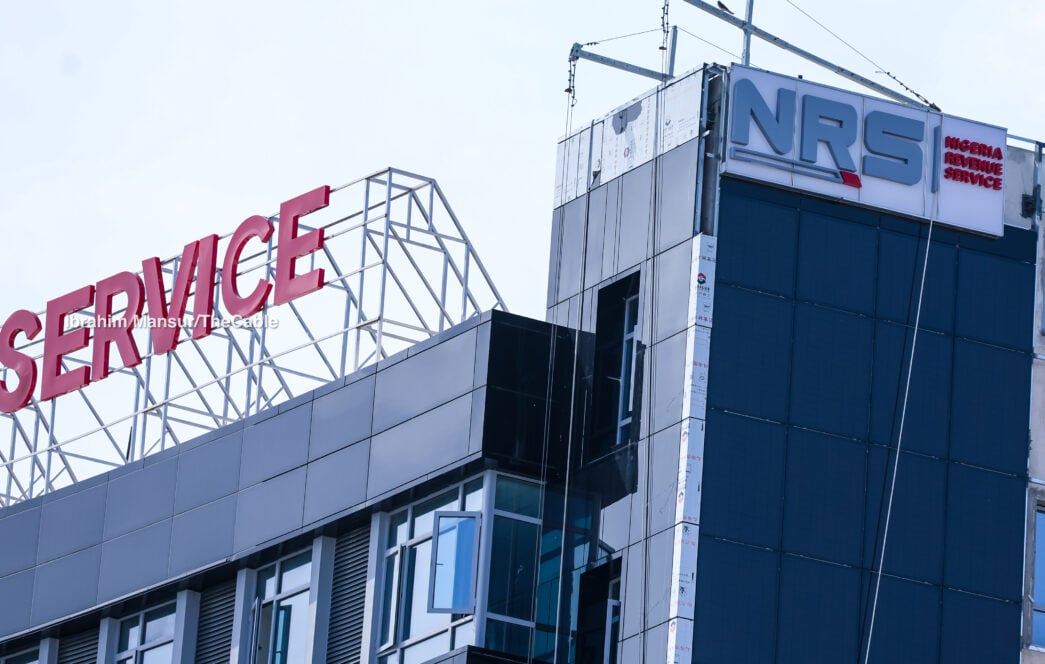

The Nigeria Revenue Service (NRS) has renewed its push for simpler and more predictable tax rules to attract investment into Nigeria’s creative economy, as the agency seeks to encourage business formalisation and help creative entrepreneurs benefit from incentives under the country’s new tax framework.
The Service said the growth of digital platforms, intellectual property-driven businesses and cross-border transactions had created new challenges that traditional tax structures were not always designed to address.
The Executive Chairman of the NRS, Dr Zacch Adedeji, made the call during a high-level dialogue on taxation and investment in the creative economy at the Creative Africa Nexus Weekend (CANEX WKND) 2026 in Lagos on Thursday, November 5.
Adedeji, who was represented by the NRS Executive Director, People, Stakeholders and Communication, Obinna Ihedioha, said Nigeria’s creative industry had evolved beyond entertainment into an economic sector capable of generating employment, attracting investment and earning foreign exchange.
He added that the country needed a tax administration system that encouraged businesses to start, expand and attract investors rather than discourage them through complicated requirements.
According to a report by The PUNCH on Saturday, November 21, Ihedioha—delivering Adedeji’s remarks—identified clarity, understanding and value as important pillars of an effective tax system for the creative economy.
“Government needs sustainable revenue to invest in education, security, technology and infrastructure. But how we tax matters as much as what we collect. It shapes whether businesses start, whether investors come, and whether enterprises grow or stay small,” Adedeji’s address stated.
In his own remarks, Ihedioha also stressed the importance of predictable tax rules, warning that uncertainty discouraged creative entrepreneurs from formalising their businesses.
“Uncertainty is a tax nobody collects but everybody pays,” he said, adding that creators and investors would be more willing to formalise their operations when their tax obligations were clear.
To address the challenges, the NRS introduced an Investment and Tax Advisory Hub and the Creative Economy Tax and Investment Initiative to provide guidance on tax obligations, available incentives, business formalisation and investment opportunities.
The initiatives are expected to sustain engagement between the revenue agency and creative industry operators beyond the CANEX event.
The agency also highlighted incentives under the Nigeria Tax Act 2025, including a 5% tax credit on qualifying capital expenditure for eligible investments in designated sectors, including parts of the creative and cultural industries.
NRS Director of Government Business South Directorate, Mustapha Akaje, said qualifying investments must meet statutory conditions, including a minimum investment threshold of ₦250 million.
He also explained that qualifying small companies with annual turnover of ₦100 million or less and fixed assets below ₦250 million could benefit from a 0% Company Income Tax rate and exemption from the 4% development levy.
Additional reliefs are available for qualifying start-ups, research and development expenditure and eligible investments under the Nigeria Startup Act 2022.
However, the incentives are subject to applicable statutory conditions and are not automatic entitlements for every creative business.
The Minister of Art, Culture, Tourism and the Creative Economy, Hannatu Musa Musawa, also identified intellectual property protection, digital infrastructure and access to funding as priorities for expanding Nigeria’s creative industries.
She said the sector offered opportunities for economic diversification, job creation, wealth generation and youth empowerment.
The tax initiatives form part of Nigeria’s broader fiscal reforms following the signing of four tax reform laws in June 2025, which took effect on January 1, 2026.
For an industry driven largely by talent, intellectual property and digital distribution, the NRS said clearer tax rules would encourage more creative businesses to operate formally, improve access to finance and contracts, and help transform individual creative success into globally competitive enterprises.