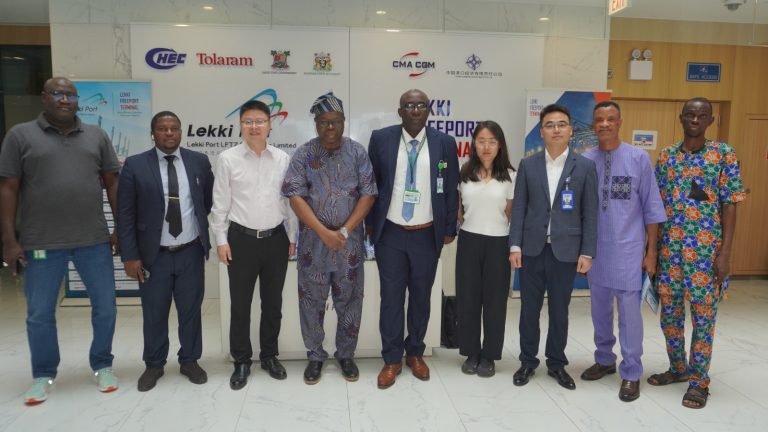

Maritime industry stakeholders are issuing a strong call to action, urging the Nigerian trade and logistics community to fully utilise the advanced capabilities of the Lekki Deep Sea Port. The consensus across the sector is that leveraging this state-of-the-art facility is essential to finally resolve the persistent issue of port congestion in Lagos and to unlock Nigeria’s massive trade and economic potential.
The Lekki Deep Sea Port, situated within the Lagos Free Zone, is Nigeria’s first deep-water facility and is strategically designed to accommodate massive vessels of up to 18,000 Twenty-foot Equivalent Units (TEU), ships that cannot currently berth at the older, shallower ports like Apapa and Tin Can Island. This capacity is viewed as a game-changer for the nation’s maritime industry.
The push for immediate and full utilisation is driven by the huge economic value the port is expected to generate. According to the Managing Director of Lekki Port, Mr Wang Qiang, the facility is projected to inject as much as $360 billion into the Nigerian economy over its 45-year concession period. It is also expected to directly and indirectly create approximately 170,000 jobs, transforming the Lekki corridor into a major industrial and commercial hub.
“The port is a vital component of Nigeria’s logistics and trade infrastructure,” Mr Qiang explained at a recent forum. “We invested over one billion dollars in developing this facility, and its success is Nigeria’s success. We urge businesses to take advantage of this platform capable of transforming national trade and industrial growth for decades to come.”
The port’s use of high-tech automation is a key economic advantage, drastically improving operational efficiency. Mr Kehinde Olubi-Neye, the Chief Commercial Officer at Lekki Freeport Terminal, confirmed that the increased automation has streamlined cargo handling and is capable of significantly reducing vessel turn-around time a major contributor to the current high cost of doing business in Nigeria.
The advanced capacity and technology are intended to enhance Nigeria’s export potential and reduce import bottlenecks. Port Manager at the Nigerian Ports Authority, Mr Emmanuel Anda, described Lekki Port as a “game changer,” stating that it will help position Nigeria as the regional export and transhipment hub within the next decade.
The utilisation of Lekki Port is also vital for regaining cargo business lost to neighbouring West African countries like Togo, Ghana, and Benin Republic, who have capitalised on the congestion and inefficiency of older Nigerian ports. By offering modern facilities, efficient services, and reduced transit times, stakeholders are confident that Lekki Port will allow Nigeria to reclaim its dominant position as the gateway to West Africa, driving foreign investment and boosting the Gross Domestic Product.