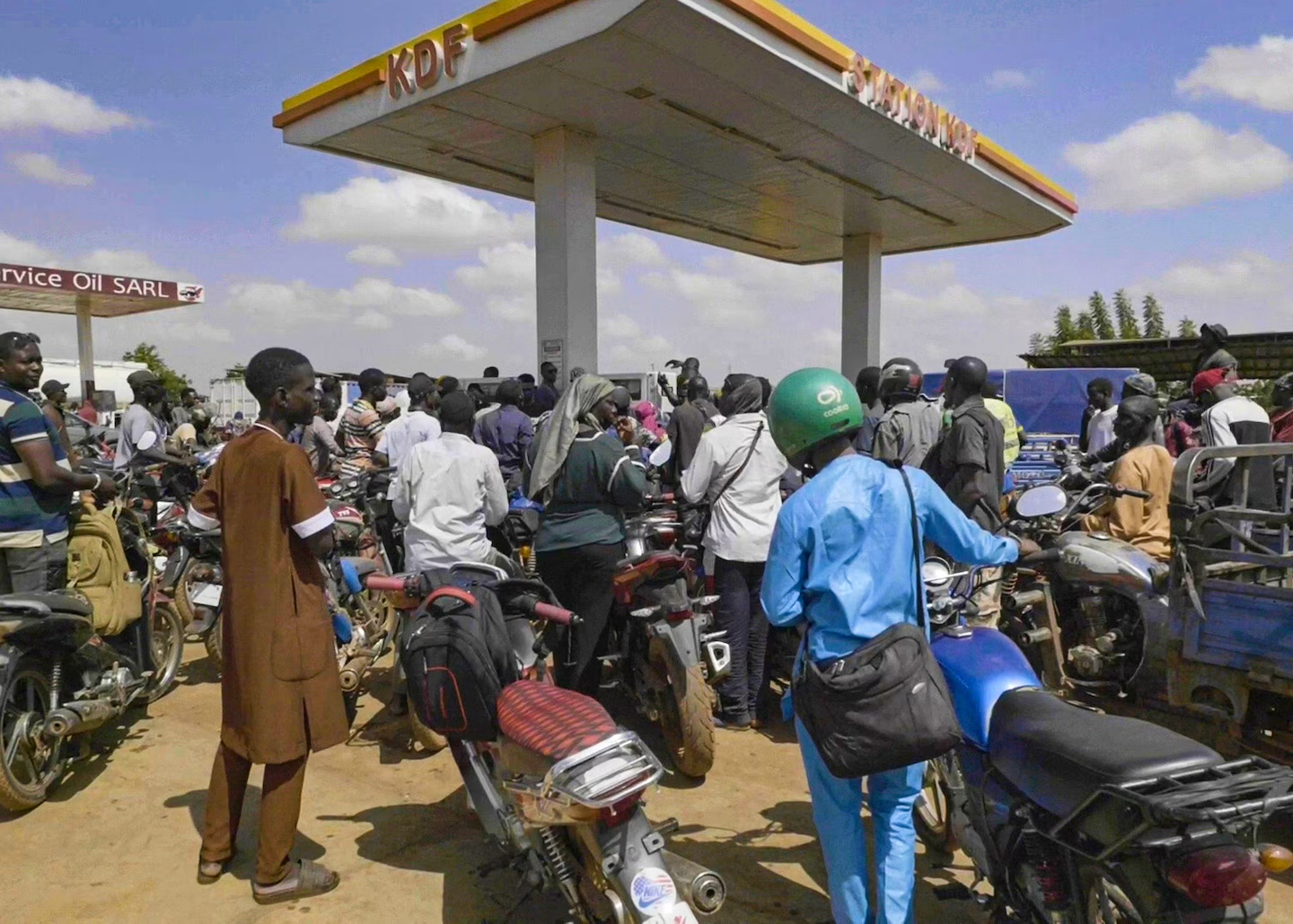

Mali’s military government has suspended all school and university classes for two weeks beginning Monday, as the country grapples with a worsening fuel shortage caused by a blockade enforced by Islamist militants. The suspension highlights the deepening economic and social toll of the crisis, which has paralysed transport networks and curtailed daily life in the capital, Bamako. The blockade, imposed by al-Qaeda–linked Jama’at Nusrat al-Islam wal-Muslimin (JNIM), began in early September, targeting convoys carrying fuel into the landlocked nation. Since then, militants have attacked multiple shipments, effectively strangling supply routes and pushing petrol stations to shut down.
The crisis has forced residents to adapt through desperate measures, from trekking long distances to relying on limited motorcycle taxis, as the price of transport and essential goods rises sharply. Economists warn that the disruption threatens to exacerbate inflation and choke local commerce, particularly in rural areas dependent on diesel for agricultural machinery and power generation. With schools now closed, the social cost of the blockade has broadened, disrupting education for millions of children already affected by years of instability.
Analysts say JNIM’s strategy is aimed at economically suffocating Mali’s junta, which has struggled to assert control since seizing power in 2021. The group’s campaign marks a shift from direct combat to economic coercion, using fuel, the lifeblood of transport and logistics, as leverage against the state. The blockade’s timing is particularly damaging, coming amid a broader regional isolation that has seen Mali withdraw from ECOWAS and deepen reliance on Russia for security and trade.
In an attempt to mitigate the crisis, Moscow announced last week that it would deliver between 160,000 and 200,000 metric tons of petroleum and agricultural products to Mali. However, Russian officials gave no timeline for the shipments, leaving uncertainty over how soon relief might arrive. For now, the government’s temporary closure of schools is as much a logistical measure as a signal of the state’s struggle to maintain normalcy.
Economically, the blockade underscores Mali’s vulnerabilities as a landlocked nation dependent on cross-border supply chains. The transport paralysis is likely to drag on GDP growth projections for 2025 and worsen fuel-driven inflation, which has already eroded household purchasing power. If prolonged, the crisis could strain government finances further, undermining public confidence in the junta’s ability to stabilise the economy and deliver essential services.
With security deteriorating and public frustration mounting, Mali faces one of its gravest domestic challenges since the 2021 coup, one that blends economic hardship, insurgent pressure, and geopolitical isolation into a combustible mix with far-reaching implications for West Africa’s stability.