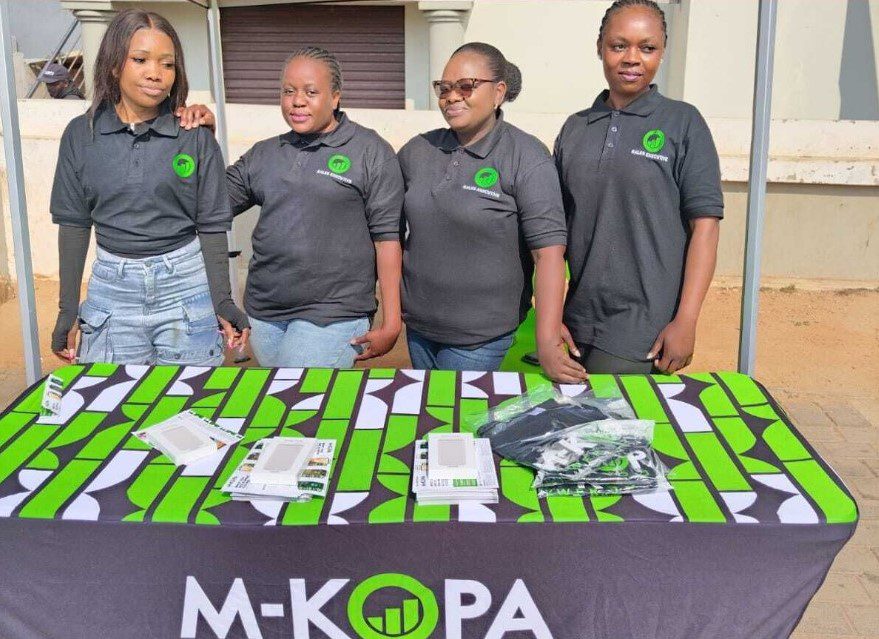

In a landmark announcement that underscores a seismic shift in African finance, the inclusive fintech platform M-KOPA has revealed it has extended a cumulative $1.6 billion in credit to its customers. This staggering figure, detailed in the company’s first Kenya-focused impact report, is more than a corporate milestone; it is a powerful validation of a business model built on a radical premise: that the continent’s vast informal workforce, long deemed “unbankable” by traditional finance, is not only creditworthy but is a formidable engine of economic growth.
M-KOPA’s journey, which began over a decade ago with solar home systems, has evolved into a central narrative in Africa’s digital inclusion story. The pivot to smartphones proved to be the catalyst for explosive growth, transforming the company from a vendor of clean energy into a gateway to the formal economy. The report notes that 4.5 million Kenyans have acquired a handset through M-KOPA, with 2.1 million owning a smartphone for the very first time. This is not merely about selling hardware; it is about deploying technology as collateral to build financial identity, one micro-payment at a time.
The PayGo Engine: Financing the “Every Day Earner”
The cornerstone of M-KOPA’s success is its Pay-As-You-Go (PayGo) model, an innovative form of asset-backed financing tailored to the realities of the African informal sector. For micro-entrepreneurs, gig workers, and small-scale farmers—individuals who lack a steady paycheck, formal collateral, or a credit history—accessing a loan from a conventional bank is nearly impossible. Traditional risk assessment models fail where formal records do not exist.
M-KOPA’s model ingeniously bypasses this impasse. A customer makes a small, affordable deposit for a product—typically a smartphone or, increasingly, an electric motorbike or appliance. They then own the item through small, daily instalments that are calibrated to mirror their irregular income streams. This “pay-as-you-earn” approach aligns the cost of ownership with the daily cash flows of its users, removing the prohibitive upfront cost of essential digital tools.
The smartphone, in this context, ceases to be a mere consumer good and becomes a transformative financial portal. It is the vehicle through which customers access M-KOPA’s broader ecosystem of services, which it aptly brands as “More than a Phone.” This bundle often includes cash loans, health insurance, and airtime. The impact is profound: 37% of M-KOPA’s customers accessed their first formal loan through the platform, and a staggering 68% received their first health insurance cover. The technology enables tangible economic uplift, with over half of customers reporting higher earnings and nine out of ten citing an improved quality of life.
The Nigerian Crucible: A Test Case for Disruptive Inclusion
While M-KOPA’s roots are in East Africa, its strategic expansion into Nigeria in 2021 presents a compelling case study in adapting this model to one of the continent’s most complex and promising markets. Nigeria is a nation of contrasts: it boasts a rapidly advancing fintech scene and widespread mobile money adoption, yet it is also home to a massive population that remains on the fringes of the formal financial system. M-KOPA’s operations there directly target several critical gaps.
First is the issue of smartphone affordability. While digital wallets are common, the hardware required to fully utilize them—a reliable 4G smartphone—remains out of reach for millions. By breaking down this cost barrier through micro-installments, M-KOPA is not just selling phones; it is onboarding new users into the digital economy, enabling everything from online commerce and digital payments to access to information and government services.
Second, and more fundamentally, is the systemic exclusion of informal workers from credit. Nigeria’s financial inclusion drive has made strides, but the irregular income of its vast informal sector continues to be a major roadblock. M-KOPA’s model turns this perceived weakness into a strength. Its proprietary technology and AI analytics use the data from daily repayment behaviour to construct a viable credit profile. This digital footprint then becomes the key that unlocks further financial services. Notably, the company reports that Nigeria is its best-performing market for credit behaviour, with lower default rates than its company average—a resounding rebuttal to the stereotype of the high-risk informal borrower.
However, the Nigerian operational environment is not without its significant hurdles. Weak digital infrastructure, particularly in rural areas, can challenge the functionality of M-KOPA’s platform, including its device-locking feature—a contentious but core mechanism that secures the loan by disabling the phone if payments are not made. Navigating these infrastructural gaps is a constant operational necessity.
Navigating the Ethical Quagmire of Consumer Credit
The rapid growth of consumer credit across Africa has rightly been accompanied by concerns about ethical lending and consumer protection. Stories of aggressive debt collection, hidden fees, and borrowers trapped in spiralling debt cycles have tarnished the reputation of some lenders. In this landscape, M-KOPA seeks to position itself as a responsible actor.
The company emphasizes a policy of fairness and flexibility, consciously avoiding hidden fees or late payment penalties. Its most distinctive safeguard is a policy that allows customers who genuinely cannot continue payments to return the device for a refund of their deposit. This “no-debt-trap” commitment is a crucial differentiator in a market where the line between financial empowerment and predatory lending can sometimes blur. It acknowledges that while credit is a powerful tool, it must be administered with a safety net that protects the most vulnerable from catastrophic financial harm.
A Pivotal Force with a Growing Footprint
The $1.6 billion in cumulative credit is not just a measure of sales; it is a testament to a vast, latent demand for financial models that respect the economic realities of African consumers. The model’s success has tangible macroeconomic ramifications. In Kenya alone, M-KOPA contributed KES 3.79 billion ($29.2 million) in taxes in 2024 and supports a network of 14,000 sales agents and over a thousand direct employees. Its Nairobi phone-assembly line, described as the largest in Africa, symbolizes a move towards not just financial inclusion but also industrial development and job creation.
In conclusion, M-KOPA’s milestone is a signal moment for African fintech. It demonstrates that the future of finance on the continent may not be built solely on replicating Western models, but on innovating homegrown solutions that are as flexible, resilient, and dynamic as the people they serve. By betting on the “Every Day Earner,” M-KOPA has not only unlocked a multi-billion dollar market—it has helped illuminate a path toward a more inclusive and digitally empowered African economy.