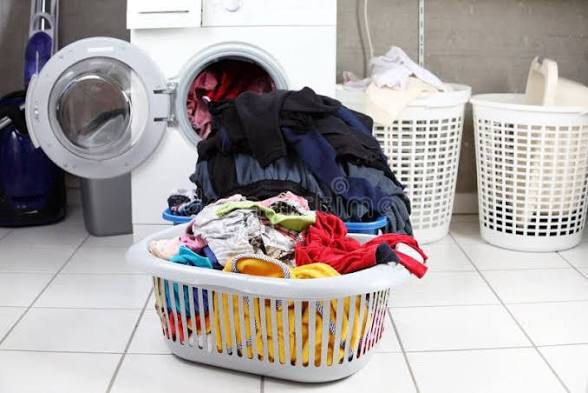

For many busy Lagos residents, doing laundry is no longer only about finding someone to wash their clothes. It is increasingly about finding a service that can collect the clothes from their doorstep and return them clean without the customer making the trip.
That shift is creating a growing business opportunity for laundry operators, who are adding pickup and delivery to traditional washing, ironing and dry-cleaning services to attract customers who value convenience.
Industry research on Nigeria’s laundry and dry-cleaning sector identifies online booking, subscription services and on-demand pickup and delivery as emerging service models, alongside traditional walk-in laundry businesses. The same research points to urbanisation, changing lifestyles and demand for convenience as key drivers of the sector.
The change is particularly visible in Lagos, where traffic, long working hours and the distance between homes and businesses make doorstep services attractive.
A 2026 analysis of laundry pickup and delivery in Nigeria describes traffic as a major challenge for customers and argues that operators can expand beyond neighbourhood walk-in customers by taking the service directly to homes.
The business model is simple. A customer places an order, usually through WhatsApp, a website or an app. A rider collects the clothes, the laundry operator washes and finishes them, and another delivery brings the order back.
But behind that convenience is a logistics business that operators must manage carefully.
Pickup and delivery can help a laundry business reach customers outside its immediate neighbourhood, but it also introduces additional costs.
Operators have to pay riders, manage fuel and transportation expenses, plan routes and ensure that clothes are properly labelled and returned to the correct customer.
Poor delivery planning can quickly reduce profit, particularly when a rider travels a long distance to collect a relatively small order.
This is why some operators are developing systems that group orders by location and schedule pickups instead of sending riders out for every individual request.
Pulito, a Lagos-based laundry platform, says it connects customers with local laundry partners, manages pickup and delivery and provides clear pricing and timelines. Its model shows how technology can separate the customer-facing booking and logistics process from the actual laundry operation.
The approach is also creating opportunities for businesses that do not necessarily need to own large laundry facilities.
Technology platforms can connect customers to existing laundry operators while handling bookings, payments and delivery.
For customers, the biggest selling point is time.
A worker who spends much of the day outside the home may prefer to pay for a pickup rather than spend additional time travelling to a laundry shop and returning later to collect the clothes.
That convenience is becoming a competitive advantage.
The Baskets Laundry & Drycleaning, for example, advertises pickup and delivery across Lagos, 24-hour express service and real-time order updates.
Other operators are experimenting with subscription models, where customers pay regularly for recurring laundry services rather than placing individual orders.
Industry research also identifies subscription services as one of the service models being tracked in Nigeria’s laundry market.
For businesses, subscriptions can provide more predictable demand and make it easier to plan staff, machines, detergents and delivery schedules.
The expansion of pickup and delivery does not mean the business is automatically profitable.
Laundry operators face several expenses, including electricity, water, detergents, equipment maintenance, labour and transportation. Research on Nigeria’s laundry sector identifies fluctuating utility and cleaning-supply costs as restraints on profitability.
If transportation costs rise, operators may have to increase delivery charges or build the expense into laundry prices. Either decision can affect demand, particularly among price-sensitive customers.
Competition is another concern. Formal laundry businesses compete with neighbourhood operators and individuals who provide washing and ironing services from home.
This means professional operators have to compete on more than price.
Reliability, turnaround time, careful handling of clothes and customer service can determine whether a first-time customer becomes a regular one.
For customers, handing over clothes to a pickup service requires trust.
A missing shirt, damaged fabric or late delivery can quickly damage a laundry company’s reputation. As a result, operators need systems for recording orders, separating customers’ clothes and confirming deliveries.
The industry’s growing focus on service quality is reflected in the performance indicators identified by market researchers, including customer retention, average order value, employee productivity, customer satisfaction and turnaround time.
The opportunity, therefore, is not simply in washing more clothes. It is in building a reliable service around the entire customer experience.
As Lagos residents increasingly pay for convenience, laundry businesses are finding that the washing machine is only one part of the business.
The bigger opportunity may be the journey between the customer’s wardrobe and the laundry room — and back to the customer’s doorstep.