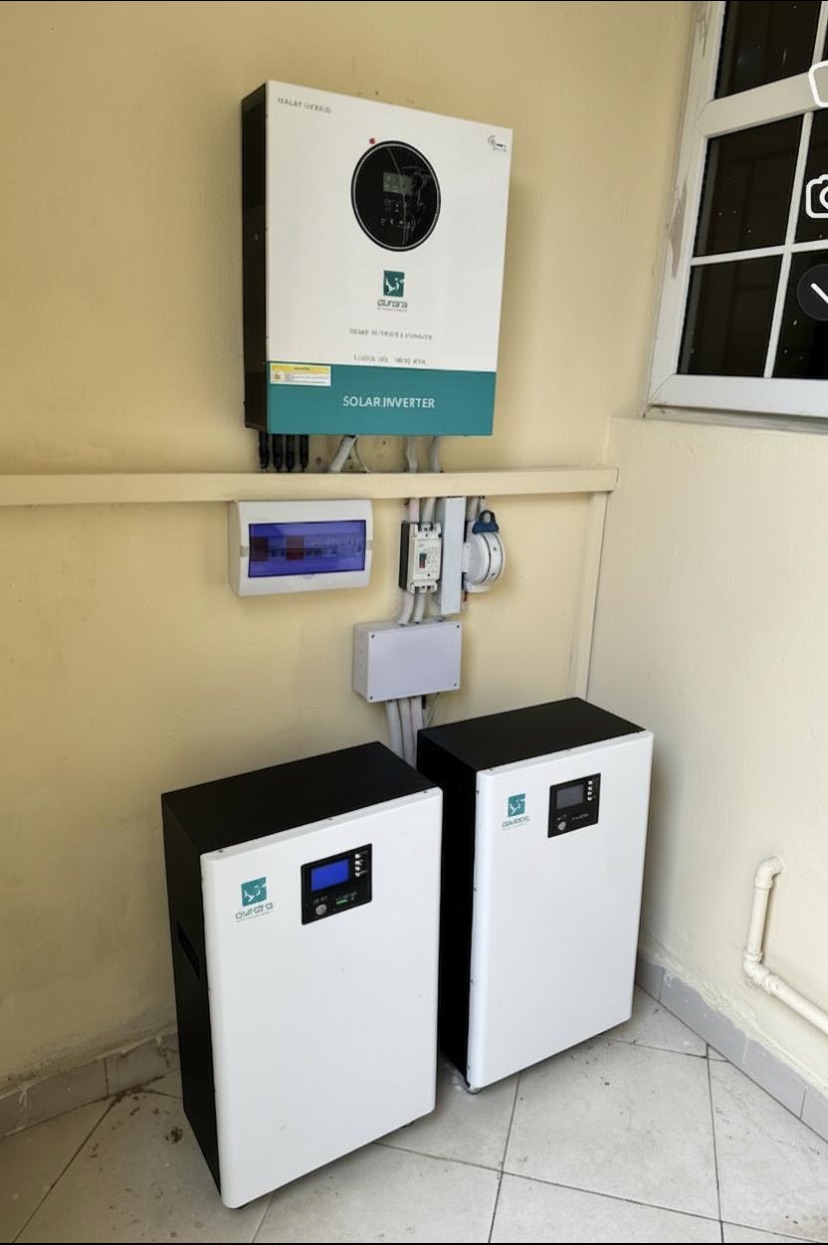

For years, owning a petrol or diesel generator has been almost unavoidable for Nigerian households and small businesses. But as fuel, maintenance and generator-running costs continue to put pressure on budgets, a growing number of consumers are looking in a different direction: small solar systems that can power the essentials without the noise and recurring fuel expense of a generator.
The shift is creating a growing market for solar panels, inverters, batteries and portable solar power systems as Nigerians increasingly buy smaller systems designed to run lights, fans, televisions, routers, phones and other basic appliances rather than attempting to power an entire building.
The trend is being supported by the country’s continuing electricity supply challenges. The Nigerian Electricity Regulatory Commission’s April 2026 operational factsheet showed that an average of 4,286 megawatts was available for dispatch from 13,625MW of installed grid-connected generation capacity during the month.
For consumers, that gap between installed capacity and electricity actually available is helping to sustain demand for alternative power sources.
The solar market is no longer limited to large rooftop installations costing several millions of naira. Smaller systems are becoming an entry point for households and small businesses that cannot afford a full solar installation but want to reduce their dependence on generators.
The appeal of the smaller systems is their practicality.
Rather than trying to run refrigerators, air conditioners, pumping machines and other heavy appliances, a household can purchase a system designed around its most important electricity needs.
A small setup can provide power for lighting, phone charging, internet routers, fans and television sets. For a small business, it can keep essential equipment operating during outages.
This makes the purchase easier to justify for consumers who cannot afford a complete solar installation.
Current Nigerian solar pricing guides show how widely costs vary depending on the capacity and quality of components. EcoFlow’s 2026 Nigeria guide, for example, puts individual home-use solar panels at roughly ₦90,000 to ₦150,000 per panel, while complete systems cost considerably more depending on their size and battery capacity.
The important point for consumers is that solar is increasingly being sold as a modular product. A buyer can start small and add capacity later instead of paying for a large installation from the beginning.
The economics become more important when the cost of operating a generator is considered.
A generator requires regular spending on petrol or diesel, engine oil, servicing and repairs. The longer it runs, the more money the owner has to spend.
Solar works differently. The initial purchase can be expensive because of the cost of panels, an inverter, batteries and installation, but the system does not require daily fuel purchases.
That difference is particularly important for businesses that need electricity every day.
A barbing salon, tailoring shop, phone-repair outlet, provision store or small office may not need enough power to justify a large solar installation. A smaller system can instead handle lighting, fans, charging and other essential equipment while reducing the number of hours the generator runs.
The shift is therefore not necessarily solar versus generator. For many consumers, it is becoming solar plus generator, with solar handling lighter loads and the generator reserved for heavier equipment or periods of prolonged poor weather.
The growth is also being supported by public and private investment in Nigeria’s off-grid electricity market.
The World Bank-supported Distributed Access through Renewable Energy Scale-Up, or DARES, project is designed to provide improved electricity access to more than 17.5 million Nigerians through distributed renewable energy. Its targets include more than one million standalone solar system sales, 236,986 MSMEs powered and 3,244,900 households powered.
The Rural Electrification Agency said in May 2026 that more than 830,000 solar home systems had been deployed under DARES as of April, providing clean-energy access to nearly 3.9 million people.
That deployment is significant for the business side of the sector because it demonstrates that standalone solar is being treated not simply as an emergency backup but as part of Nigeria’s broader electricity-access strategy.
In February, the REA also announced a ₦100 billion interest-free financing partnership with Lotus Bank to accelerate clean-energy deployment under DARES.
The financing and deployment programmes create opportunities for solar distributors, installers, component suppliers and other businesses operating in the off-grid energy value chain.
Households are not the only market.
Small businesses are particularly sensitive to unreliable electricity because power interruptions can mean lost working hours and revenue.
The REA’s DARES programme specifically targets MSMEs, with its standalone solar component designed to make systems available to households, MSMEs, public institutions and farmers.
For a small business, the calculation is straightforward: if a solar system can keep essential operations running without continuously buying fuel, the upfront investment may become easier to defend.
The World Bank has also described off-grid solar as a cost-effective way to expand electricity access, noting that it can provide power for homes, farms, businesses and public infrastructure.
Despite the growing interest, solar is not yet an affordable replacement for generators for everyone.
A quality system with sufficient battery storage can cost millions of naira, depending on capacity. A 2026 Nigerian solar pricing guide puts small home systems at around ₦1.5 million to ₦3 million, although actual prices vary according to battery type, inverter brand, panel capacity and installation requirements.
That means many low-income households may still find a generator easier to purchase initially, even if its running costs are higher over time.
There are also concerns about poor-quality components and inexperienced installers. Consumers who focus only on the cheapest quotation risk buying equipment that does not match their electricity needs or does not last.
The solar industry’s growth will therefore depend not only on lower prices but also on consumer financing, quality standards, after-sales service and reliable installation.
For now, the Nigerian consumer is increasingly looking for a different way to buy electricity.
Instead of purchasing a generator and budgeting repeatedly for fuel, some households and businesses are choosing smaller solar systems that target the appliances they cannot afford to leave without power.
That change is turning electricity insecurity into a business opportunity — and moving solar from a luxury product toward a practical everyday power solution for more Nigerians.