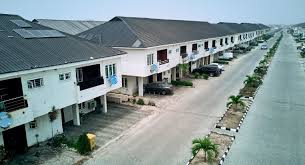

The booming city of Lagos, Nigeria’s economic engine and most populous urban area, is currently gripped by a severe housing crisis that sees tenants facing extraordinary and unmanageable rent hikes. Across the metropolis, many residents are groaning under sharp increases, with some residential flats experiencing surges of eighty per cent or more in just a single year. This escalating situation is leaving countless families in an untenable position, forcing them to either dramatically reconfigure their household finances to meet staggering new obligations or face the costly and disruptive alternative of relocation.
The personal toll of this crisis is profound. In one common example, a two-bedroom flat in the Mushin Olosha district saw its annual rent jump by a crushing eighty-seven point five per cent, from N800,000 to N1.5 million. Even for those whose household income may have seen a modest rise, such a jump instantly strains the budget to breaking point. Many tenants are finding themselves cornered; they stay put because comparable properties in the area are now priced similarly, and the expenses associated with moving such as agency commissions, lease agreement fees, and general relocation costs simply compound the financial burden. This dilemma is mirrored by thousands across the city, from the busy mainland area of Ogba to the far-flung neighbourhood of Ikorodu. Even in Akute, a nearby suburb that shares a border with Lagos, one resident reported a staggering one-hundred and three per cent increase in rent over a two-year period, yet stated he could not contemplate moving as every alternative was either unavailable or prohibitively overpriced.
This rent escalation is driven by deep structural and macroeconomic imbalances that underscore a significant failure in the country’s housing strategy. Structurally, the core issue is a vast mismatch between supply and demand. As Lagos’s population continues to balloon, projected to reach 24 million by 2025, the number of formal rental households has stagnated. Though hundreds of thousands of new households are forming, the city’s ability to deliver the necessary housing falls drastically short, with estimates suggesting Lagos needs over two hundred thousand new homes annually simply to meet demand and replace ageing stock. This shortage ensures that a basic economic principle prevails: when demand drastically exceeds supply, prices will inevitably spiral upwards.
Furthermore, the economic angle highlights how national instability is being directly transferred onto the backs of tenants. Nigeria has recently battled high rates of inflation, which soared to some of its highest levels in decades, pushing up the cost of living for everyone. This pervasive inflation has severely impacted the real estate sector, most notably by skyrocketing the prices of essential construction materials. For instance, the cost of cement has seen an exponential rise in recent years. Landlords and property owners, facing higher maintenance costs and a diminished return on their investment due to inflation and the falling value of the naira, are passing these increased expenses directly to the renters in the form of higher annual fees.
The consequence is a crippling affordability crisis. Whilst rents have soared, average incomes have largely remained stagnant. Many Lagos residents earn monthly salaries that are no match for the rapid pace of house price inflation. It is now common for tenants to spend as much as fifty per cent of their earnings just on rent, far above the sustainable global benchmark. This financial squeeze has a damaging effect across the socioeconomic spectrum. Middle and lower-income earners are forced into difficult compromises, such as moving to far-flung outskirts of the city, which then results in hours lost and substantial money spent on gruelling daily commutes. Others resort to downsizing, or sharing already cramped flats in an attempt to split the crippling cost, ultimately diminishing their quality of life.
The legal framework intended to provide a safeguard offers little protection in practice. The Lagos State Tenancy Law of 2011 is designed to restrict arbitrary rent adjustments and requires landlords to consult with tenants. The law even allows tenants to challenge unreasonable hikes in court. However, weak enforcement and a general lack of public awareness mean that, for the average renter, the law offers almost no tangible relief. With the economic environment worsening and housing supply remaining desperately tight, tenants are essentially bearing the full brunt of Nigeria’s deepening housing and cost-of-living crisis. Without decisive policy intervention to boost the supply of genuinely affordable homes and tackle inflation, the prospect of secure and affordable shelter remains an elusive dream for the vast majority of Lagosians.