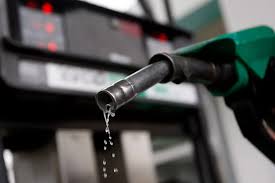

The landscape of fuel retail in Lagos underwent a sharp shift on Saturday, March 7, 2026, as motorists converged on the few remaining filling stations selling petrol below the ₦1,000 per litre mark. Following a week of global oil volatility, a market survey conducted across the Lagos mainland and island revealed that most private and major retail outlets have now adjusted their pump prices upward, triggering long queues at stations offering relatively cheaper rates.
The structural and economic consequence of this price hike is tied directly to the international market and local refining costs. Earlier this week, the Dangote Petroleum Refinery increased its ex-depot price by ₦100, moving from ₦774 to ₦874 per litre. This adjustment has rapidly rippled through the downstream sector, with Eterna Plc now retailing at ₦1,040, North West Petroleum and Fatgbems at ₦1,030, and Mobil outlets selling at approximately ₦1,025 per litre. Even NNPC Limited retail stations in areas like Iwaya and Ikoyi were observed dispensing at ₦1,050 per litre by Saturday noon.
Analytically, the primary driver for this surge is the escalating U.S.-Israel-Iran military standoff in the Middle East. Global crude prices rallied by nearly 14% during the week, surpassing the $80 per barrel threshold. Energy economists, including Paul Alaje of SPM Professionals, warned that as crude costs rise, the refined costs for PMS, diesel, and aviation fuel inevitably follow. Alaje noted that if the geopolitical conflict is not managed, domestic petrol prices could comfortably settle above the ₦1,000 mark by the end of April.
The impact on “Supply Stability and Consumer Behavior” was evident at stations still selling at legacy rates. Long lines of private and commercial vehicles blocked portions of the Lagos–Ibadan Expressway, particularly at MRS stations retailing at ₦937 per litre. Conversely, several TotalEnergies and NNPC stations, including the flagship outlet at OPIC Estate, remained shut or were not dispensing as of early Saturday morning, further compounding the anxiety among motorists.
Furthermore, the conflict has begun to affect broader energy markets beyond crude oil. Following missile and drone strikes across the region and threats to the strategic Strait of Hormuz, European natural gas prices spiked by nearly 40% after QatarEnergy reported disruptions to its liquefied natural gas production. These supply shocks are placing immense inflationary pressure on global economies, complicating the efforts of central banks to stabilize prices.
The long-term outlook for Nigerian fuel prices remains tethered to the stability of the Middle East and the operational capacity of local refineries. As global energy flows face potential blockages, analysts warn that the era of sub-₦1,000 petrol may be drawing to a close. For the average Lagosian, this translates to higher transportation costs and a continued reliance on the few retail outlets that have yet to fully pass on the ₦100 depot price increase to the consumer.