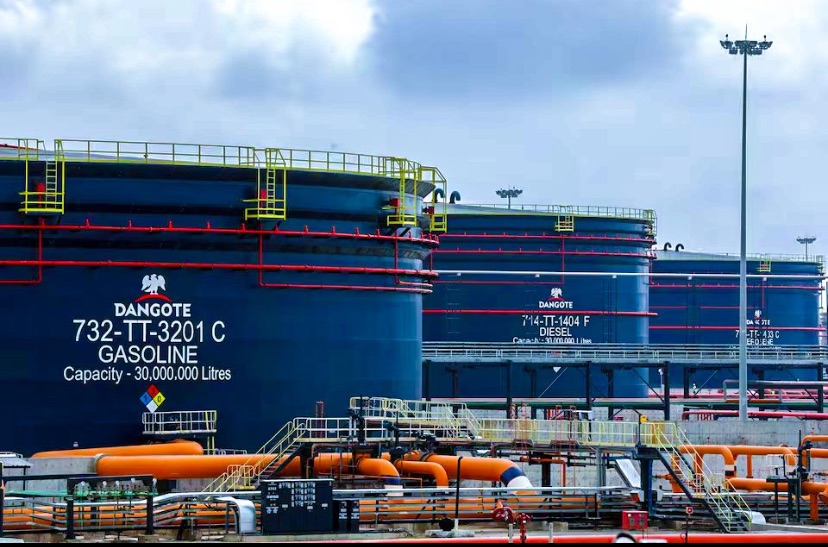

Nigeria’s imported petrol has become more expensive than fuel produced by the Dangote Petroleum Refinery, strengthening calls from petroleum marketers for the Federal Government to stop issuing fuel import licences and focus on supporting local refining.
According to the latest Energy Bulletin released by the Major Energies Marketers Association of Nigeria (MEMAN), the landed cost of imported Premium Motor Spirit (PMS), also known as petrol, rose to N1,223.32 per litre as of July 29.
This is higher than the N1,215 per litre gantry price offered by the Dangote Petroleum Refinery, meaning marketers now pay more to import petrol than to buy it from the Lekki-based refinery.
The latest figures have added weight to the argument by the Independent Petroleum Marketers Association of Nigeria (IPMAN), which has repeatedly urged the government to end petrol imports.
IPMAN believes Nigeria now has enough local refining capacity, especially with the operations of the 650,000-barrels-per-day Dangote Refinery, to satisfy domestic fuel demand without relying on imported products.
The association argues that continuing to import petrol increases pressure on Nigeria’s foreign exchange reserves, weakens the value of the naira, and discourages investment in local refining.
Recent market data appears to support this position, as locally refined petrol is currently cheaper than imported fuel.
MEMAN’s report showed that Dangote Refinery’s coastal price stood at N1,195 per litre, while the gantry price, including regulatory charges from the Nigerian Midstream and Downstream Petroleum Regulatory Authority (NMDPRA), was N1,215 per litre.
The report also revealed that the naira traded at an average of N1,367.03 to one US dollar during the review period, while Brent crude oil averaged $90 per barrel.
The increase in global crude oil prices has also pushed up the cost of refined petroleum products worldwide.
Diesel prices in the international market averaged $1,246.54 per metric tonne, contributing to higher fuel import costs.
Within Nigeria, the landed cost of imported diesel climbed to N1,739.96 per litre, compared to a 30-day average of N1,427.00 per litre.
Aviation fuel also became more expensive, rising to N1,616.43 per litre from an average of N1,421.10 per litre over the previous month.
These increases highlight the growing cost advantage of buying fuel from local refineries instead of relying on imports.
IPMAN’s National Publicity Secretary, Chinedu Ukadike, maintained that issuing more petrol import licences has failed to reduce fuel prices as expected.
Instead, he said imported petrol is now selling at prices above those offered by Dangote Refinery, making imports less competitive and adding unnecessary pressure to the downstream petroleum market.
He also warned that continued imports could create more price instability while reducing the benefits expected from Nigeria’s growing local refining industry.
Meanwhile, depot prices across the country continued to change in response to market conditions.
In Lagos, AIPEC sold petrol at N1,216 per litre, while Ardova reduced its ex-depot price to N1,217 per litre. Ascon and T-Time also lowered their prices to N1,216 per litre, while Emadeb increased its price slightly to N1,218 per litre. NIPCO maintained its price at N1,217 per litre.
Outside Lagos, prices also varied. Aradel increased its ex-depot price to N1,240 per litre in Port Harcourt, while Matrix, Sigmund and T.S.L. reduced their prices. In Calabar, several depot owners lowered their prices to N1,220 per litre, while in Warri, some marketers raised prices slightly as others introduced small reductions.
Industry experts say the current pricing trend clearly shows that buying petrol from Nigerian refineries is now more economical than importing it. They believe supporting local refining could help reduce foreign exchange demand, improve fuel supply stability and strengthen Nigeria’s energy security in the long term.