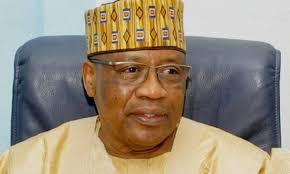

Former Military President Ibrahim Badamasi Babangida has advocated for a significant increase in funding and robust welfare support for Nigerian military veterans and the families of fallen heroes. During a courtesy visit by the leadership of the Nigerian Legion to his residence in Minna, Niger State, on Friday, March 13, 2026, the elder statesman emphasized that the sacrifices made by retired personnel in defense of the nation must never be overlooked.
The structural and welfare consequence of the meeting centered on the systemic gaps currently facing the veteran community. The National Chairman of the Nigerian Legion, Ms. Morenike Henry, detailed the “major challenges” confronting her members, including insufficient medical assistance, limited healthcare funding, and the severe economic hardships faced by military widows. A specific appeal was made for financial grants equivalent to five or six months of salary for these widows to enable them to establish small businesses and secure sustainable livelihoods.
Analytically, the Legion is pushing for a fundamental shift in how the state manages its retired assets. Ms. Henry reiterated the call for the establishment of a Ministry of Veterans Affairs, arguing that such a body would provide the structured and sustainable support system currently lacking for those who enlisted at a young age and now face limited post-service support. Babangida acknowledged these concerns, assuring the delegation that he would engage relevant authorities to explore solutions to these pressing welfare issues.
The impact on “National Security and Civil Advocacy” was further addressed by the Chief of Defence Intelligence (CDI), Lt.-Gen. Emmanuel Undiandeye. While the CDI commended the proposal for a specialized ministry, he cautioned the Legion’s leadership against using protests to pursue their demands. He maintained that constructive engagement with government authorities remains the most effective path to securing policy support and funding, rather than public demonstrations.
Furthermore, Lt.-Gen. Undiandeye emphasized the necessity of transparency in the utilization of existing funds. He urged the Legion to prioritize programs with direct, measurable impacts on veteran welfare, ensuring that any support received is managed with high accountability. The Legion’s leadership, in turn, expressed gratitude for the CDI’s logistical support in hosting the Nigerian Legion Council meeting, signaling a continued partnership between active and retired military hierarchies.
The long-term outlook for Nigerian veterans hinges on the government’s willingness to institutionalize these welfare requests into the national budget. As the Nigerian Legion continues its advocacy, the focus will be on whether the current administration adopts the proposed Ministry of Veterans Affairs to streamline benefits. For the families of fallen soldiers, the promised intervention by a former president provides a glimmer of hope for a more dignified and secure retirement framework.