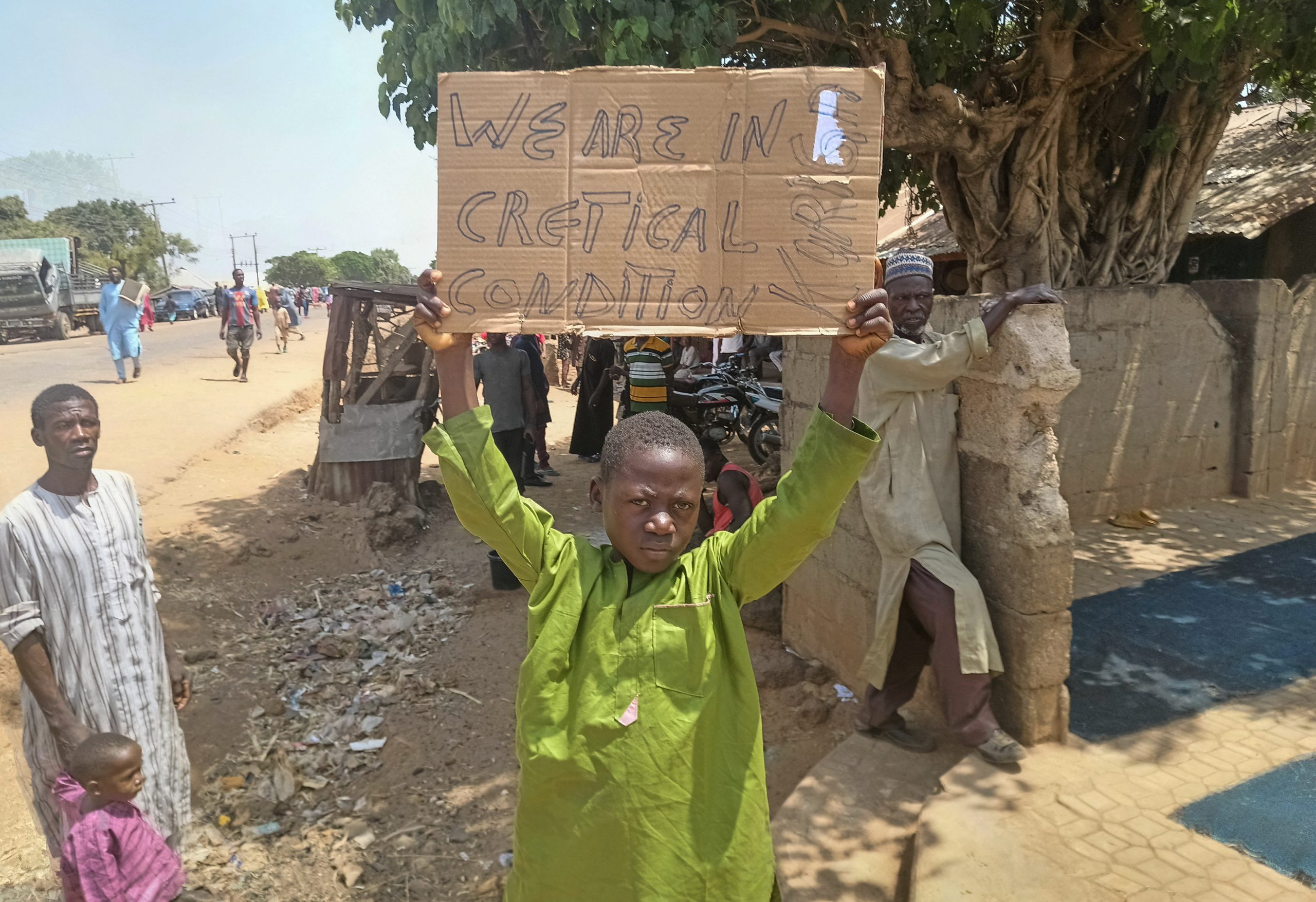

The classrooms in northern Nigeria are falling silent. This is not the quiet of an empty schoolyard between terms, but the profound, anxious silence of institutions shuttered by government decree. This educational retreat, a direct response to a devastating escalation in mass abductions, has become the hallmark of a deepening national crisis. The recent kidnappings of over 300 students and teachers from St. Mary’s School in Papiri, Niger State, and 25 schoolgirls from a secondary school in Maga, Kebbi State, in November 2025, have triggered one of the most widespread school closure directives in Nigeria’s history, affecting 47 Federal Unity Colleges and countless state schools.
This event, however, is not an isolated tragedy but the latest and most severe symptom of a decade-long epidemic. An analysis of the trajectory from 2014 to the present reveals a devastating pattern: Nigeria’s education sector, already grappling with the world’s highest number of out-of-school children, is now trapped in a self-defeating cycle. The very measure taken to protect students—closing schools—is simultaneously sacrificing their futures, eroding the foundation of public trust, and handing a strategic victory to the criminal elements terrorizing the nation.
The nature of the threat has undergone a dangerous evolution. The crisis began a decade ago with the brutal ideological warfare of Boko Haram in the North-East, which specifically targeted Western education. Between 2014 and 2016, the group destroyed 910 schools and forced the closure of 1,500 more in Borno state alone. The iconic Chibok abduction of 276 girls in April 2014 became the stark symbol of this era. Yet, the primary driver has since morphed. By 2020, the impetus for closures had shifted from ideological insurgency to financially motivated banditry and kidnapping-for-ransom in the North-West and North-Central regions. While the motivation changed from destroying education to profiting from it, the catastrophic impact on learning remains identical.

The November 2025 attacks mark a disturbing new chapter, demonstrating both the brazenness and scale of this evolved threat. The abduction of 303 students and 12 teachers from St. Mary’s School represents the largest single school kidnapping in Nigeria’s history. The simultaneous, multi-state closures that followed—shutting down schools not just in Niger and Kebbi, but in Katsina, Plateau, and Yobe—signal a crisis that has metastasized from a regional challenge into a national emergency. The fact that the Federal Government felt compelled to close its flagship Unity Colleges, institutions symbolizing national integration, is a chilling admission that the threat now permeates the entire country.
The official justification for these closures is rooted in a stark, moral calculus. State officials have consistently framed the decision as a painful necessity, with figures like the Katsina State Commissioner for Basic and Secondary Education stating the aim is to “strengthen security and protect the education system.” They echo the sentiment expressed by officials in Bauchi, who emphasized that “the protection of our children remains our highest moral responsibility.”
Yet, this short-term safety measure is creating a long-term catastrophe, and it has been widely condemned as a policy of capitulation. A coalition called Voices for Inclusion and Equity for Women (VIEW) has sharply criticized the government for responding with “panic rather than protection,” arguing that the closures represent “not security but surrender.” Analysts and former officials echo this sentiment, viewing the shutdowns as a “massive strategic victory” for the bandits and terrorists, whose actions successfully paralyze a fundamental state function. The opposition Peoples Democratic Party has accused the government of a “complete surrender to terrorists,” highlighting the political dimension of the crisis.
The human impact of this cycle is both devastating and multifaceted. The emotional toll on parents is immeasurable. Stella Shaibu, a nurse who collected her daughter from a boarding school near Abuja following the closures, gave voice to a widespread loss of faith: “The government is not doing anything to curb insecurity.” The anguish is even more acute for those directly affected by abductions. A parent named Usman, whose daughter was taken, pleaded, “I plead with the government and security agents to help us get our children out of the bush. This is the most horrible experience of my life.”
Religious and community leaders have echoed these concerns on a national stage. Most Rev. Bulus Dauwa Yohanna, the Chairman of the Christian Association of Nigeria in Niger State and proprietor of the attacked St. Mary’s School, has appealed for continued prayers for the victims. Pope Francis expressed his “great sorrow” and made a “heartfelt appeal” for the immediate release of the hostages, underscoring the international dimension of the crisis.
Critically, this security crisis violently exacerbated a pre-existing educational emergency. A 2018 report established that Nigeria already had an unacceptable number of out-of-school children before the surge in abduction-driven closures. Insecurity has now compounded this structural failure. According to a UNICEF report cited in the internal documents, conflict and insecurity have disrupted education for over 3 million children in Nigeria and the wider West and Central Africa region, with the number of closed schools nearly doubling since 2019.
The disruption of learning is immense and intergenerational. Each closure, whether for days, months, or years, severs educational continuity. Students fall behind, and many never return. There is a particular and justified fear for the girl-child, who faces the heightened risk of being married off due to economic pressure or persistent insecurity once removed from the formal education system. The policy of closures, while intended as a protective measure, ultimately plays into the hands of those who oppose Western education, creating a lost generation deprived of literacy, numeracy, and the chance to build a future beyond the conflict.
In conclusion, the data maps a decade of escalating failure. Nigeria has transitioned from battling a known ideological enemy to struggling against a hydra-headed, financially motivated criminal network. The ultimate cost is being paid by millions of children. The closed schools stand as silent monuments to this failure—not just of security, but of national promise. Until the cycle is broken, and protection is achieved through robust security and community engagement rather than pre-emptive surrender, the promise of education for an entire generation will remain locked away, behind closed doors. The nation’s classrooms will remain quiet, but the crisis they represent is screaming for a solution.