
Rising Transport Fares Put Fresh Pressure on Nigerian Households
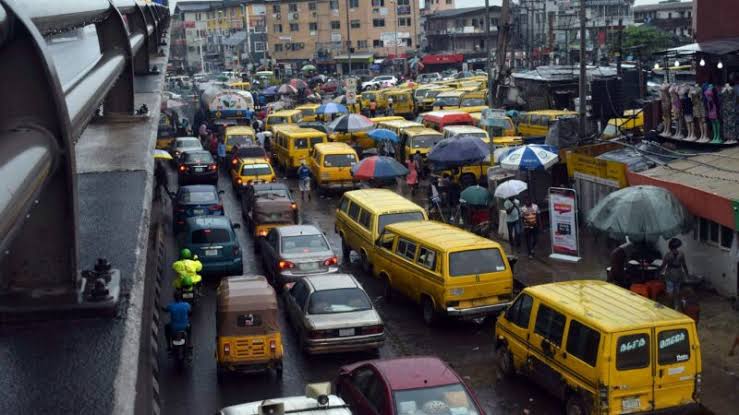
For commuters and small-business owners across Nigeria, the rising cost of transportation is becoming an increasingly important part of the household squeeze.
The pressure is reflected in the latest data from the National Bureau of Statistics (NBS), which shows that average fares for intra-city bus journeys rose sharply in May 2026.
According to the NBS Transport Fare Watch for May, the average fare paid for a bus journey within a city increased to ₦1,431.25, up 2.43% from ₦1,397.27 in April and 38.63% from ₦1,032.46 recorded in May 2025.
The increase means that commuters making multiple journeys each day are facing a substantially higher transport bill than they did a year ago.
The NBS data also showed increases across other forms of transportation. The average fare for intercity bus journeys rose to ₦9,699.55 in May, while the average fare for motorcycle transport increased to ₦1,072.51.
The increases highlight how transportation remains a significant source of pressure on household budgets, particularly for workers, traders and small-business operators who cannot easily avoid daily travel.
The national average also masks considerable differences between states.
Zamfara recorded the highest average intra-city bus fare in May at ₦1,878.80, while Taraba followed with ₦1,771.96. Abia and Adamawa recorded the lowest average fares in the category.
These differences reflect variations in local transport markets, distances travelled, operating costs and the availability of alternative means of transportation.
For households already dealing with elevated food, housing and other living costs, another increase in transportation expenses can leave less money available for consumption, savings or business investment.
Transportation costs have implications beyond the price paid by passengers.
Businesses rely on road transport to move workers, raw materials and finished products. Farmers and traders also depend on transport to move agricultural produce from production areas to markets.
That makes transportation an important channel through which higher operating costs can eventually feed into consumer prices.
The International Monetary Fund (IMF), in its 2026 Article IV assessment of Nigeria, said higher food and transport costs were weighing on economic activity. The IMF also warned that higher global fuel, food and fertiliser prices could create additional inflationary pressures in Nigeria.
The IMF’s analysis of Nigeria’s inflation basket also noted that the 2025 rebasing increased the relative weights of non-food components, including transport, reflecting changes in household consumption patterns.
This helps explain why an improvement in headline inflation does not necessarily mean that every major household expense is becoming cheaper. Inflation measures the rate at which prices are changing; it does not mean that prices automatically return to previous levels when inflation slows.
Nigeria’s economic reforms have improved some macroeconomic indicators, but the benefits remain unevenly distributed across household expenses.
The IMF projects Nigeria’s economy to grow by 4.1% in 2026, while warning that higher food and transport costs remain headwinds to economic activity.
For households, however, economic progress is ultimately experienced through everyday expenses.
A worker may welcome improving macroeconomic stability, but still feel financially worse off if the cost of travelling to work rises faster than income.
That makes transportation one of the clearest pressure points to watch as Nigeria’s economic reforms continue through 2026. If fares remain elevated, their effects will extend beyond the daily commute, influencing business costs, household disposable income and, potentially, the prices consumers ultimately pay for goods and services.