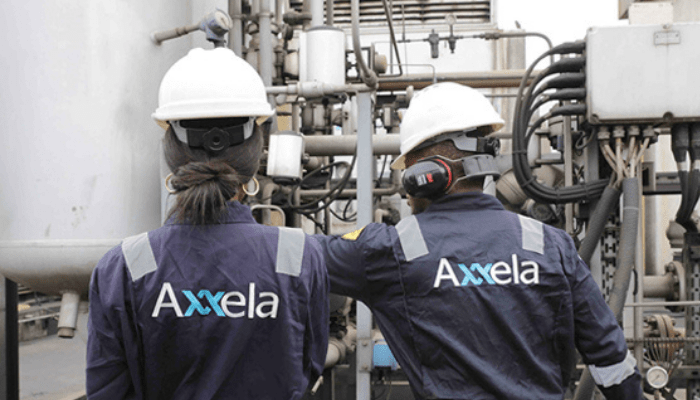

Helios Investment Partners, Africa’s largest private equity firm, is preparing to sell its remaining 75 percent stake in Axxela Limited, Nigeria’s leading natural gas distribution company, effectively bringing an end to nearly a decade of investment in one of West Africa’s key energy assets.
The announcement came from Helios co-founder and managing partner Tope Lawani, who confirmed in an interview with Bloomberg TV that the firm had signed an agreement to sell one of its major Nigerian businesses in the energy transition space.
While Lawani did not name the buyer, industry sources believe the sale involves Axxela, formerly known as Oando Gas and Power, which has long been a central player in Nigeria’s gas infrastructure network.
A Strategic Withdrawal, Not a Failure
Helios’ decision to divest is not driven by poor performance. Lawani described the exit as “strategic,” noting that the firm was proud of the business it helped shape. Since taking control of Axxela in 2016, Helios has transformed the company into Nigeria’s largest private natural gas distributor, operating over 360 kilometres of pipeline across Lagos, Sagamu, and Port Harcourt.
The firm had previously sold a 25 percent stake to Japan’s Sojitz Corporation in 2022, marking Sojitz’s first-ever equity investment in Africa. That deal was viewed as a signal of growing international interest in Nigeria’s gas sector at the time. With Helios now exiting fully, the market is watching closely to see who takes control of this critical energy player.
Gas Infrastructure and the Everyday Economy
The sale of Axxela comes at a delicate time for Nigeria’s energy economy. The country’s manufacturing sector and households depend heavily on affordable gas to power factories, bakeries, and even small generators. Any shift in ownership could influence the cost of gas supply across industrial and commercial hubs.
Analysts warn that foreign investors exiting the gas distribution space could limit access to new capital for infrastructure upgrades. “If investors like Helios pull out completely, local operators may struggle to maintain expansion plans, which eventually affects the cost of gas supply,” said a Lagos-based energy economist.
For small businesses, already burdened by high diesel and electricity costs, even a slight increase in gas prices could push up production costs, with those expenses likely to be passed on to consumers. Food processors, cement plants, and textile manufacturers, many of which rely on gas-fired power, may have to adjust prices upward.
Axxela’s Legacy and What Comes Next
Axxela’s roots trace back to Oando Gas and Power, which was spun off in 2004 and later rebranded after Helios’ investment in 2017.
Over the years, the company has built a strong presence through subsidiaries such as Gaslink Nigeria, Transit Gas, and Central Horizon Gas Company. Its network supplies key industrial corridors, helping cushion the impact of Nigeria’s unreliable power grid.
GCR Ratings recently upgraded Axxela’s credit outlook, citing solid earnings and strong cash flows, a sign that the company remains financially sound despite its changing ownership structure.
Still, the planned sale raises larger questions about Nigeria’s attractiveness to long-term investors in the energy sector. The gas market is widely seen as central to the country’s energy transition goals, but inconsistent policy, foreign exchange shortages, and regulatory uncertainty have made investors cautious.
The Broader Economic Picture
For ordinary Nigerians, Helios’ exit may sound distant, but its ripple effects could soon be felt. Nigeria’s energy costs already form a major part of household and business expenses. As global investors scale back exposure to local gas infrastructure, the risk is that fewer projects will emerge to expand pipelines or stabilise supply.
That could mean slower industrial growth, higher transport and cooking costs, and more strain on small manufacturers, the backbone of Nigeria’s fragile economy.
In essence, Helios’ departure from Axxela is more than just a corporate reshuffle; it’s a reflection of the uneasy balance between private capital and public policy in Nigeria’s energy future. For investors, it’s a profit-taking exit. For the man on the street, it could be one more reason why the price of goods keeps rising.