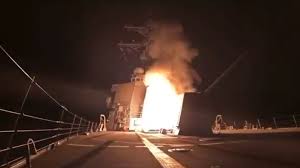

Ghana’s Foreign Affairs Minister, Samuel Okudzeto Ablakwa, has disclosed new details about the Christmas Day 2025 airstrikes on ISIS-linked targets in Sokoto State, describing the operation as a coordinated effort involving Ghana, Nigeria, and the United States. Speaking at Chatham House in London, Ablakwa said Ghana was formally invited by both governments to support the mission, which targeted the growing threat of jihadist groups such as Lakurawa in Nigeria’s northwest.
The operation involved US precision strikes, including cruise missiles, launched after Nigeria approved the intervention. Ablakwa stressed that the success of the operation depended on clear agreements among the partners, particularly regarding the scope of the intervention and respect for national sovereignty. He warned against unilateral military actions by foreign powers, stating that African countries must retain full control over security decisions on their territory.
For regional security and economic stability, the operation carries significant implications. The spread of jihadist groups from the Sahel into coastal West Africa has emerged as a major threat to stability, disrupting trade, displacing populations, and deterring investment. Groups like Lakurawa have exploited porous borders and weak state presence to establish footholds in areas previously unaffected by insurgency.
The coordinated response involving multiple West African states and international partners represents a model for addressing transnational threats that respect national sovereignty while leveraging external capabilities. Ablakwa suggested that the Sokoto mission could serve as a template for future security cooperation, where international partners support, but do not lead, African counterterrorism efforts.
For Nigeria’s economy, improved security in the northwest carries direct benefits. The region is agriculturally productive, and insecurity has constrained farming, disrupted markets, and displaced rural populations. Each successful operation that degrades militant capacity potentially enables farmers to return to their land, traders to resume activities, and investment to flow into affected areas.
The involvement of multiple governments also signals the regional nature of the threat. Jihadist groups do not respect borders, and effective response requires coordination across jurisdictions. The Sokoto operation demonstrates that such coordination is possible, building trust and operational relationships that can be activated in future crises.
However, the use of foreign military assets, including US cruise missiles, raises questions about sovereignty and the long-term implications of external intervention. Ablakwa’s emphasis on African control over security decisions reflects sensitivity to these concerns and the importance of maintaining local ownership of counterterrorism efforts.
For Ghana, participation in the operation reflects its growing role in regional security and its recognition that instability in neighbouring countries ultimately affects its own stability. The threat of spillover from conflicts in the Sahel and Nigeria’s north has prompted Ghana to invest in border security and intelligence cooperation.
The economic case for such cooperation is compelling. Instability in one country disrupts trade routes, displaces populations, and creates conditions for criminal networks to flourish across borders. Coordinated action that degrades militant capacity benefits all countries in the region, protecting economic activity and development gains.