
The Federal Government has signed a new agreement with Moroccan partners to introduce a satellite and artificial intelligence (AI)-powered agricultural monitoring system across 15 states in Nigeria. The initiative is expected to improve food security by providing accurate, real-time information on farming activities and crop production.
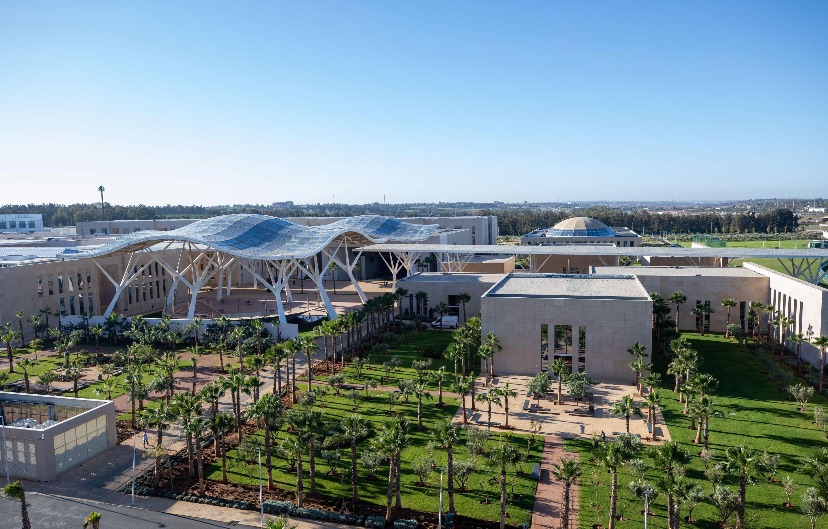
The Memorandum of Understanding (MoU) was signed at the Mohammed VI Polytechnic University in Ben Guerir, Morocco. The agreement brings together the Federal Government, OCP Africa, and geospatial technology company Ground Truth Analytics.
Deputy Chief of Staff to the President (Office of the Vice President), Senator Ibrahim Hassan Hadejia, signed the agreement on behalf of Nigeria. He represented Vice President Kashim Shettima, who chairs the Presidential Food Systems Coordinating Unit (PFSCU).
The partnership officially launches the National Agro-Productivity System (NAPS), Nigeria’s first satellite-based crop monitoring platform. The system will use satellite images and AI technology to monitor farmland, identify crops being grown, estimate harvests, and detect possible food security threats.
With updated information, both federal and state governments will be able to make better decisions on farming, food production, agricultural investments, imports, and exports. Authorities believe the technology will improve planning and help prevent food shortages.
Speaking during the signing ceremony, Senator Hadejia said Nigeria should not rely only on foreign technology but must also build local expertise to manage and improve modern agricultural systems.
According to him, agriculture is becoming more technology-driven through the use of artificial intelligence, precision farming, and geospatial data. He stressed that Nigeria must develop the knowledge and institutions needed to fully benefit from these innovations.
Hadejia added that the government’s goal is not only to use advanced technology but also to train Nigerian experts and strengthen local institutions so the system can be sustained for many years.
Technical Assistant to the President on Agriculture, Marion Moon, explained that the new platform was created to solve the problem of unreliable farming data. She said government officials often struggle to know exactly what farmers are planting and harvesting during each farming season.
For example, a farmer may plan to grow maize but later decide to plant rice instead. Without accurate information, policymakers may make wrong decisions about food reserves, imports, or exports.
Moon revealed that the monitoring system has already been tested in 13 states over three planting seasons. During the pilot phase, it reached about 250,000 farmers, surveyed more than 50,000 farmers in over 2,000 communities, and collected more than one million agricultural data records.
Ground Truth Analytics Chief Executive Officer, Driss Kitane, explained that the AI system can identify individual farms, determine the crops being cultivated, and monitor their growth without manual inspections. Satellite images will be updated every five days, allowing continuous monitoring throughout the farming season.
The project will begin with one pilot state before expanding to three states and later covering all 15 selected states. Officials also assured that all agricultural data collected through the platform will remain under Nigeria’s ownership and be stored on servers located within the country.
The Federal Government believes the new technology will strengthen agricultural planning, improve food production, and support Nigeria’s long-term goal of achieving greater food security.