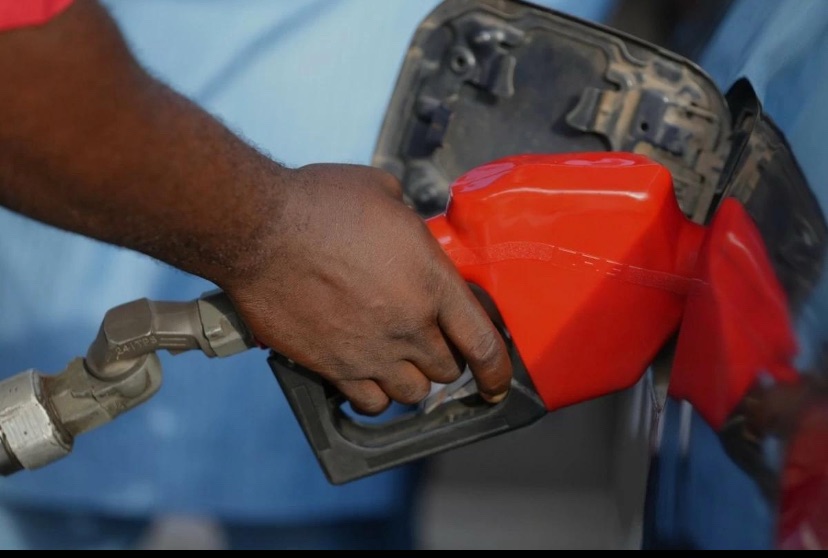

The Federal Government has called on petrol marketers across the country to reduce the prices of petrol and other petroleum products following the recent decline in global crude oil prices.
The appeal was made on Monday by the Minister of State for Petroleum Resources (Oil), Heineken Lokpobiri, during a stakeholders’ meeting involving key players in Nigeria’s downstream petroleum industry. The meeting brought together regulators, marketers, industry associations, and representatives of the Dangote Refinery to discuss fuel pricing and market conditions.
Lokpobiri explained that the international price of Brent crude oil has dropped significantly, falling from about 118 dollars per barrel earlier this year to below 70 dollars. According to him, this reduction should naturally lead to lower fuel prices for Nigerian consumers.
He questioned why the cost of Premium Motor Spirit (PMS), commonly known as petrol, has remained high despite the sharp decline in global oil prices. He urged marketers to ensure that the savings from lower crude oil prices are reflected at filling stations across the country.
The minister stressed that while the government supports the deregulation of the petroleum sector, it does not encourage businesses to make excessive profits at the expense of consumers. He said the government’s preference is to work closely with industry operators to find practical solutions instead of introducing strict enforcement measures that may be difficult to implement.
Lokpobiri noted that discussions during the meeting would focus on important issues affecting fuel pricing. These include inventory management, transportation and logistics, market monitoring, and ways to prevent unnecessary profit-making that delays price reductions.
Also speaking at the meeting, the Chief Executive of the National Midstream and Downstream Petroleum Regulatory Authority (NMDPRA), Rabiu Umar, called on all stakeholders to cooperate in ensuring that the benefits of lower international crude oil prices reach consumers.
He said the objective is to create a transparent and fair market where businesses remain profitable while consumers also enjoy reasonable fuel prices. Umar added that deregulation should promote healthy competition and investment, not unfair pricing practices.
According to him, the meeting follows a similar engagement recently held with operators in the domestic gas sector, which helped bring down the retail price of cooking gas. He described that outcome as proof that dialogue between regulators and industry players can produce positive results.
Umar also explained that global crude oil prices have experienced fluctuations over the past six months due to international events and geopolitical tensions. Although prices have now eased, he said retail fuel prices in Nigeria have not adjusted accordingly.
He encouraged participants to identify operational challenges affecting the market and work together on lasting solutions. Areas highlighted for discussion include market surveillance, inventory management, logistics, and the development of the National Strategic Stock initiative to improve Nigeria’s energy security.
The meeting was attended by officials from the Federal Competition and Consumer Protection Commission (FCCPC), Dangote Refinery, the Major Energies Marketers Association of Nigeria (MEMAN), the Independent Petroleum Marketers Association of Nigeria (IPMAN), the Depot and Petroleum Products Marketers Association of Nigeria (DAPPMAN), the Nigerian Association of Road Transport Owners (NARTO), PETROAN, and other industry stakeholders.
The government expressed hope that the discussions would lead to fair fuel pricing, protect consumers, maintain a steady supply of petroleum products, and support the long-term growth of Nigeria’s downstream oil sector.