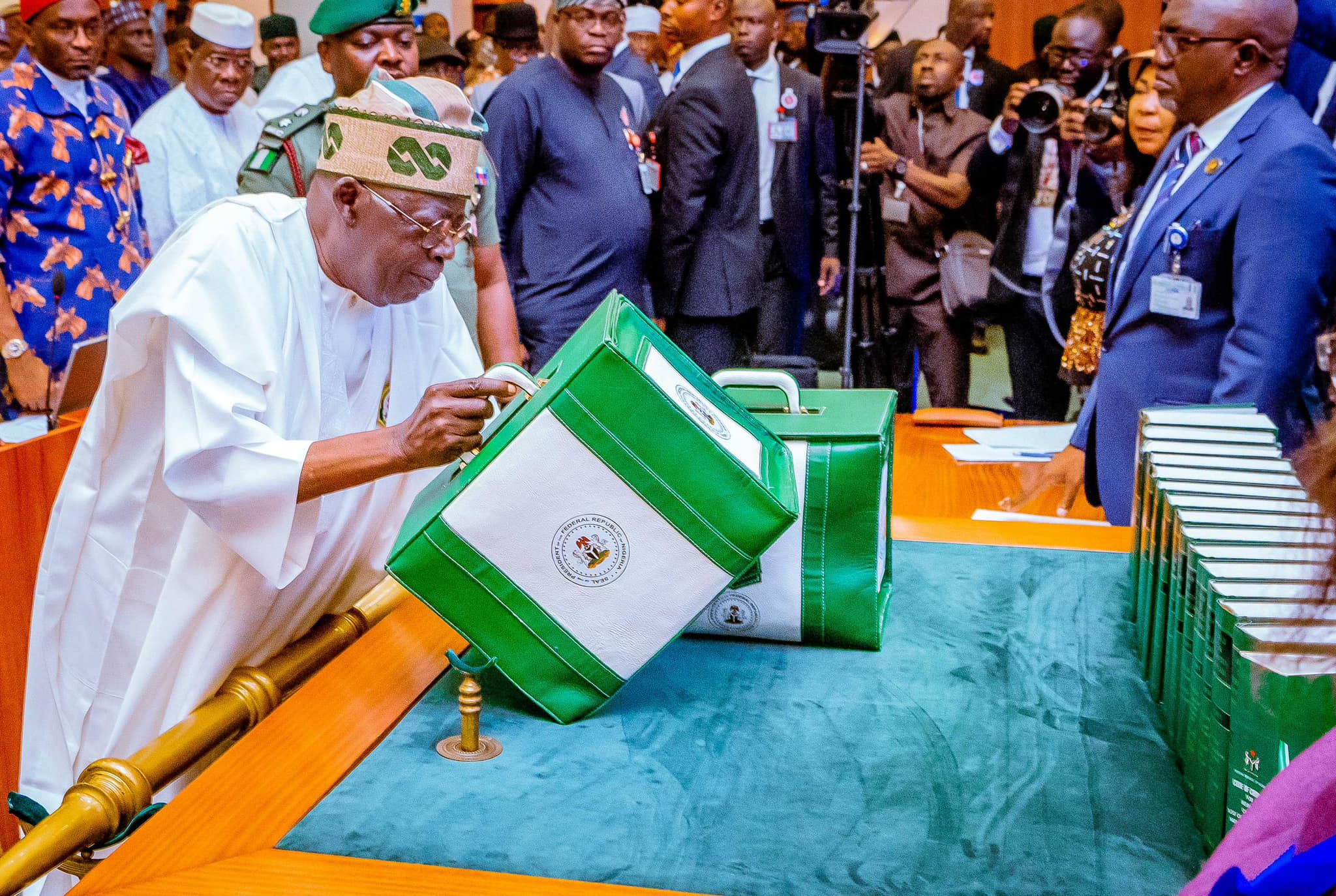

The administration of President Bola Ahmed Tinubu has come under intense public scrutiny following its reported failure to publish comprehensive expenditure records for the entire 2025 fiscal year. This significant lapse in public financial accountability directly contravenes established transparency norms and legal requirements, raising serious concerns among civic groups, economists, and accountability advocates. The lack of detailed public disclosure regarding how funds were disbursed across Ministries, Departments, and Agencies (MDAs) has created an unprecedented gap in the federal government’s fiscal reporting.
Typically, in line with the Fiscal Responsibility Act and best global practice, the government is expected to release detailed budget implementation reports (BIRs) on a quarterly basis. These reports are the primary mechanism through which citizens and oversight bodies can track government spending, assess performance against approved budgets, and hold public officials accountable for the effective use of taxpayer money. The absence of even a provisional report for the 2025 fiscal year signals a major setback for the transparency agenda championed by previous administrations and undermines the fundamental tenets of democratic governance.
Critics argue that the non-publication of expenditure records is particularly alarming given the nation’s fragile economic state. With Nigeria navigating high inflation, rising public debt, and a cost-of-living crisis, the public has a heightened need to understand precisely where every Naira is being allocated and spent. Without this critical data, it becomes impossible to verify the efficiency of the massive capital projects undertaken, monitor the salaries and allowances paid to government personnel, or confirm the veracity of contracts awarded. This opacity leaves the government’s financial operations vulnerable to speculation and suspicion of widespread mismanagement or malfeasance.
The silence from key financial oversight institutions, including the Office of the Accountant-General of the Federation and the Budget Office of the Federation, has only exacerbated public frustration. Accountability groups have historically relied on official data publications—such as those once available on the Open Treasury Portal—to conduct independent analyses and advocacy. The current deficit of information severely hampers their ability to perform this essential civic function, effectively putting an end to data-driven public oversight of federal finances.
The incident is seen by many as a dangerous precedent, suggesting a retreat from the hard-fought gains in fiscal transparency achieved over the last decade. It raises pointed questions about the political will of the current leadership to uphold the spirit of open governance. The non-disclosure not only impacts domestic accountability but also sends a negative signal to the international community, potentially affecting credit ratings, foreign direct investment inflows, and Nigeria’s standing in global anti-corruption rankings. The pressure is now mounting on the Tinubu administration to immediately release the full, disaggregated expenditure records for the 2025 financial year and commit to the timely publication of future fiscal reports to restore public confidence in the management of the nation’s treasury.
Nigeria’s prolonged and systemic record of poor transparency and accountability is widely regarded as the most corrosive obstacle to its economic stability and long-term development. This deep-seated opacity—ranging from concealed budget details to non-disclosed contracts—creates an economy where uncertainty reigns, making accurate financial forecasting and risk assessment nearly impossible for both local entrepreneurs and foreign investors. When public financial data is either deliberately withheld or fragmented, it destroys the social contract, signalling to citizens and the global community that public funds are not being managed for the collective good but are instead vulnerable to diversion and corruption, thus stifling growth and exacerbating poverty across all sectors.
Voices across the civil society space have consistently decried this institutionalised secrecy. BudgIT, a leading civic-tech organisation focused on public finance transparency, has been particularly vocal. Mr. Vahyala Kwaga, the organisation’s Deputy Country Director, previously underscored this point: “Deferring 70 per cent of capital projects is neither a solution nor a setback on its own. What matters is whether this decision marks a clear break from the cycle of bloated budgets, overlapping fiscal years, and weak project implementation. Without strict adherence to budget timelines, proper fiscal closure, and transparent payment processes, the risk is that we simply postpone inefficiencies rather than resolve them.” This highlights the fact that opaque procedures often lead to perpetually unfinished or poorly executed projects that fail to deliver developmental value.
The economic consequences manifest dramatically in Nigeria’s infrastructure deficit, poor public service delivery, and high cost of governance. Transparency International’s Corruption Perception Index consistently places Nigeria among the lowest-ranked nations, linking high perceived corruption directly to the lack of fiscal openness. When a significant portion of national wealth is systematically siphoned off through inflated contracts and unaccounted-for ‘security votes,’ it starves critical public services. An economist, Professor Ken Ofori-Atta, has noted that every dollar lost to corruption represents not just a financial loss but a missed opportunity to fund a child’s education or provide essential healthcare, confirming that this lack of transparency directly undercuts the nation’s human capital development. This chronic lack of transparency ultimately leads to a continuous cycle of debt and underdevelopment, as government borrowing increases to cover the gaps created by financial leakages.