
Friday, July 10, 2026
  • Login
No Result
View All Result
The Business Times
  • News
  • BT Exclusive
  • Economy
  • Business
  • Financial Markets
  • Politics
  • Energy
  • Insights
  • Sports
  • News
  • BT Exclusive
  • Economy
  • Business
  • Financial Markets
  • Politics
  • Energy
  • Insights
  • Sports
No Result
View All Result
The Business Times
No Result
View All Result
Home Agriculture

Nigeria Catfish Farmers Seek Control of Eriwe Processing Centre

byStephen Abebor
May 24, 2026
in Agriculture, Business, Economy, Trade
0
10
VIEWS
Share on FacebookShare on Twitter

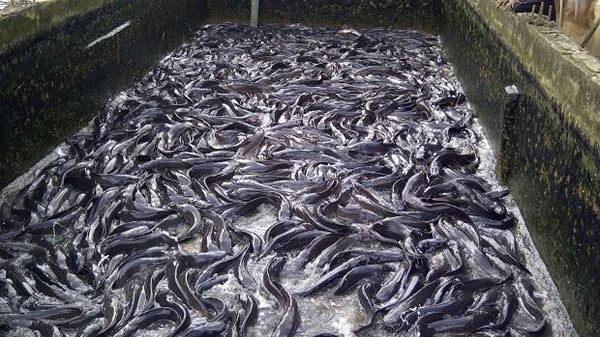
Catfish farmers in the Eriwe Farm Village cluster in Ogun State are pressing the Federal Government to transfer operational control of a newly completed but idle fish processing centre to producer cooperatives, arguing that farmer-led management would unlock value across Nigeria’s aquaculture supply chain.

The appeal underscores a recurring challenge in Nigeria’s agricultural infrastructure development: underutilised public assets amid rising production capacity in key food sectors. The Eriwe cluster, one of the country’s more established aquaculture hubs, produces more than 2,000 metric tons of catfish annually, with an estimated market value exceeding ₦50 billion. Yet farmers say a significant share of that value is eroded through post-harvest inefficiencies.

Without adequate cold-chain systems and local processing capacity, fresh fish is often sold quickly at lower margins or lost entirely due to spoilage. Farmers argue that the dormant processing facility could address this gap by enabling smoking, drying, packaging, and storage at scale, extending shelf life and improving access to higher-value markets.

“We can do more if we control this centre ourselves,” said a spokesperson for the group. “It will boost production, save our harvest, and put more Nigerians to work.”Their proposal reflects a broader shift within Nigeria’s agribusiness sector, where producer cooperatives are increasingly advocating for direct participation in infrastructure management. Industry stakeholders say such models could reduce dependence on intermediaries, improve pricing efficiency, and strengthen rural employment.

Economists note that the issue also highlights a structural bottleneck in Nigeria’s fisheries value chain: limited processing capacity relative to output growth. While production clusters like Eriwe continue to expand, downstream infrastructure has not kept pace, constraining competitiveness and export potential.

The Federal Government has yet to issue a formal response to the request. However, policy analysts suggest the situation could reopen debate over public-private partnerships in agricultural infrastructure, particularly in cases where state-built facilities remain inactive.

For Eriwe farmers, the argument is pragmatic rather than political. They contend that operational control is not only about ownership, but about efficiency turning sunk public investment into productive capacity and reducing the costly leakages that continue to weigh on Nigeria’s food production system.

As aquaculture demand rises domestically, the outcome of the request may help define how Nigeria balances infrastructure provision with on-the-ground management in its growing blue economy.

Tags: Agribusiness Nigeriaaquaculture value chaincatfish farming NigeriaEriwe catfish farmersfish processing centre Nigeriafish processing infrastructurefisheries development NigeriaFood Security NigeriaNigeria agriculture policyOgun State aquaculturepost-harvest fish lossesrural industrialisation Nigeria
Stephen Abebor

Stephen Abebor

Next Post
FirstBank and Visa Launch Visa Signature Premium Card in Nigeria

FirstBank and Visa Launch Visa Signature Premium Card in Nigeria

Leave a Reply Cancel reply

Your email address will not be published. Required fields are marked *

Recommended

Ghana’s Credit-to-GDP Gap Widens to Record Low as Banks Prioritise Stability Over Lending

Ghana’s Growth Picks Up in October, but Tight Credit Underscores Fragile Recovery

6 months ago

BPP Reforms Cut Federal Spending by N1.1 Trillion

5 months ago

Popular News

  • Fubara Unveils N1.85 Trillion 2026 Budget to Boost Growth in Rivers State

    0 shares
    Share 0 Tweet 0
  • FCMB Donates N50 Million to Support Girls’ Education and Mental Health Programme

    0 shares
    Share 0 Tweet 0
  • Nigeria Becomes First OPEC Member to Join IEA as Associate

    0 shares
    Share 0 Tweet 0
  • Sterling Financial Holdings Strengthens Board with Two New Director Appointments

    0 shares
    Share 0 Tweet 0
  • NSIB Begins Investigation After Business Jet Lands on Road Near Asaba Airport

    0 shares
    Share 0 Tweet 0

Connect with us

Facebook Twitter Instagram TikTok

Newsletter

Pages

  • About Page
  • Contact
  • Domestic Gas Sales Rise 30% as Nigeria’s Energy Reforms Gain Traction
  • Privacy Policy
  • Terms & Conditions

Navigation

  • News
  • BT Exclusive
  • Economy
  • Business
  • Financial Markets
  • Politics
  • Energy
  • Insights
  • Sports

© 2025 The Business Times NG .

Welcome Back!

OR

Login to your account below

Forgotten Password?

Retrieve your password

Please enter your username or email address to reset your password.

Log In
No Result
View All Result
  • Home
  • News
  • BT Exclusive
  • Economy
  • Business
  • Financial Markets
  • Politics
  • Energy
  • Insights
  • Sports

© 2025 The Business Times NG .