
Tuesday, May 5, 2026
  • Login
No Result
View All Result
The Business Times
  • News
  • BT Exclusive
  • Economy
  • Business
  • Financial Markets
  • Politics
  • Energy
  • Insights
  • Sports
  • News
  • BT Exclusive
  • Economy
  • Business
  • Financial Markets
  • Politics
  • Energy
  • Insights
  • Sports
No Result
View All Result
The Business Times
No Result
View All Result
Home Agriculture

Ecuador’s $8.4bn Shrimp Boom Offers Nigeria a Blueprint for Export Diversification

byStephen Abebor
May 5, 2026
in Agriculture, Business, Economy
0
Ecuador’s $8.4bn Shrimp Boom Offers Nigeria a Blueprint for Export Diversification
4
VIEWS
Share on FacebookShare on Twitter

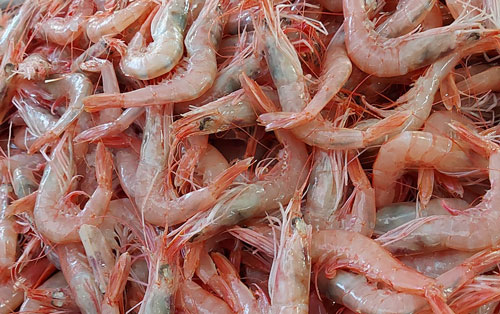
For decades, Nigeria’s export strategy has rested almost entirely on crude oil, a volatile commodity that leaves Africa’s largest economy exposed to price swings and geopolitical shocks. Meanwhile, Ecuador, a smaller economy facing similar developmental challenges, has quietly built an $8.4bn-a-year shrimp industry that now rivals its banana and flower sectors. The lesson for Lagos is unambiguous: targeted agricultural value chains can generate hard currency, jobs, and resilience where oil alone cannot.

Ecuador’s shrimp success is no accident. Since the early 2000s, Quito has invested in hatchery technology, biosecurity protocols, and trade agreements that lowered tariffs with China and the European Union. The result is a vertically integrated sector from feed production to cold-chain logistics that employs over 260,000 people directly. In 2024, shrimp became the country’s top non-oil export, accounting for nearly 20% of total goods sold abroad.

Nigeria has no shortage of aquatic potential. With over 850km of Atlantic coastline and a vast network of inland waters, the country produced only about 300,000 metric tonnes of farmed fish annually, meeting barely 60% of domestic demand. More critically, less than 1% of that output is exported, largely due to poor post-harvest infrastructure, high credit costs, and fragmented regulation. By contrast, Ecuador exports over 90% of its farmed shrimp.

What Nigeria lacks is not geography but deliberate industrial policy. Ecuador offers a replicable playbook: disease-resistant broodstock development, public-private cold-storage partnerships, and export-financing facilities tied to sustainability certification. Analysts at the World Bank estimate that a similar aquaculture push in Nigeria could generate $1.2bn in annual export revenue within a decade, while cutting post-harvest losses by 40%.

For policymakers in Abuja, the broader implication is clear. Oil accounted for 85% of Nigeria’s export earnings in 2024, down only marginally from a decade ago. A single-commodity structure leaves the naira perpetually vulnerable. Ecuador’s shrimp economy did not replace its oil sector it hedged against it. Nigeria would be wise to fish from the same playbook.

Tags: Agricultural value chainsAquaculture growthEcuador shrimp industryEmerging Marketsexport diversificationFood export revenueNigeria EconomyNon-Oil ExportsTrade Policy
Stephen Abebor

Stephen Abebor

Next Post
UBA Announces Exit of Non-Executive Director Angela Adebayo

UBA Announces Exit of Non-Executive Director Angela Adebayo

Leave a Reply Cancel reply

Your email address will not be published. Required fields are marked *

Recommended

Makinde Urges Unity During Ramadan and Lent

Makinde Urges Unity During Ramadan and Lent

3 months ago
Nigeria’s World Bank Debt Surges $2.08bn in 2025

Nigeria’s World Bank Debt Surges $2.08bn in 2025

3 days ago

Popular News

  • Global Offshore Oil Investment Set to Drop Sharply in 2026

    0 shares
    Share 0 Tweet 0
  • NGX Ends Flat as Banking Selloff Offsets MTN Gains

    0 shares
    Share 0 Tweet 0
  • Interswitch, Asaba Airport Launch Smart Parking System Upgrade

    0 shares
    Share 0 Tweet 0
  • UBA Announces Exit of Non-Executive Director Angela Adebayo

    0 shares
    Share 0 Tweet 0
  • Ecuador’s $8.4bn Shrimp Boom Offers Nigeria a Blueprint for Export Diversification

    0 shares
    Share 0 Tweet 0

Connect with us

Facebook Twitter Instagram TikTok

Newsletter

Pages

  • About Page
  • Contact
  • Privacy Policy
  • Terms & Conditions

Navigation

  • News
  • BT Exclusive
  • Economy
  • Business
  • Financial Markets
  • Politics
  • Energy
  • Insights
  • Sports

© 2025 The Business Times NG .

Welcome Back!

OR

Login to your account below

Forgotten Password?

Retrieve your password

Please enter your username or email address to reset your password.

Log In
No Result
View All Result
  • Home
  • News
  • BT Exclusive
  • Economy
  • Business
  • Financial Markets
  • Politics
  • Energy
  • Insights
  • Sports

© 2025 The Business Times NG .