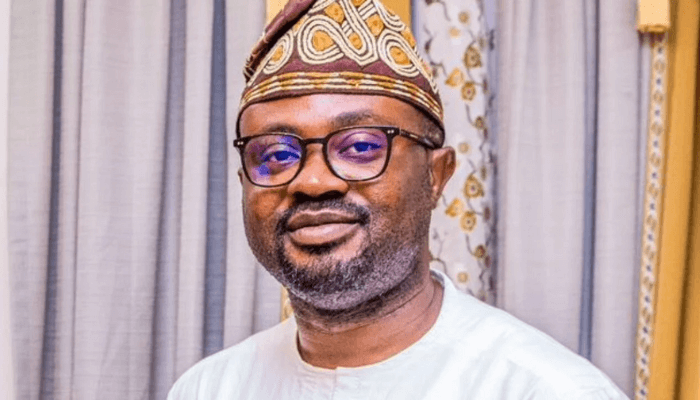

Nigeria’s path to economic resilience and sustainable development is intrinsically tied to social cohesion and institutional restructuring, according to Olubunmi Tunji-Ojo, the Minister of Interior. Speaking at Obafemi Awolowo University (OAU), where he received an Award of Excellence in Public Service, the Minister articulated a vision where national unity is not merely a social ideal but a critical economic imperative.
In an environment where fragmented markets and social instability often deter investment, Tunji-Ojo’s remarks underscore the economic cost of disunity. He argued that the country’s future prosperity hinges on a “renewed national spirit” capable of driving collective productivity. This perspective aligns with broader economic theories suggesting that social capital—trust and shared values—reduces transaction costs and fosters a stable climate for business operations.
The Minister highlighted that the “Renewed Hope Agenda” championed by President Bola Tinubu provides the necessary policy framework for this transformation. By prioritizing institutional efficiency, the administration aims to restore national confidence, a key metric for both domestic and foreign investors. Tunji-Ojo pointed to specific reforms within his ministry, such as the automation of passport applications and the clearance of backlogs, as evidence of how structural improvements can enhance service delivery. From an economic standpoint, streamlining these processes reduces bottlenecks that hamper labour mobility and international business travel, thereby facilitating smoother economic exchanges.
Furthermore, the Minister’s focus on “resilient institutions” touches on a fundamental driver of economic growth. Strong institutions are essential for enforcing contracts, protecting property rights, and ensuring a fair regulatory environment. By committing to these reforms, the government signals its intent to create a more predictable and efficient market, which is crucial for attracting long-term capital.
Tunji-Ojo also identified the youth as the nation’s “greatest asset,” a nod to Nigeria’s significant demographic dividend. However, he warned that realizing this economic potential requires vision and conviction. His address to the students emphasized that human capital development—fueled by education and a sense of national purpose—is the “most powerful weapon for change.” This suggests that economic policy must be deeply integrated with strategies to harness the innovation and labor power of the younger generation.
Ultimately, the Minister’s message frames national unity and spirit as economic assets. By fostering a collective resolve to overcome challenges, Nigeria can build the stable foundation necessary for robust economic growth, proving that social cohesion is a prerequisite for prosperity.