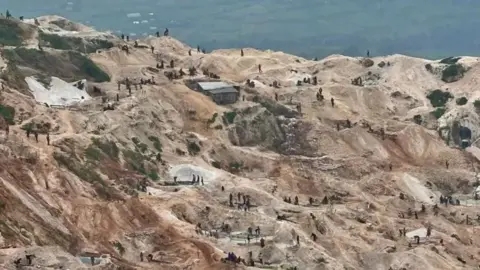

More than 200 people have been confirmed dead after a landslide at a coltan mine in eastern Democratic Republic of the Congo, according to government authorities, in a tragedy that exposes the lethal conditions facing workers in the informal mining sector. The disaster struck Tuesday afternoon at the Rubaya mining site, approximately 70 kilometres west of Goma in the conflict-ravaged North Kivu province, an area controlled by the rebel group M23.
The government statement reported that victims include around 70 children who were working at the mine when heavy rains triggered the collapse. The presence of children in such dangerous conditions highlights the desperation driving families into hazardous work and the complete absence of safety regulation in artisanal mining operations. The Rubaya deposit is one of the world’s most important sources of coltan, a mineral refined into tantalum for use in phones, computers, and other electronic devices.
The M23 rebel group, which controls the territory, disputed the scale of the tragedy, claiming only a handful of people died. This contradiction underscores the information challenges in conflict zones where access for independent verification is severely limited. The remote location and active conflict make it extremely difficult for aid groups, journalists, or government investigators to reach the site and assess conditions.
Thousands of miners work daily at Rubaya under conditions that international human rights organisations have repeatedly condemned. Miners descend into unstable tunnels with minimal safety equipment, working for meagre wages that rarely reflect the value of the minerals they extract. The coltan they produce enters global supply chains that power the world’s electronics industry, creating a stark disconnect between the dangerous conditions of production and the clean convenience of consumption.
The economic significance of the Rubaya deposit is immense. Coltan from eastern DRC supplies a substantial portion of global tantalum demand, critical for capacitors used in virtually all electronic devices. This mineral wealth, however, has been a curse as much as a blessing. Control over mining areas fuels conflict, funds armed groups, and perpetuates the instability that keeps the region trapped in poverty.
The landslide was reportedly triggered by heavy rains, a reminder of how climate hazards compound existing vulnerabilities. Deforestation from mining activity may have increased landslide risk, while inadequate infrastructure makes it impossible to monitor conditions or issue warnings. The combination of environmental degradation, lax safety standards, and conflict creates conditions where tragedy is predictable yet repeatedly unaddressed.
For the international electronics industry, the Rubaya disaster raises uncomfortable questions about supply chain due diligence. While regulations such as the Dodd-Frank Act in the United States and similar initiatives in Europe attempt to address conflict minerals, their effectiveness in improving conditions on the ground remains debated. Minerals from conflict zones continue to flow into global supply chains, often laundered through multiple intermediaries.
The DRC government faces immense challenges in asserting control over mining areas and improving conditions for artisanal miners. Armed groups control significant territory, infrastructure is virtually non-existent, and the scale of the problem dwarfs available resources. Formalisation efforts have made limited progress, and the vast majority of miners continue to operate outside any regulatory framework.