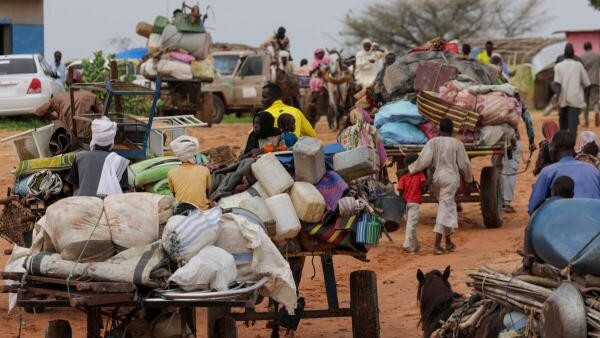

At least 33 people have been killed in southwestern Chad following violent clashes between communities over disputed land, local media reported on Wednesday. The violence erupted late on Tuesday in Dibebe, approximately 15 kilometres from Ngoura in Hadjer-Lamis province, and spread to neighbouring Barh El Gazal. Local sources indicate that 18 people died and 20 were injured in Hadjer-Lamis, while Barh El Gazal recorded 15 deaths alongside multiple injuries. Eyewitnesses said tensions remained high on Wednesday despite the deployment of security forces.
Officials from the Chadian government, including Territorial Administration Minister Limane Mahamat, Justice Minister Youssouf Tom, and Public Security Minister Ali Ahmat Akhabach, visited the affected areas to assess the situation and support efforts to restore calm. The incident underscores the persistent fragility of social cohesion in regions where competition over vital natural resources intersects with historical grievances.
The root of the conflict can be traced back to a land dispute dating to 1967, highlighting the long-standing tensions between communities over access to water and arable land. In areas such as Hadjer-Lamis and Barh El Gazal, livelihoods are heavily dependent on subsistence agriculture and livestock farming, making access to wells and water sources a critical survival issue. Scarcity of water, exacerbated by periodic droughts and climate change, often intensifies competition, creating fertile ground for violent confrontations.
The economic impact of such conflicts is considerable. Disruptions to farming and livestock activities threaten food security in already vulnerable regions. Many households rely entirely on local water sources for crop irrigation and animal husbandry; damage or restricted access to wells can reduce agricultural output, drive up food prices, and exacerbate poverty. Local markets may also face interruptions, limiting trade and the availability of essential goods.
Beyond immediate economic consequences, recurrent violence can undermine broader regional development. Investors and humanitarian agencies may hesitate to operate in high-risk areas, limiting the delivery of aid and economic programmes. Infrastructure projects, including roads, irrigation systems, and community services, may be delayed or abandoned due to security concerns, further constraining growth. In the long term, persistent instability can perpetuate cycles of poverty and underdevelopment, making reconciliation and conflict resolution essential for sustainable progress.
Analysts warn that incidents such as the Dibebe clashes are symptomatic of deeper governance challenges in Chad. Weak enforcement of land rights, limited access to dispute-resolution mechanisms, and under-resourced local administrations often leave communities to resolve conflicts themselves, sometimes violently. Strengthening local governance, improving legal frameworks for land and water rights, and investing in community-based conflict prevention measures are widely seen as crucial steps to reduce the recurrence of such deadly clashes.
The government’s high-level visit to the affected areas aims to signal its commitment to restoring order and supporting victims. However, observers stress that short-term security interventions must be accompanied by long-term solutions, including dialogue between communities, equitable resource management, and economic development initiatives. Expanding access to water infrastructure, supporting sustainable agriculture, and promoting inclusive local governance could mitigate competition over scarce resources and reduce the risk of future conflicts.
The tragedy in southwestern Chad highlights the ongoing challenges faced by many Sahelian and Central African regions, where climate change, population pressures, and historical disputes converge to create volatile situations. For communities in Hadjer-Lamis and Barh El Gazal, the urgent priorities are restoring security, supporting the injured and bereaved families, and ensuring access to essential resources, particularly water, to sustain livelihoods.
As authorities work to stabilise the situation, the incident serves as a stark reminder of the need for coordinated efforts to address the underlying causes of intercommunal violence. Without comprehensive strategies encompassing governance, economic support, and resource management, such conflicts are likely to recur, threatening both human lives and regional development.