
A wave of coordinated attacks by suspected Boko Haram and ISWAP fighters has killed several Nigerian soldiers, including senior officers, in Borno State, delivering a devastating blow to ongoing efforts to stabilize the northeast and restore economic activity in a region slowly emerging from years of conflict. The assaults, which targeted military bases and civilian communities, highlight the persistent insecurity that constrains agricultural production, deters investment, and drains fiscal resources needed for development.
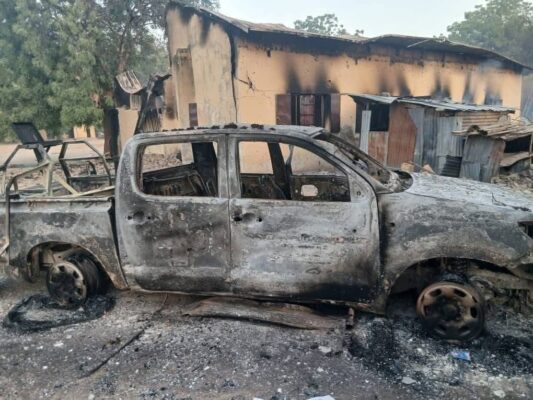
Security sources confirmed that Lieutenant Colonel Umar Farouq, who commanded military operations in Kukawa Local Government Area, died after being critically wounded during an assault on the Kukawa military base. The insurgents reportedly overran the base, burned facilities, destroyed military vehicles, and carted away weapons and ammunition, exposing vulnerabilities in force protection despite years of counter-insurgency operations.
The violence extended beyond military targets. Insurgents attacked Dalwa community in Konduga Local Government Area, burning homes and forcing residents to flee. The town had only recently been resettled by the Borno State government as part of post-conflict recovery efforts, making the attack particularly devastating for communities attempting to rebuild their lives and livelihoods. Separate attacks on several military bases across Borno, including Konduga and Banki junction, led to additional casualties among officers and soldiers.
For Nigeria’s economy, each such attack compounds the cumulative damage inflicted on the northeast’s productive capacity. Borno State, once a significant producer of sorghum, millet, maize, and groundnuts, has seen agricultural output plummet as farmers abandon their lands due to persistent insecurity. The destruction of Dalwa, a community specifically targeted for resettlement, represents not only humanitarian tragedy but the waste of government resources invested in post-conflict reconstruction.
The attacks also carry significant fiscal implications. Each fallen officer represents an investment in training, equipment, and support that is lost, requiring replacement and retraining that imposes costs on the defence budget. The destruction of military vehicles and facilities adds to replacement costs, while weapons captured by insurgents will be used in future attacks, perpetuating the cycle of violence. Nigeria’s defence expenditure has increased substantially in recent years, yet the persistent ability of insurgent groups to mount large-scale attacks suggests that simply increasing spending may be insufficient without corresponding improvements in strategy, intelligence, and civil-military coordination.
The targeting of recently resettled communities is particularly significant economically. The Borno State government has invested substantial resources in encouraging displaced persons to return home, including infrastructure rehabilitation, livelihood support, and security guarantees. When communities like Dalwa are attacked, it undermines confidence in the entire resettlement programme, discouraging returns and perpetuating displacement. Each person who remains in internally displaced persons camps represents ongoing humanitarian costs and lost economic productivity.
The attacks also disrupt the upcoming farming season, which typically begins with land preparation in March and April. Farmers in affected areas face impossible choices: risk returning to their fields and encountering insurgents, or abandon their livelihoods and remain dependent on humanitarian assistance. Each farmer who chooses displacement represents lost agricultural output, reduced food availability, and increased pressure on already strained humanitarian resources.
For Nigeria’s broader economy, the cost of continued insecurity in the northeast is measured in billions of naira in lost agricultural output, millions of displaced persons requiring humanitarian support, and countless lives disrupted or destroyed. The Kukawa and Dalwa attacks demonstrate that despite territorial gains against insurgent groups, the underlying conditions that fuel conflict—poverty, marginalisation, weak governance, and lack of economic opportunity—remain largely unaddressed.
Sustainable peace requires not only military operations but comprehensive strategies that provide alternative livelihoods, strengthen local governance, and rebuild the social fabric of affected communities. Until such strategies are implemented effectively, attacks like those in Borno will continue to undermine economic recovery and perpetuate the cycle of violence that has crippled the northeast for more than a decade.