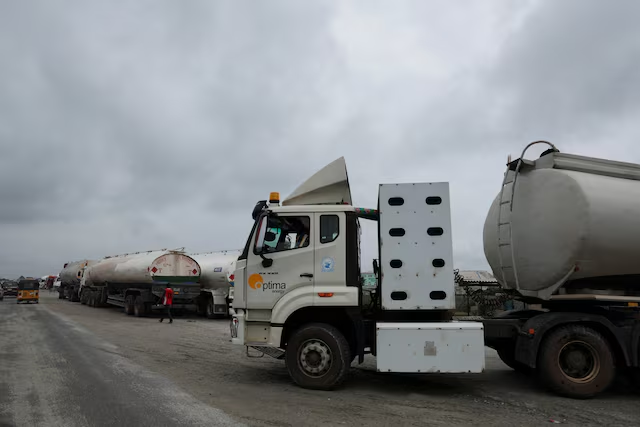

Dangote Refinery has announced plans to significantly expand its refining capacity from 650,000 barrels per day to 1.4 million barrels per day within the next three years, a move expected to further transform Nigeria’s energy landscape and strengthen regional fuel supply.
According to the company’s leadership, the expansion will follow a “replication strategy” that mirrors the existing refinery design, allowing Dangote to bypass lengthy redesign and regulatory delays that typically slow down large-scale energy projects. By replicating proven systems, the company aims to reduce construction risk and accelerate project timelines.
Preparatory work for the expansion is already underway. Long-lead equipment procurement has commenced, while the designated site for the new units has been reclaimed, raised above flood levels, and stabilised to support rapid construction. These early steps are intended to ensure smoother execution once full-scale construction begins.
Industry observers say the expansion could further reduce Nigeria’s dependence on imported refined petroleum products, which has historically placed heavy pressure on foreign exchange reserves. With domestic fuel demand rising and regional export opportunities expanding, a larger Dangote Refinery could position Nigeria as a major refining hub in Africa.
The refinery’s current operations have already begun reshaping fuel supply chains, contributing to increased local availability of petrol, diesel, and aviation fuel. An expanded capacity is expected to deepen these gains while enhancing Nigeria’s energy security.
However, analysts caution that the success of the expansion will depend on crude supply consistency, regulatory stability, and infrastructure support, including pipelines and port logistics. Global oil market dynamics and energy transition policies could also influence long-term returns.
Despite these risks, the expansion signals strong investor confidence in Nigeria’s energy sector and underscores the role of private capital in addressing structural supply challenges.