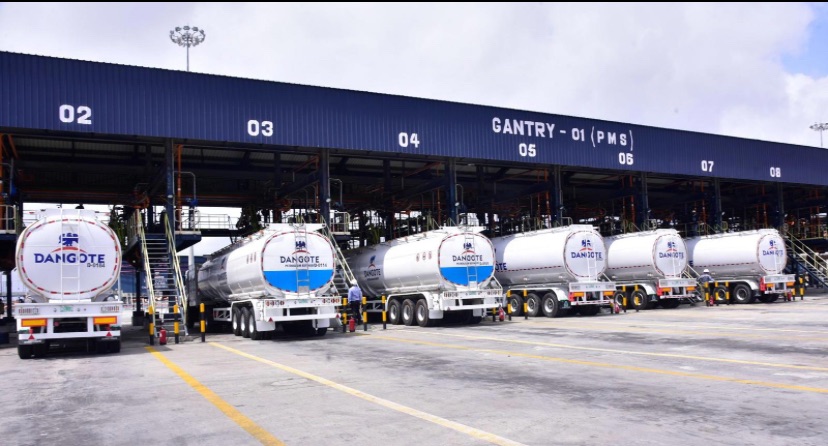

The Dangote Petroleum Refinery has announced another reduction in the prices of petroleum products, lowering the gantry prices of diesel and aviation fuel as global crude oil prices continue to decline.
According to industry data obtained from Petroleumprice.ng, the refinery reduced the ex-depot price of Automotive Gas Oil (diesel) by N100 per litre, bringing it down from N1,700 to N1,600 per litre. The price of Aviation Turbine Kerosene, commonly known as jet fuel, was also reduced by N100 per litre, dropping from N1,550 to N1,450 per litre.
The latest adjustment comes just hours after the refinery announced a reduction in the price of Premium Motor Spirit (petrol), cutting the gantry price by N75 per litre from N1,250 to N1,175.
Industry observers attribute the downward review to falling global crude oil prices following easing tensions in the Middle East. The recent improvement in relations between the United States and Iran has helped calm fears of supply disruptions, leading to a decline in international oil prices.
As a result, private fuel depot operators have also begun adjusting their prices in an effort to remain competitive. Data from Petroleumprice.ng showed that Rainoil slightly reduced its jet fuel price from N1,553 to N1,550 per litre. Meanwhile, diesel prices at major Lagos depots, including African Terminal, Sahara, Ibeto and Duport, averaged around N1,660 per litre.
The global oil market has continued to experience a downward trend. Brent crude, which serves as the international benchmark for oil prices, fell from about $83 per barrel on Monday to approximately $78 per barrel on Tuesday. This marks the first time in nearly three months that Brent crude has traded below the $80 mark.
The current price is significantly lower than the levels recorded during the height of the Middle East conflict when crude oil prices surged to around $120 per barrel. Before the crisis began, Brent crude traded below $70 per barrel.
Industry stakeholders believe the decline in crude prices could lead to further reductions in fuel costs if geopolitical tensions remain under control.
Speaking on the development, the National Publicity Secretary of the Independent Petroleum Marketers Association of Nigeria (IPMAN), Chinedu Ukadike, said Nigerians may soon begin to feel the impact of the reductions. He explained that many fuel marketers are still selling products purchased at older, higher prices and therefore cannot immediately lower pump prices without incurring losses.
Ukadike noted that whenever the Dangote refinery announces a new pricing structure, marketers usually pause fresh loading activities to clear existing stock before purchasing products at the new rates. He expressed confidence that retail prices would begin to adjust as fresh supplies enter the market.
However, concerns remain among some stakeholders. The spokesperson for the Petroleum Products Retail Outlet Owners Association of Nigeria (PETROAN), Joseph Obele, argued that imported petroleum products currently appear more competitive than some locally refined products. He urged regulators to approve additional import licences to encourage competition.
Many Nigerians have also taken to social media to express dissatisfaction, arguing that the recent reductions are not substantial enough when compared to the sharp decline in global crude oil prices.
Despite the concerns, analysts believe the latest price cuts signal a positive direction for the energy sector and could eventually provide some relief to consumers if the trend in global oil prices continues.