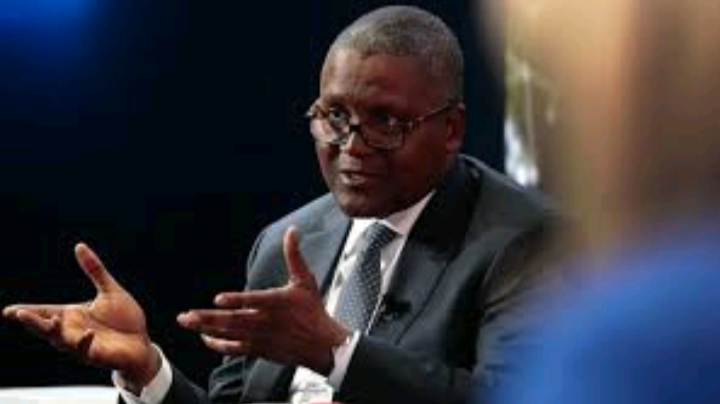

Aliko Dangote has stepped forward with tough questions about how the head of a key Nigerian petroleum agency paid for his children’s education abroad, stirring public concern over accountability and fairness in a time of economic strain.
The billionaire industrialist wants clarity on how the Chief Executive Officer of the Nigerian Midstream and Downstream Petroleum Regulatory Authority (NMDPRA), Engr. Farouk Ahmed, managed to fund $5 million in school fees for his children in Switzerland, a sum that many Nigerians see as out of step with average public servants’ earnings.
Reports from civic groups, lawyers, and civil society organisations claim Ahmed’s four children were educated at some of the world’s most expensive schools, with annual costs for each child allegedly exceeding six figures in U.S. dollars.
These figures quickly drew criticism from activists and members of the public who argue that such lavish spending is hard to justify for someone whose known income comes mainly from a government salary.
Calls for transparency have not been limited to Dangote alone. Several civil society organisations have pushed for a full public accounting of how the tuition was funded, including whether it came from declared personal assets or other legal income sources.
The Coalition for Transparency, one of the leading advocacy groups, pointed to the high annual fees at the Swiss institutions attended by the children. The group’s spokespeople accuse Ahmed of failing to explain how he could afford such spending without clear documented wealth beyond his public office.
In their view, the disconnect between these elite education expenses and the economic reality faced by many ordinary Nigerians, struggling with cost of living pressures, inflation, and limited access to quality education highlights deeper issues of inequality and accountability.
Opposition voices have been loud. Lawyers and civic activists petitioned the Attorney General of the Federation to begin formal investigations into the alleged misuse of funds, with some protests targeting enforcement agencies and the offices responsible for anti-corruption oversight.
At the centre of these demands is a simple yet powerful question: **how could a public servant’s salary justify spending millions of dollars on exclusive foreign education without apparent external income?
While Ahmed has not publicly detailed the sources of these funds, his office issued advertisements in several national newspapers defending his integrity. Critics dismissed the ads as vague and “diversionary,” asking for clear financial disclosure instead.
“Engr. Ahmed’s lavish spending is a dagger in the heart of Nigeria’s struggling masses,” one civil society leader said, pointing to the contrast between elite schooling costs and the daily hardships many Nigerians face.
Protesters and civic groups have also accused the NMDPRA of sidestepping questions and failing to provide transparency on asset declarations, financial records or whether any investments, inheritances, or lawful business ventures could explain the alleged spending.
The controversy has sparked debates nationwide about governance and ethical standards, especially for top public officials whose decisions affect regulatory policy across Nigeria’s critical oil and energy sectors.
In response to the outcry, some groups have urged the Independent Corrupt Practices Commission (ICPC), Economic and Financial Crimes Commission (EFCC), and the Code of Conduct Bureau (CCB) to launch coordinated investigations and, if warranted, prosecute any wrongdoing.
Amid these tensions, Dangote’s demand for answers taps into broader public frustration over economic pressures. Nigeria’s economy has struggled with debt service demands, inflation and uneven growth, making issues of public trust and fiscal responsibility more urgent than ever.
Nigeria’s economic landscape, marked by slow growth and rising public debt, fuels frustration over perceived elite privileges. At a time when millions of Nigerians face high inflation and limited access to quality education, the controversy over a public official’s alleged $5 million schooling bill deepens debates on fiscal transparency and equitable governance.