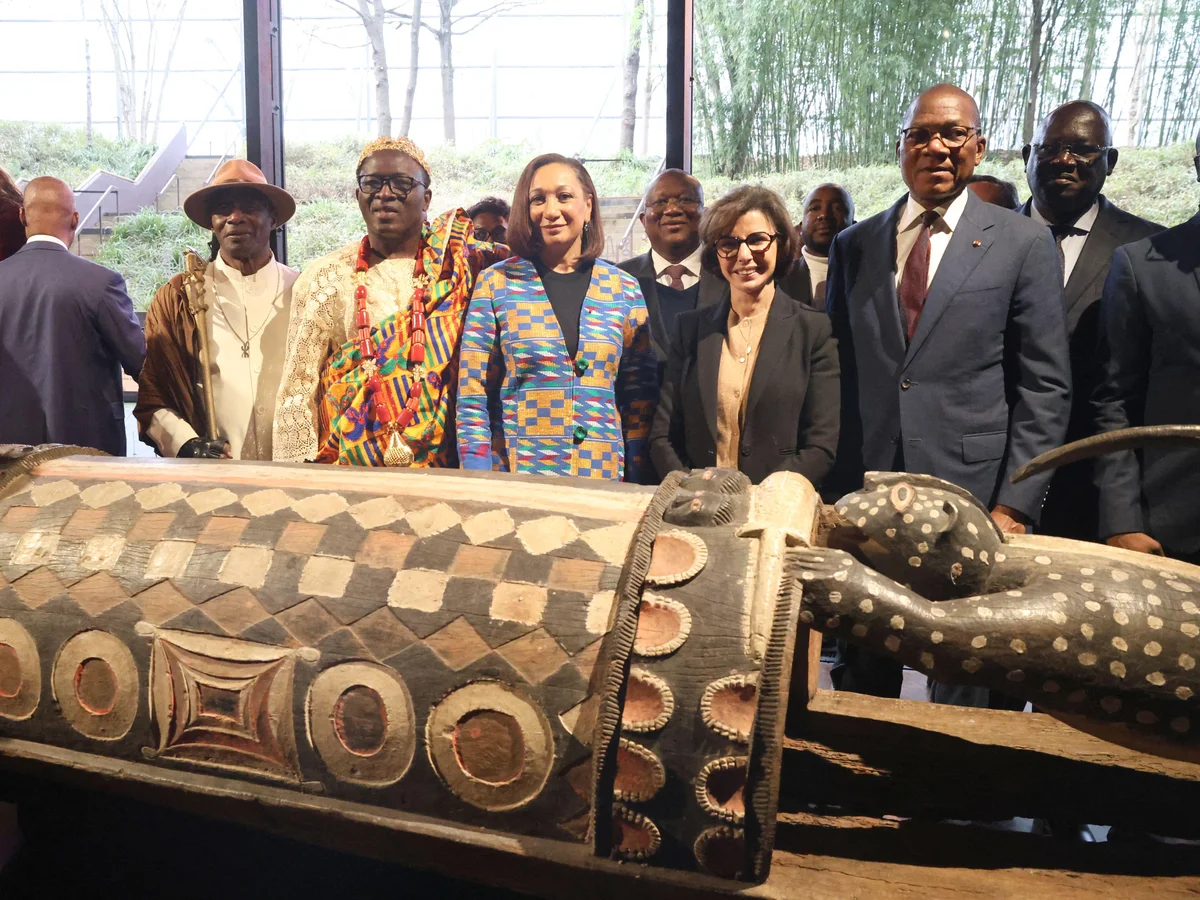

Côte d’Ivoire has received the historic Djidji Ayôkwè talking drum, more than a century after it was taken to France during the colonial era. The instrument was officially welcomed on March 13, 2026, during a ceremony at Félix Houphouët‑Boigny International Airport, led by Culture Minister Françoise Remarck.
Officials described the return as a powerful moment of justice, memory and cultural renewal for the country. The drum, a symbol of communication, peace and social cohesion among local communities, will first undergo a short acclimatisation period in a secure facility before being displayed to the public at the Musée des Civilisations de Côte d’Ivoire.
The restitution follows a transfer agreement signed in February at the Musée du quai Branly – Jacques Chirac in Paris. Leaders including President Alassane Ouattara and French President Emmanuel Macron supported the process, which could pave the way for the return of more African cultural artifacts held in European museums.
For Côte d’Ivoire’s cultural economy, the return of significant artifacts carries multiple benefits. It strengthens national identity, supports the development of museum tourism, and reinforces the country’s soft power on the continental stage. The drum’s display is expected to attract visitors to the Musée des Civilisations, generating revenue and supporting the broader cultural sector.
The restitution also carries symbolic weight for the broader debate about colonial-era artifacts held in Western museums. Côte d’Ivoire’s successful negotiation for the drum’s return provides a template for other African nations seeking the repatriation of cultural heritage, potentially reshaping the landscape of cultural ownership and museum practice.