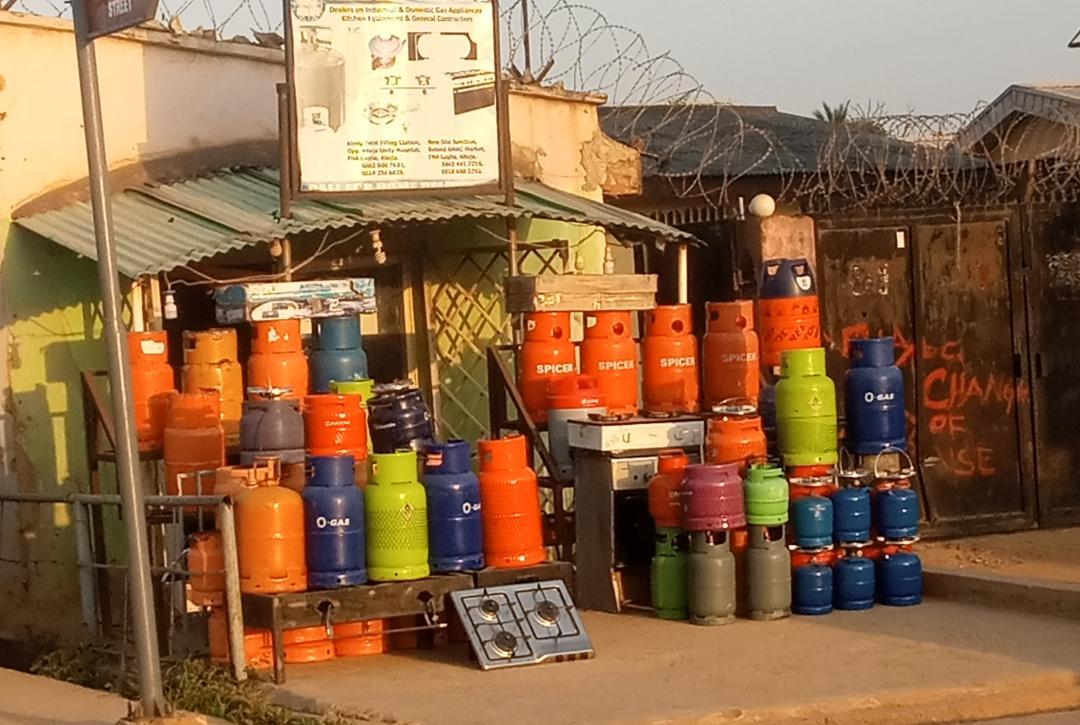

Retailers and consumers of liquefied petroleum gas (LPG), commonly known as cooking gas, are reporting improved availability and more stable prices across several parts of the country, sparking cautious optimism in the market.
A recent market survey indicates that LPG prices have moderated toward the end of 2025, with retail rates now ranging between ₦1,000 and ₦1,400 per kilogramme, depending on location, seller, and logistics costs. This marks a significant improvement from the acute scarcity experienced between September and October last year.
Consumers in Lagos, Ogun, Oyo, and neighbouring states confirmed that they recently purchased cooking gas within the ₦1,050 to ₦1,400 range. Some major marketers were also observed selling directly to consumers at prices as low as ₦900 per kilogramme.
The current price levels contrast sharply with the spike recorded in October, when LPG prices surged to nearly ₦2,000 per kilogramme in some areas. That increase followed an industrial dispute between the Dangote refinery and the Petroleum and Natural Gas Senior Staff Association of Nigeria (PENGASSAN), which resulted in the shutdown of key gas facilities.
Despite the recent relief, many households remain hopeful that prices will drop further below ₦1,000 per kilogramme in the new year, arguing that lower costs are critical to promoting clean cooking and reducing reliance on firewood and kerosene.
Commenting on the situation, Ayobami Olarinoye, National Chairman of the Liquefied Petroleum Gas Retailers branch of the Nigeria Union of Petroleum and Natural Gas Workers, said the market has shown signs of stabilisation, with some off-takers now accessing gas supplies from Apapa, Lagos.
According to him, street-level retail prices currently fall between ₦1,300 and ₦1,400 per kilogramme, while filling stations and gas plants may offer lower rates due to reduced logistics expenses. He added that retailers purchase LPG from major marketers at prices ranging from ₦960 to ₦1,050 per kilogramme, noting that sellers offering gas below ₦1,000 are typically plant owners who sell directly to end users.