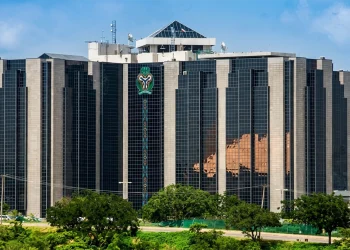

The Central Bank of Nigeria (CBN) has directed banks to restrict access to certain banking services for large borrowers with non-performing loans as part of efforts to strengthen credit discipline and protect the stability of the financial system.
The directive was contained in a letter dated March 12, 2026, and signed by Olubukola Akinwunmi, Director of Banking Supervision at the apex bank.
According to the CBN, borrowers whose loan facilities have been classified as non-performing and recorded in the Credit Risk Management System or any licensed private credit bureau will no longer be eligible to access additional credit facilities from banks.
The regulator said the measure is aimed at reducing risks associated with large-ticket borrowers whose loan defaults could pose threats to the stability of the banking sector.
“Effective immediately, all financial institutions shall restrict further credit access. Any large-ticket obligor with a non-performing facility recorded in the CRMS and/or any licensed private credit bureau shall not be granted additional credit facilities,” the CBN said.
The restriction also extends beyond traditional loans. According to the directive, affected borrowers will no longer be eligible for certain banking services or contingent liabilities such as bankers’ confirmations, letters of credit, performance bonds, or advance payment guarantees.
The CBN explained that the restrictions apply to borrowers classified as large-ticket obligors under Clause 3.2(d) of its Prudential Guidelines for Deposit Money Banks.
Large-ticket obligors are defined as borrowers whose total credit exposure across the banking system exceeds the Single Obligor Limit and whose obligations could significantly affect a bank’s Capital Adequacy Ratio or pose broader systemic risks.
Banks have also been instructed to obtain additional realisable collateral from such borrowers to better secure their existing loan exposures.
The apex bank said the classification of affected borrowers will rely on credit data captured in the Credit Risk Management System and information provided by licensed private credit bureaus.
This is not the first time the regulator has issued a directive targeting loan defaulters. In June 2024, the CBN introduced a similar policy restricting borrowers with non-performing loans from accessing additional credit facilities.
According to the central bank, the latest directive reinforces earlier measures aimed at curbing credit abuse and strengthening risk management across the banking industry.
The regulator added that it will closely monitor compliance by financial institutions and warned that violations could attract sanctions under the Banks and Other Financial Institutions Act 2020.
The directive comes amid rising concerns about the level of bad loans in the banking sector.
Recent data from the CBN shows that Nigeria’s banking industry recorded an increase in non-performing loans in 2025 after the regulator ended pandemic-era regulatory forbearance that allowed banks to restructure troubled loans without classifying them as non-performing.
As a result, the sector’s Non-Performing Loans (NPL) ratio rose to about 7 percent, exceeding the prudential benchmark of 5 percent.