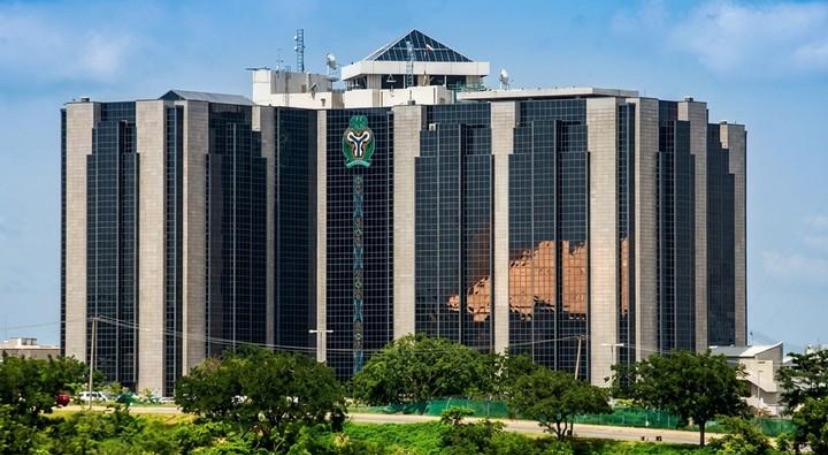

Nigeria’s cash-based economy remains strong despite ongoing efforts by the Central Bank of Nigeria (CBN) to encourage digital payments and increase financial inclusion.
New data released by the CBN revealed that the amount of cash held outside the banking system rose to N5.19 trillion in May 2026. The figure represents an increase of N109.34 billion, or 2.15 percent, compared to the N5.08 trillion recorded in April 2026.
On a year-on-year basis, cash outside banks increased by N559.16 billion from N4.63 trillion in May 2025, highlighting the continued preference of many Nigerians to keep money outside formal banking channels.
The report also showed that total currency in circulation rose from N5.65 trillion in April to N5.69 trillion in May 2026. This reflects an increase of N43.59 billion within one month. Compared to the same period last year, currency in circulation grew by N675.19 billion, representing a 13.46 percent increase.
A closer look at the figures shows that 91.27 percent of all currency circulating in the economy was held outside banks in May 2026. This was higher than the 90.03 percent recorded in April, although slightly lower than the 92.40 percent recorded in May 2025.
The data suggests that while there has been some improvement over the past year, Nigeria remains heavily dependent on cash transactions. This trend continues despite the rapid growth of electronic payment platforms, mobile banking services, fintech innovations, agency banking networks, and government efforts to promote a cashless economy.
Financial analysts believe that the large volume of money kept outside banks may affect the effectiveness of monetary policy. When individuals and businesses hold cash instead of depositing it in banks, financial institutions have fewer funds available for lending and investment activities. This can reduce the overall flow of credit within the economy and limit economic expansion.
The report further revealed that bank reserves declined during the month. Reserves dropped by N840.77 billion, or 2.43 percent, from N34.60 trillion in April to N33.76 trillion in May 2026.
However, on a yearly basis, bank reserves remained stronger than they were in 2025. Compared to May last year, reserves increased by N2.90 trillion, representing a growth of 9.39 percent. This indicates that the banking sector still maintains relatively strong liquidity despite the high level of cash circulating outside formal financial institutions.
Historical data showed that currency outside banks stood at N5.41 trillion in December 2025 before falling gradually to N5.25 trillion in January and N5.19 trillion in February 2026. The figure later dropped further to N5.08 trillion in April before rising again in May.
To address the challenge, the CBN recently unveiled its Nigeria Payments System Vision 2028. The initiative aims to bring more Nigerians into the formal financial system and accelerate the adoption of digital payment solutions.
CBN Governor Olayemi Cardoso announced plans to onboard an additional 50 million Nigerians into the financial system by 2028. He also disclosed the bank’s target of reducing cash held outside banks to less than 40 percent of total currency in circulation within the same period.
Experts say achieving this goal could improve banking sector liquidity, strengthen lending activities, enhance financial inclusion, and make monetary policy more effective. As digital payment adoption continues to grow, attention will remain focused on whether Nigeria can successfully reduce its dependence on cash and build a more digitally driven economy.