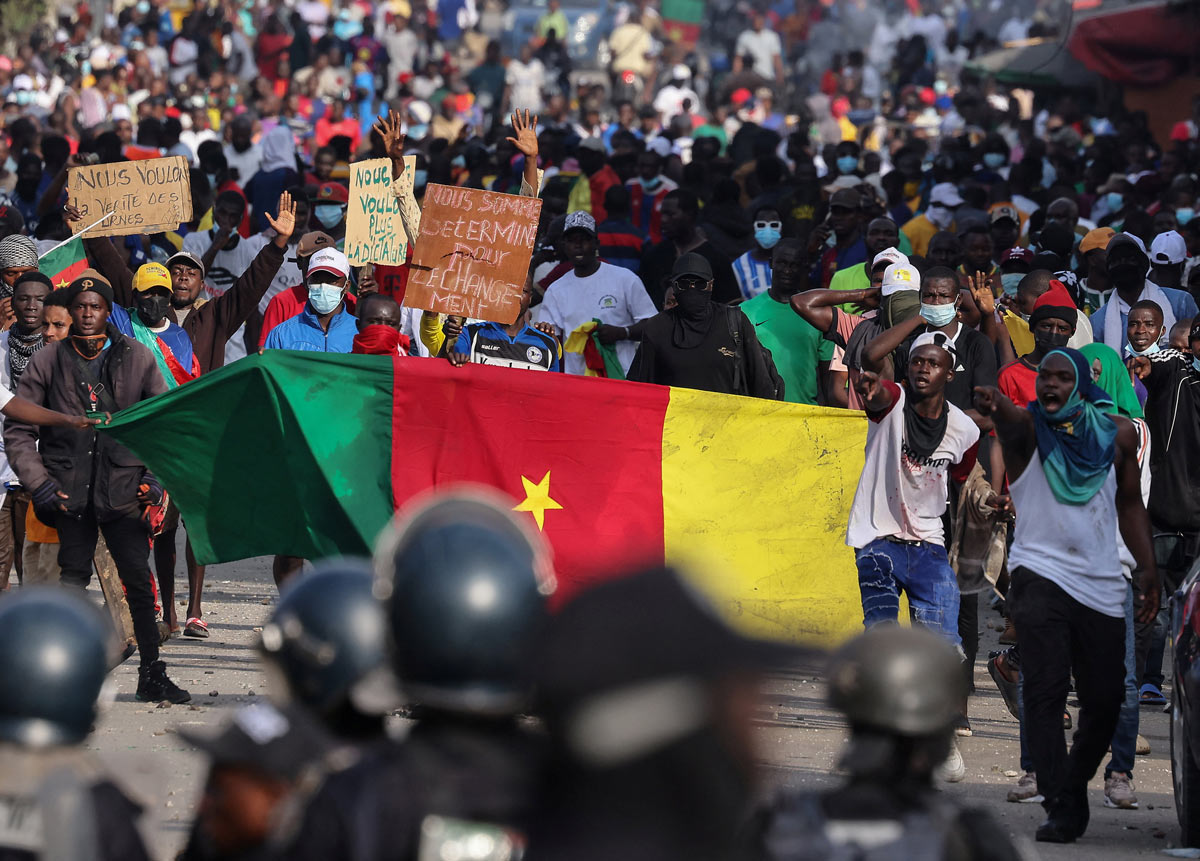

The re-election of Cameroon’s long-serving president, Paul Biya, has once again cast a shadow over the country’s fragile political stability and economic outlook. At least 48 civilians have reportedly been killed in violent clashes between security forces and protesters following the disputed October 25 presidential election, which handed Biya an eighth term in office. The unrest has reinforced concerns about democratic decline in Central Africa’s second-largest economy and raised fears of worsening economic disruptions in an already fragile environment.
At 92, Paul Biya remains the world’s oldest serving head of state, having ruled Cameroon since 1982. The latest election results, giving him 53.66 per cent of the vote against 35.19 per cent for opposition candidate Issa Tchiroma Bakary, were largely expected. Yet the announcement triggered widespread anger, particularly among younger urban voters who viewed the process as neither credible nor competitive. Bakary’s disqualification of the results and self-declaration as the legitimate winner sparked protests across several cities, notably in Douala and Garoua, where tensions between security forces and demonstrators quickly escalated into violence.
The United Nations estimates that nearly half of the deaths occurred in the Littoral region, home to Douala, the country’s commercial capital and main seaport. Three members of the gendarmerie also died during the clashes. The government has so far refrained from commenting publicly on the events or issuing an official death toll, a silence that risks fuelling further resentment among opposition supporters.
Beyond the immediate human toll, the unrest carries potentially severe economic consequences. Cameroon’s economy, which depends heavily on agriculture, oil, and trade through the Douala seaport, has long been constrained by governance challenges and periodic instability. The current turmoil has disrupted transport routes and slowed port activity, both of which are vital to the economy not only of Cameroon but also of its landlocked neighbours, such as Chad and the Central African Republic, which rely on Douala for imports.
The timing of the crisis is particularly concerning. Cameroon is grappling with inflationary pressures driven by global energy and food prices, and its public finances are already strained. The government has been implementing fiscal reforms under an International Monetary Fund (IMF) programme aimed at improving debt sustainability and public investment efficiency. However, renewed political unrest risks deterring investors and delaying structural reforms. Foreign investors, already wary of the country’s security situation in the Anglophone regions, are likely to view the post-election violence as further evidence of systemic instability and governance risks.
Moreover, the humanitarian situation could worsen if protests persist or if repression intensifies. The use of live ammunition and excessive force by security forces has previously drawn condemnation from human rights groups, and a prolonged cycle of unrest would undermine government credibility domestically and abroad. The fear among many Cameroonians is that the current crisis may deepen existing fractures between the government and opposition supporters, as well as between urban and rural populations.
Biya’s renewed mandate, though constitutionally permitted following the 2008 removal of term limits, continues to divide public opinion. His decades-long tenure has brought a measure of continuity, but it has also entrenched a political culture resistant to reform. The opposition’s exclusion from the political process, coupled with low trust in electoral institutions, points to the erosion of democratic norms in a country once considered relatively stable within the volatile Central African subregion.
The voter turnout of about 50 per cent also highlights growing apathy and disillusionment among the electorate. Many voters, especially the youth, view elections as predetermined and governance as disconnected from their socio-economic realities. Unemployment remains high, particularly among young people, while inequality and corruption persist. These grievances, combined with the rising cost of living, form the backdrop of the current unrest and underscore the risk of broader social instability.
Regionally, Cameroon’s unrest could have spillover effects. As an economic hub in Central Africa, any sustained disruption to its ports, roads, and energy exports could affect regional trade flows and increase logistical costs for neighbouring states. Furthermore, the government’s focus on internal dissent could divert attention and resources from its ongoing security challenges in the Far North, where Boko Haram insurgents continue to pose threats, and in the Anglophone regions, where separatist tensions persist despite government crackdowns.
Internationally, Biya’s government faces renewed scrutiny. Western governments, particularly the United States and European Union members, have in recent years linked development aid and trade relations to governance and human rights performance. The perception of another flawed election could therefore strain diplomatic relations and complicate access to external financing, which Cameroon relies on for infrastructure and budgetary support.
In the medium term, stability will depend on how the government handles post-election grievances. Efforts to suppress dissent through force are likely to entrench opposition further, whereas limited concessions, such as electoral reforms or dialogue with civil society, could help ease tensions. However, such reforms appear unlikely under Biya’s entrenched administration, which has historically responded to political challenges through coercion rather than consensus-building.
As Biya prepares to be sworn in for another five-year term, Cameroon faces a familiar dilemma: an ageing leader presiding over a youthful population that is increasingly disillusioned with politics and constrained by economic hardship. Unless the government takes credible steps to restore confidence in governance and improve living conditions, the country risks a prolonged period of stagnation, both politically and economically.
In the end, the re-election of Paul Biya may bring short-term continuity, but it also reinforces the long-term uncertainties that have defined Cameroon’s political and economic trajectory for decades.