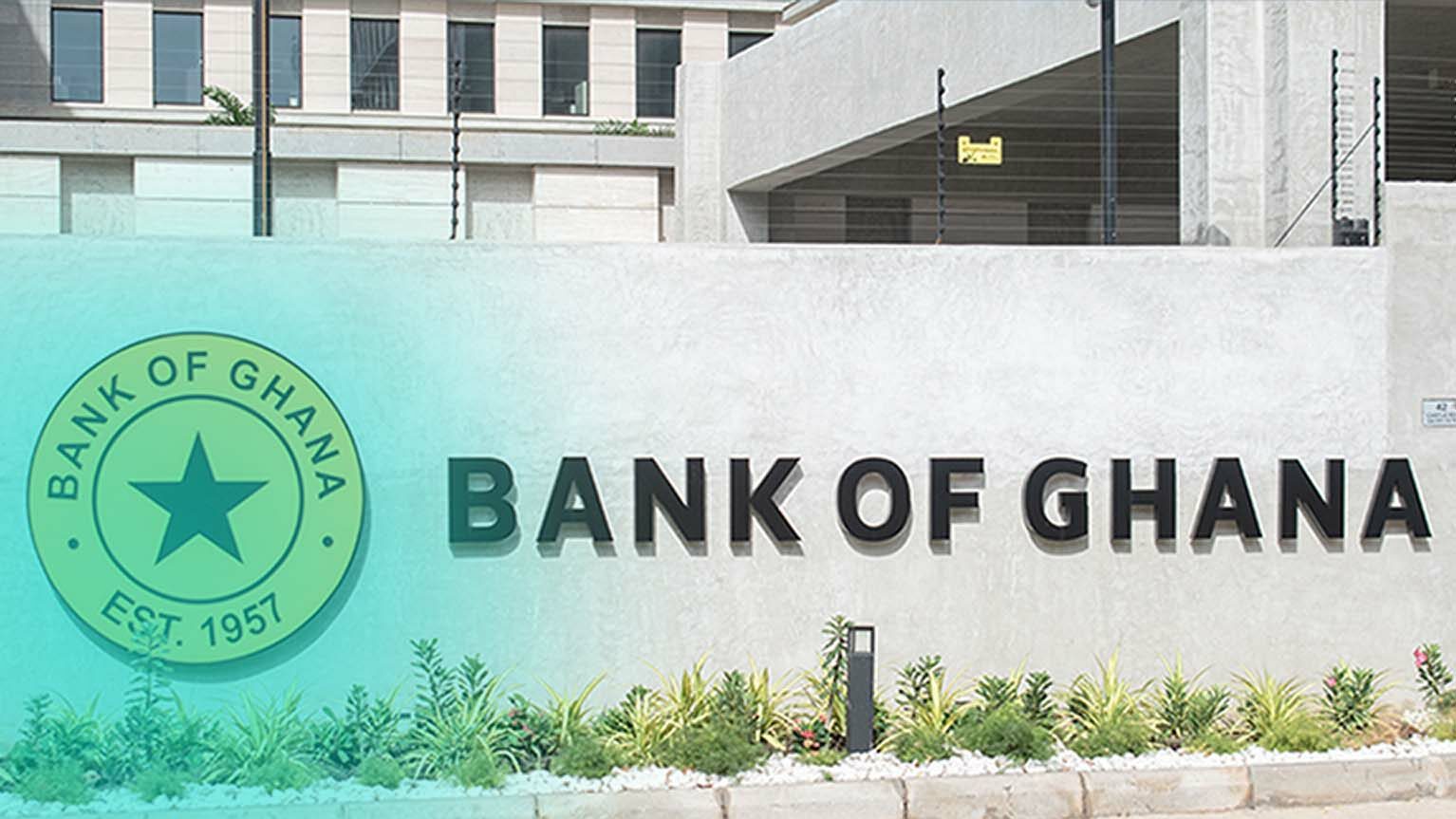

Ghana’s central bank cut its benchmark interest rate by 350 basis points to 18 percent on Wednesday, a deeper reduction than markets anticipated and the latest sign that policymakers believe the country is firmly emerging from one of its most turbulent economic periods in decades. The move marks the fourth rate cut this year and brings total easing in 2025 to 1,000 basis points, following earlier reductions in July, September, and another record cut just two months ago.
Economists surveyed by Reuters had expected a 250-basis-point cut, but the Bank of Ghana opted for a more aggressive move as inflation dropped sharply and broader macroeconomic indicators strengthened. Governor Johnson Asiama said the monetary policy committee reached its decision after noting “broadly improved” economic fundamentals, driven largely by the dramatic fall in inflation from 54 percent in January 2023 to 8 percent in October 2025. The bank now expects inflation to remain anchored around its 8 percent target range through the first half of 2026, a projection that reflects heightened confidence in Ghana’s policy trajectory.
The scale of the rate cut underscores how quickly Ghana’s economic landscape has shifted since the government entered an International Monetary Fund programme in 2023 to stabilise public finances, restructure debt and restore investor confidence. A combination of fiscal consolidation, reduced exchange rate volatility, and stronger external buffers has helped ease price pressures, reversing a two-year period marked by record inflation, currency depreciation and supply chain disruptions.
By lowering the benchmark rate to 18 percent, the Bank of Ghana aims to support credit expansion and stimulate growth in non-extractive sectors such as manufacturing, services and agriculture. High borrowing costs in previous years had suppressed private-sector investment, while elevated government yields crowded out corporate lending. A more accommodative rate environment could help revive business activity and create space for banks to expand credit to small and medium-sized enterprises, although analysts caution that the transmission of monetary policy in Ghana has traditionally been slow due to structural rigidities in the financial system.
Governor Asiama also announced a shift in the bank’s liquidity management operations, confirming a return to the 14-day bill as the primary tool for open market activities. The move is expected to simplify short-term market operations and improve monetary policy signalling, helping financial institutions better anticipate liquidity conditions. This adjustment forms part of broader efforts to deepen Ghana’s domestic debt market following the completion of the country’s domestic debt restructuring in 2023.
Reaction from analysts has been largely positive. Standard Chartered’s chief economist for Africa and the Middle East, Razia Khan, said the bank’s decision reflected a “measured” approach that prioritises long-term macroeconomic stability rather than short-term political or growth pressures. She noted that the rapid decline in inflation created room for easing, but the central bank appears cautious enough to avoid undermining recent gains.
Still, risks remain. Ghana’s medium-term stability hinges on disciplined fiscal management, ongoing structural reforms and maintaining a stable currency. With global financial conditions still uncertain and commodity markets volatile, the central bank must balance the need to support growth against the risk of renewed inflationary pressures. A sudden increase in food prices, supply shocks or exchange rate weakness could challenge the inflation outlook and limit further rate cuts.
For now, the sharper-than-expected easing sends a strong signal that policymakers believe Ghana has entered a new phase of recovery. If inflation continues to hold within the target band and fiscal consolidation remains on track, the Bank of Ghana may gradually shift its focus to supporting a broader economic rebound after two years of austerity and adjustment.
Wednesday’s decision reinforces Ghana’s emergence as one of the more stable macroeconomic environments in West Africa, positioning the country to rebuild investor confidence, attract portfolio inflows and restore momentum in sectors hit hardest by the previous inflation surge.