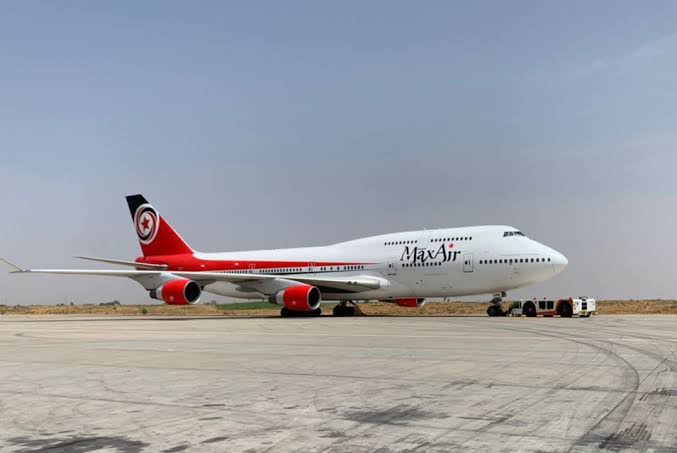

Nigeria’s aviation sector has stepped back from a potential operational disruption after aviation ground handling companies lifted their suspension of services to Nigerian carrier Max Air following partial debt payments and renewed settlement negotiations.
The suspension, which had threatened to disrupt flight schedules and passenger movement across key domestic routes, was initially imposed over unpaid service charges owed by the airline to ground handling firms responsible for passenger processing, baggage management, aircraft servicing coordination, and ramp operations.
Industry sources indicate that the decision to restore services followed intensive negotiations between Max Air management and representatives of ground handling operators. While the airline has reportedly made partial payments toward its outstanding obligations, stakeholders confirm that discussions are ongoing to resolve remaining balances under a structured repayment plan.
The resolution offers temporary relief to Nigeria’s already strained aviation ecosystem, where airlines frequently grapple with foreign exchange volatility, high operational costs, and liquidity pressures that impact service providers across the value chain. Ground handling firms, for their part, have increasingly adopted stricter enforcement measures in response to mounting industry-wide receivables.
Analysts note that the episode underscores persistent structural weaknesses in Nigeria’s domestic aviation financing model, where delayed settlements between airlines and service providers can quickly escalate into operational disruptions affecting thousands of passengers.
The lifting of the suspension is expected to stabilize short-term flight operations, particularly on routes where Max Air maintains significant passenger demand. However, aviation stakeholders caution that the underlying financial dispute has not been fully resolved, leaving open the possibility of renewed tensions if repayment commitments are not honoured.
Broader industry observers say the development highlights the fragile balance between airline liquidity constraints and the operational dependency on third-party service providers. Without improved credit discipline and stronger regulatory oversight of commercial obligations, similar disputes could reoccur and threaten service reliability across the sector.
For now, the restored cooperation between both parties signals a pragmatic compromise aimed at preventing further disruption, even as negotiations continue behind closed doors.