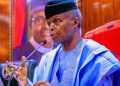

Former Vice President Atiku Abubakar, a presidential aspirant of the African Democratic Congress, has declared his readiness to support whoever emerges as the party’s flag bearer in the 2027 presidential election, signalling a commitment to party cohesion regardless of the primary outcome. Atiku also dismissed claims that the Independent National Electoral Commission could undermine the ADC, noting that the party has continued to attract members nationwide despite the electoral body’s recent decision to freeze recognition of the party’s leadership.
Speaking in an interview with DW Hausa, Atiku alleged that vested interests were behind the party’s current situation, arguing that its growing popularity had made it a target. The INEC had on Wednesday said it would cease further communication with all leadership factions of the ADC and would not monitor the national convention of the party slated for April 14, based on a Court of Appeal ruling directing all parties to maintain the status quo pending the determination of a substantive suit. The ADC has rejected the move, accusing INEC of wrongly interpreting the ruling, and has vowed to go ahead with its planned convention and other party activities.
On the party’s presidential ticket, Atiku said he would stand firmly behind whoever emerges through the process. “We will support and endorse whoever emerges as the flag bearer. How many are we (presidential aspirants), three or four? In the PDP, more than ten of us contested,” he said. This commitment to support the eventual candidate, regardless of whether it is himself or another aspirant, is significant in a political environment where defections and internal saboteurs often undermine party unity after contested primaries.
The former Vice President stressed that the ADC is youth friendly, noting that the party remains committed to youth and women inclusion. “The youths have taken over the party. Most of those seeking elective positions, from councillor to state assembly, national assembly and House of Representatives, are young people. We have always said our party belongs to youths and women. Our role is to create the opportunity and hand it over to them,” he said. Asked if he could support a youth as presidential candidate should the party field one, Atiku said, “Yes, why not.”
This positioning reflects a strategic calculation by Atiku, who at 79 years old would be seeking the presidency again after multiple attempts. By emphasising youth inclusion and expressing willingness to support a younger candidate, he may be seeking to broaden his appeal beyond older voters who remember his tenure as Vice President. It also aligns with broader political currents in Nigeria, where young voters have become increasingly influential and where the “Not Too Young To Run” movement has reduced age barriers for elective office.
Atiku expressed confidence that Nigerians were ready for change, citing worsening economic and security conditions. “We are confident that Nigerians are yearning for change. They are ready for it. They are being pushed to the wall and are prepared to do even more than they did in the previous elections,” he said. The former Vice President linked rising insecurity, particularly in the North, to youth unemployment and poor access to education.
“Insecurity is more severe in the northern states, largely due to youth unemployment and lack of access to education. When you go round the region, you see that education is not receiving the attention it deserves. It has been relegated. Governments have not ensured that children enrol in school, and even when they graduate, there are no jobs or business opportunities. I have never witnessed a period like this in Nigeria,” he said. Atiku further accused the government of tolerating corruption. “There is also embezzlement on the part of government and corruption is rampant. The government has turned a blind eye because it is involved,” he said.
From a political economy perspective, Atiku’s defection to the ADC and his positioning within the party represent a significant realignment in Nigeria’s opposition landscape. The former Vice President was the presidential candidate of the Peoples Democratic Party in 2019 and 2023, losing to President Bola Tinubu in the most recent election. His move to the ADC, a smaller party, suggests a calculation that the PDP may not offer a clear path to the nomination or that the ADC’s structure and brand offer advantages for 2027.
The ADC’s crisis with INEC, stemming from the leadership dispute between the David Mark faction and challengers, presents both risks and opportunities for Atiku. If the party successfully navigates the legal challenges and holds a convention that INEC eventually recognises, Atiku could emerge as the candidate of a party that is not encumbered by the PDP’s internal dynamics. However, if the party remains in legal limbo or if INEC refuses to monitor its activities, the path to the ballot box could be complicated.
Atiku’s comments on youth unemployment and education speak to core economic challenges facing Nigeria. The country has one of the highest rates of out of school children globally, and youth unemployment remains persistently high. These factors contribute not only to economic underperformance but also to insecurity, as young people with limited opportunities may be drawn into criminal or insurgent activities. By highlighting these issues, Atiku is signalling the themes he intends to campaign on: economic revival, education reform, and security restoration.
The former Vice President’s assurance that he would support any candidate who emerges from the ADC’s process is also a message to party members that he will not be a spoiler or a sore loser. In Nigerian politics, defeated primary candidates frequently defect to other parties or run as independents, splitting opposition votes and making it easier for the ruling party to win. Atiku’s commitment to party unity, if honoured, could strengthen the ADC’s position as a unified opposition force.