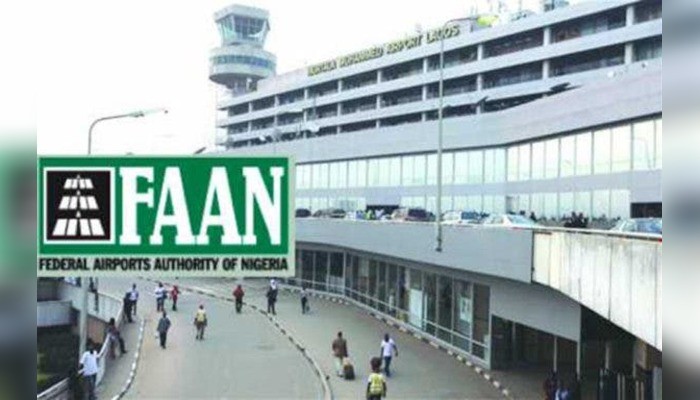

Commercial taxi operators at Murtala Muhammed International Airport have protested against the Federal Airports Authority of Nigeria’s (FAAN) Airport Car Hire Rank Management System (ACHRAMS), saying the cost of complying with vehicle requirements threatens their livelihoods.
The drivers’ protest comes weeks before FAAN’s October 1, 2026 compliance deadline for operators to register under the airport’s revised car-hire management framework.
The dispute has centred on the age of vehicles permitted to operate at the airport. Some drivers claimed they had been told to acquire newer vehicles costing between ₦18 million and ₦30 million, depending on the vehicle.
One driver, Austin, told The PUNCH that the cost remained beyond the reach of many operators.
“Before they said 2020 vehicle model that will cost close to ₦70m, but now it is 2012 model. The motor is around ₦14m. Where will I get that from?” he said.
FAAN, however, disputed the suggestion that it had introduced a 2020 minimum vehicle requirement.
Adebola Agunbiade, FAAN’s Director of Commercial and Business Development, said the minimum requirement is a 2012 model vehicle or newer. She said the policy was communicated to operators in 2024, with the authority subsequently granting several extensions to allow affected drivers to comply.
FAAN said the latest deadline is October 1, 2026, making the current protest part of a longer-running implementation process rather than a policy introduced only in August.
Agunbiade also rejected claims that the protest was triggered by a fresh vehicle rule. According to her, the immediate issue was resistance by some operators to registering on ACHRAMS, FAAN’s digital platform for managing airport car-hire operations.
The authority has said the system is intended to improve the identification and monitoring of drivers and vehicles while strengthening passenger safety and service standards at Nigerian airports.
The controversy has nevertheless exposed the financial burden facing small transport operators. Replacing an ageing vehicle with a compliant model requires millions of naira in capital at a time when drivers are already dealing with high fuel, maintenance, insurance and financing costs.
Drivers also alleged that some operators had been arrested or forced to make payments during enforcement. One driver claimed a colleague paid ₦50,000 to secure his release.
The police denied involvement in such arrests, according to The PUNCH.
The October 1 deadline now leaves affected operators with a clear choice: upgrade their vehicles and complete the required registration or risk losing access to airport passengers.
For FAAN, the challenge is to enforce higher safety and service standards without imposing costs that smaller commercial operators say they cannot afford.