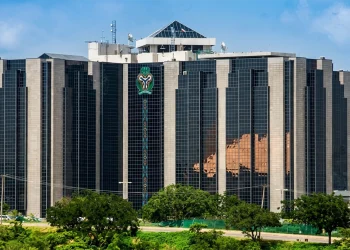

Nigeria’s credit outlook has improved as Moody’s Ratings changed the country’s sovereign outlook from stable to positive, citing stronger foreign-exchange reserves, improved external balances and better-than-expected economic growth.
Moody’s announced the change on Friday, August 28, 2026, but kept Nigeria’s long-term foreign- and local-currency issuer ratings at B3.
In other words, Moody’s has not upgraded Nigeria’s credit rating. The positive outlook means the rating could be upgraded if the improvements identified by the agency continue.
The Federal Ministry of Finance said on Saturday, August 29, that Finance Minister and Coordinating Minister of the Economy Taiwo Oyedele welcomed the decision as evidence that the government’s economic reforms are producing results.
“Moody’s positive outlook is an important external validation of the difficult but necessary reforms this administration has implemented,” Oyedele said.
The minister pointed to the removal of the petrol subsidy, foreign-exchange reforms and tax reforms as major measures introduced by the Tinubu administration.
According to Moody’s, Nigeria’s stronger external position was a major reason for the improved outlook. The rating agency said higher foreign-exchange reserves, large current-account surpluses, better functioning of the FX market and improved monetary policy transmission have strengthened the country’s ability to withstand external shocks.
Moody’s said foreign-exchange reserves, measured using its methodology and excluding gold, Special Drawing Rights and Nigeria’s position at the International Monetary Fund, rose to about $44.4 billion in June 2026, from $31.2 billion a year earlier.
The agency expects Nigeria’s current-account surplus to rise to about 6.1% of GDP in 2026, before narrowing to 4.1% in 2027.
On economic growth, Moody’s said Nigeria’s real GDP expanded by 4% in 2025, above its earlier expectation of about 3%. It expects growth to remain around 4% through 2027, supported by non-oil activity and higher oil production.
Moody’s also noted that headline inflation fell to 15.4% in July 2026, from 25.3% a year earlier. The agency linked the decline partly to the fading impact of earlier price adjustments following the exchange-rate reforms and petrol subsidy removal.
Despite the improved outlook, Moody’s kept Nigeria’s B3 rating, citing continued fiscal pressure. The agency said general government revenue was about 10% of GDP in 2025, among the lowest levels globally, while high interest costs continued to weaken the country’s ability to comfortably service its debt.
Moody’s said a further rating upgrade could follow if Nigeria sustains the improvement in its external position or successfully raises government revenue through reforms.
The decision follows S&P Global Ratings’ upgrade of Nigeria’s sovereign rating from B- to B in May 2026. Reuters reported that S&P cited sustained structural reforms and improving creditworthiness. Fitch Ratings also maintained Nigeria’s B rating with a stable outlook in April.
Oyedele said the government’s longer-term ambition is to move Nigeria towards investment-grade status. He said achieving that goal would require continued improvements in domestic revenue collection, government spending and debt affordability.
For Nigeria, the positive Moody’s outlook is a step towards a stronger credit profile, but the unchanged B3 rating shows that major fiscal challenges remain.