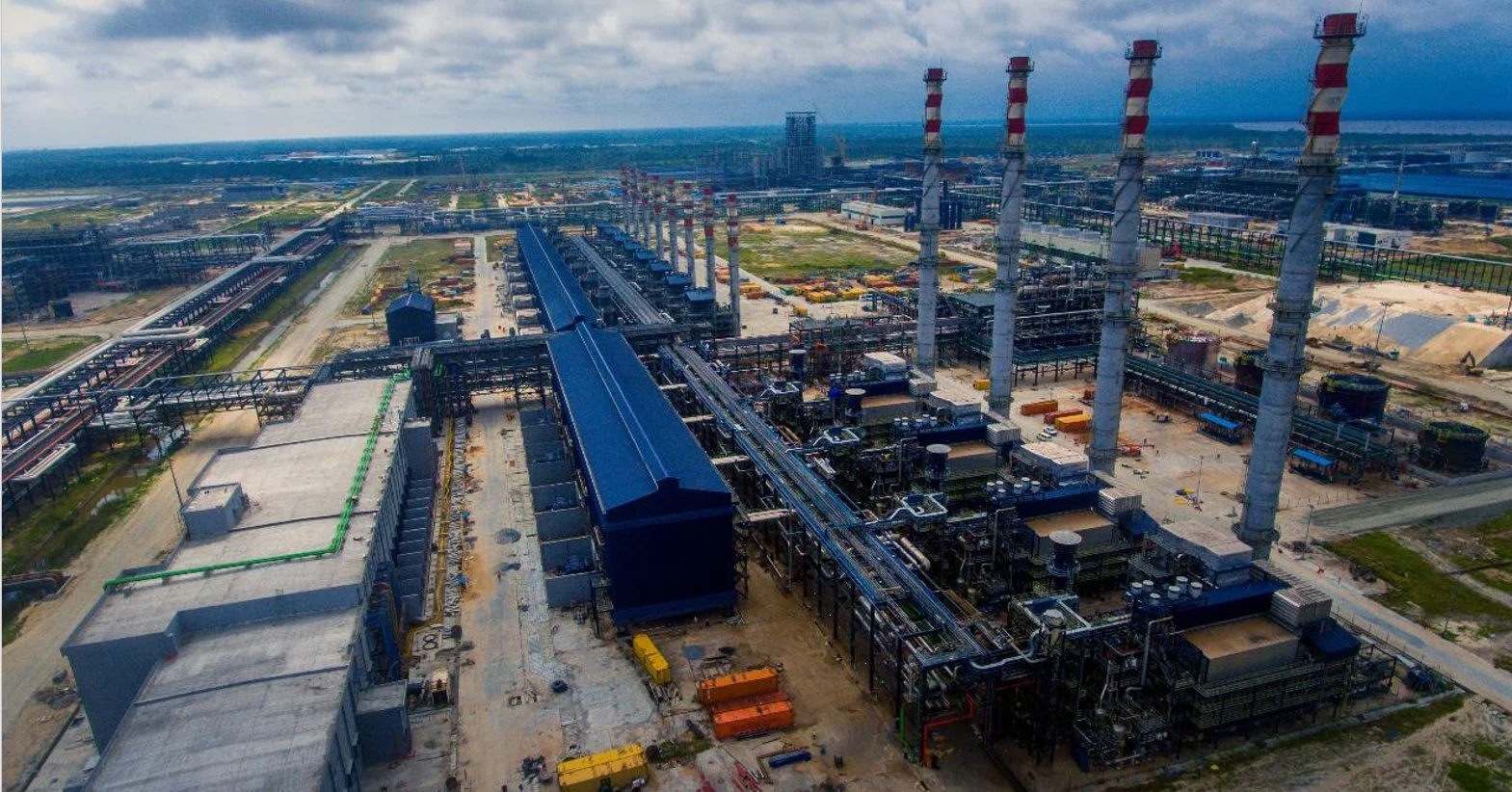

Africa will need at least two additional refineries the size of the Dangote Petroleum Refinery and Petrochemicals to meet rising fuel demand and reduce heavy reliance on imports, according to a new report by the Africa Finance Corporation.
The projection was unveiled in the 2026 State of Africa’s Infrastructure Report at the Africa We Build Summit in Nairobi. The report estimates that Africa’s fuel demand will grow by 56 percent by 2040, creating an import gap of about 86 million tonnes.
Currently, around 70 percent of the continent’s refined fuel consumption is imported, exposing economies to global supply disruptions and critical trade chokepoints. The report identifies East Africa as a key region for new refining capacity due to limited existing infrastructure.
Presenting the findings, Rita Babihuga-Nsanze said Africa’s infrastructure challenge is no longer defined by a lack of capital or resources, but by weak systems that fail to connect them into productive economic outputs.
The report estimates that the continent holds more than $4 trillion in domestic capital across banks, pension funds, insurance firms, sovereign funds, and development finance institutions. However, much of this capital remains underutilised due to limited channels for long-term infrastructure and industrial investment.
It also highlights a sharp drop in external funding, with official development assistance to Africa falling by 23 percent in 2025, the largest decline on record. Despite this, the report argues that stronger mobilisation of domestic capital could help close the financing gap.
Beyond refining, the report calls for a shift from Africa’s traditional “pit-to-port” model—focused on exporting raw materials—to integrated systems that link resources, transport, energy, and markets to drive industrialisation.
In the energy sector, Africa currently adds between 6.5 and 8 gigawatts of power annually, far below the estimated 20 gigawatts required to meet development needs. Structural issues such as weak transmission networks, fragmented grids, and climate risks continue to limit progress.
The report also identifies opportunities in fertiliser production, noting that while Africa holds about 80 percent of global phosphate reserves, it produces only 20 percent of phosphate-based fertilisers.
On digital infrastructure, mobile connectivity has reached roughly 85 percent of the population, but a significant usage gap remains, limiting its economic impact.
Responding to the findings, Lerato Mataboge said they align with continental efforts to promote integrated infrastructure through initiatives such as the Single African Air Transport Market and the Single Electricity Market Programme. However, she noted that progress has been slowed by weak cross-border coordination and fragmented national planning.
Also speaking, Samaila Zubairu said Africa’s long-standing economic model, exporting raw materials and importing finished goods, remains unsustainable, especially amid global energy market volatility.
He stressed the need for integrated regional systems that can strengthen energy security, stabilise supply, and support industrial growth across the continent.