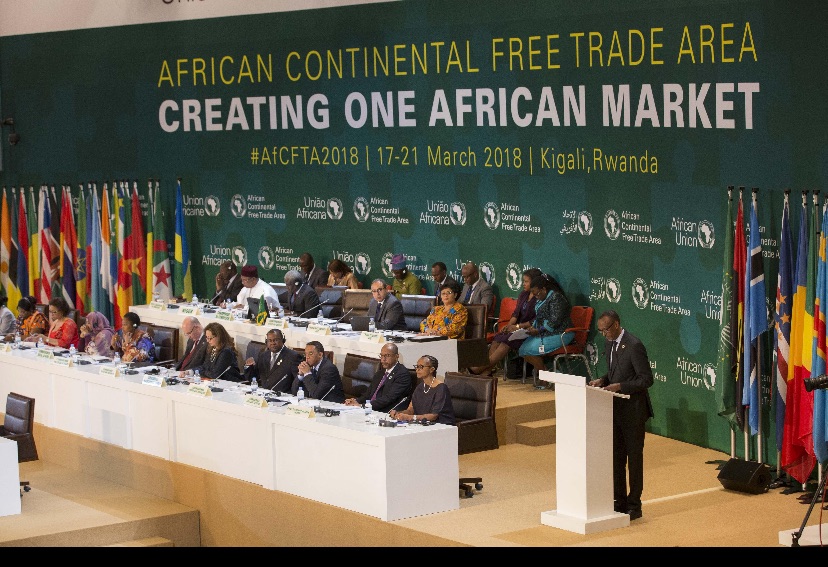

Africa must shift away from exporting raw materials and instead focus on processing and manufacturing its natural resources if it wants to fully benefit from the African Continental Free Trade Area (AfCFTA), according to the National Coordinator and Chief Executive Officer of the Nigeria AfCFTA Coordination Office, Patience Okala.
She made the statement during the Streamsowers & Köhn 20th Anniversary Business Forum, where she highlighted the importance of value addition in driving Africa’s industrial growth and long-term economic development.
Okala explained that for many years, African countries have exported raw materials while importing finished products at much higher prices. She said this practice has limited the continent’s economic growth, reduced job opportunities, and slowed industrial development.
According to her, the AfCFTA presents a unique opportunity for African countries to reverse this trend by encouraging local production, manufacturing, and trade among African nations.
She stressed that the free trade agreement is not only about removing tariffs or making it easier to move goods across borders. Instead, she described it as a platform for industrialisation, economic transformation, job creation, and increased investment across the continent.
Okala noted that Africa must process its agricultural products, minerals, oil, and other natural resources locally before exporting them. By doing so, countries will create more jobs, develop stronger industries, increase export earnings, and retain more wealth within the continent.
She also emphasised that simply signing trade agreements is not enough to guarantee success. According to her, the true impact of the AfCFTA will depend on how effectively member countries implement the agreement and create an environment where businesses can trade freely across borders.
She explained that the success of the trade pact will be measured by the ability of businesses to access new African markets, reduce trade barriers, and take advantage of the many opportunities created by the agreement.
Okala said Nigeria has continued to strengthen the implementation of the AfCFTA under the leadership of the Minister of Industry, Trade and Investment, Dr. Jumoke Oduwole. She revealed that the Nigeria AfCFTA Coordination Office has developed simplified guides in six different languages to help businesses understand the agreement and participate more effectively in continental trade.
According to her, these educational materials are designed to make it easier for entrepreneurs, exporters, manufacturers, and investors to understand the rules, benefits, and procedures under the AfCFTA.
She also called for stronger cooperation among African governments, regulators, financial institutions, and the private sector. She said working together is necessary to remove obstacles that continue to limit trade and investment across the continent.
Okala added that improving transport systems, simplifying customs procedures, strengthening infrastructure, and creating business-friendly policies will help build a more integrated African market that supports sustainable economic growth.
She further stressed that the opportunities created by the AfCFTA should benefit businesses of every size, especially micro, small and medium-sized enterprises (MSMEs), women-owned businesses, and young entrepreneurs who play a vital role in Africa’s economy.
She urged governments and business leaders to move beyond policy discussions and focus on practical implementation that delivers real economic benefits.
Okala concluded that if African countries invest in local industries, process more of their natural resources, and fully implement the AfCFTA, the continent can become more competitive globally, create millions of jobs, attract greater investment, and build a stronger and more self-reliant economy for future generations.