


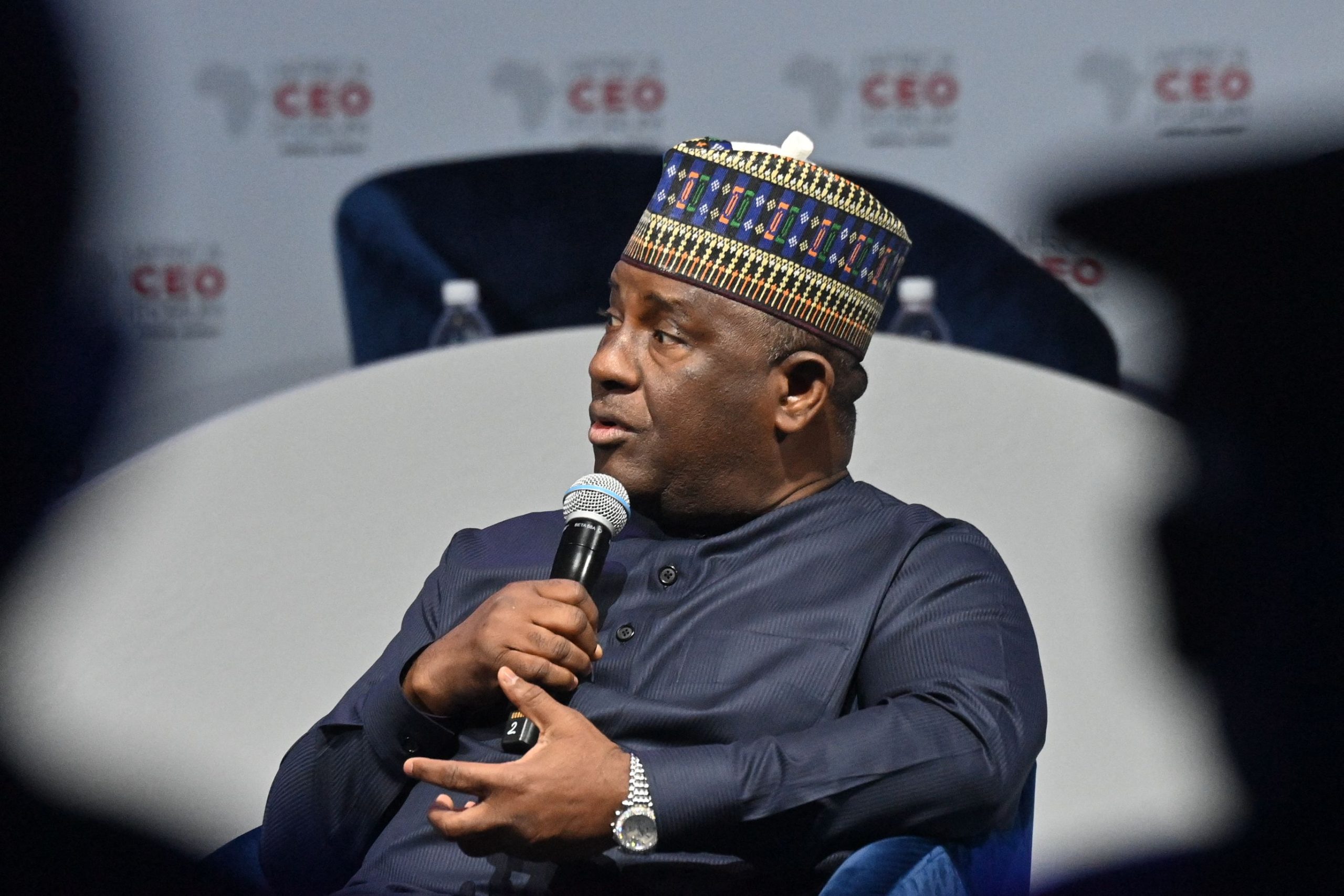

Abdul Samad Rabiu, Nigeria’s second-richest man and chairman of BUA Group, has built and handed over a 500-seat lecture theatre worth ₦350 million to Adamawa State University in Mubi, through his philanthropic arm, the Abdul Samad Rabiu Africa Initiative (ASR Africa).
The facility, which also includes four boreholes to improve the university’s water supply, is the latest in a series of education-focused interventions by the billionaire, who has been funding social infrastructure across Nigeria since 2021. It was completed under the ASR Africa Tertiary Education Grant Scheme, which targets institutions struggling with poor facilities and limited government funding.
At a time when Nigeria’s public universities are crumbling under economic pressures, Rabiu’s gesture is being seen as a practical response to a widening infrastructure gap that affects learning conditions and, ultimately, job readiness for young people. For many students and lecturers at Adamawa State University, the new theatre represents more than just a building, it’s relief from the heat, noise and overcrowding that have long hampered academic life.
Easing the Strain on Learning Spaces
Speaking at the handover ceremony, Aliyu Idi Hong, a director at BUA Group who represented Rabiu, said the project was “dear” to the businessman and was delivered despite Nigeria’s challenging economic environment. Governor Ahmadu Umaru Fintiri of Adamawa State and the university’s vice-chancellor, Professor Augustine Clement, both noted that the facility would significantly ease pressure on teaching spaces.
Rabiu, whose fortune Forbes estimates at $8.9 billion, was also awarded an honorary doctorate by the university for his contributions to education. The lecture hall, named after him, is the first ASR Africa-funded project in Nigeria’s North-East region and will serve as a multipurpose venue for classes, conferences and examinations.
The ASR Africa initiative has now supported more than 30 tertiary institutions across Nigeria, with grants ranging from ₦250 million to ₦2 billion depending on project scale. The scheme is known for its strict monitoring and counterpart funding structure, which ensures faster delivery and accountability.
Philanthropy Filling a Public Gap
Nigeria’s public universities remain starved of investment, with ageing infrastructure, erratic power and poor water systems. Federal allocations have failed to keep up with inflation, leaving many schools dependent on private and donor-led interventions.
For students, the ripple effect of private philanthropy like Rabiu’s can be tangible. Better facilities mean fewer disruptions to academic calendars, lower maintenance costs for institutions, and more stable conditions for learning. In the long term, such projects help reduce the hidden financial burden on families who often pay out-of-pocket for alternative study spaces or materials when public facilities fail.
The improved infrastructure also has a modest but real impact on the local economy. Construction of the theatre employed local workers, while improved water access from the boreholes benefits not just students but neighbouring communities.


