


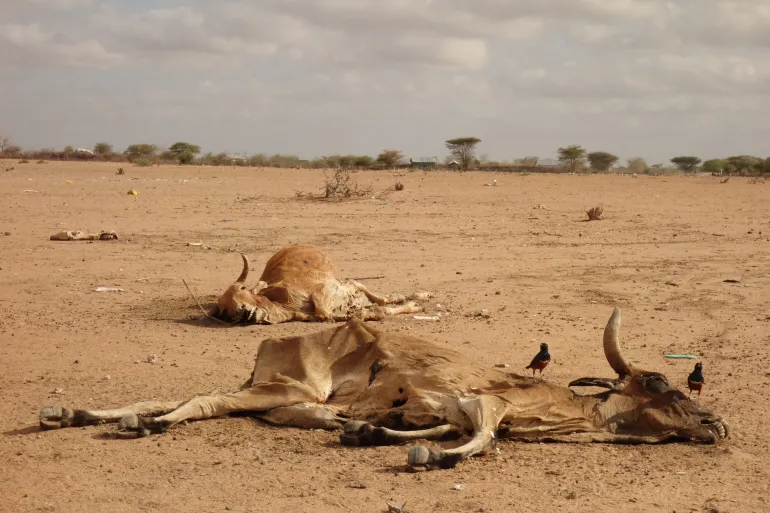

A catastrophic drought gripping north-eastern Kenya has escalated into a full-scale economic disaster, eroding the productive assets of pastoral communities and overwhelming local infrastructure. With over two million people facing acute food insecurity, the environmental crisis is catalysing a deep economic shock that destroys livelihoods, cripples local health systems, and necessitates costly emergency interventions. The situation, particularly severe in Mandera County which recorded no rainfall, reveals the fragile economic underpinnings of regions where wealth is stored in livestock, now decimated by a changing climate.
The most direct and devastating economic impact is the loss of livestock, which represents the primary capital reserve, savings account, and source of income for pastoralist families. Reports of communities burning animal carcasses to deter scavengers illustrate the total depletion of this wealth. Each lost cow, goat, or camel is not merely a food source but a liquid asset that funds education, healthcare, and trade. This mass die-off constitutes a generational economic setback, pushing households from self-reliance into absolute dependency and reversing years of incremental wealth accumulation in one of the country’s most challenging economic zones.
Parallel to the livestock crisis is the collapse of local water infrastructure, which has severe economic ramifications. Critical man-made boreholes and pans have dried up, forcing remaining herds to undertake arduous, energy-sapping journeys to access rationed water. This desperate migration further weakens animals, reduces their market value, and brings different communities into conflict over scarce resources. The failure of this basic infrastructure underscores a chronic lack of investment in climate-resilient water systems for the arid north, a disparity that perpetuates economic marginalisation and inhibits any form of sustainable development or private sector growth.
The economic strain has violently shifted to the region’s healthcare system, transforming a health crisis into a fiscal one. Facilities like the main hospital in Banissa report being overwhelmed by an influx of severely malnourished children, with supplies of vital therapeutic milk nearly exhausted. Treating acute malnutrition is intensive and expensive, diverting limited local health budgets from other services and creating a long-tail of associated costs related to childhood development setbacks. The drought is thus creating a future economic liability in the form of a less healthy, less productive potential workforce, compounding the immediate loss of current productive assets.
The response from aid groups and the national government, including increased water-trucking and food distribution, is itself a massive, inefficient economic transfer. These are stopgap measures that consume vast financial resources—funds that could be directed toward permanent infrastructure or economic diversification—simply to maintain basic survival. Officials openly state that assistance cannot keep pace with demand, highlighting a dangerous economic triage where the cost of the crisis outruns the capacity to respond. This dynamic threatens to trigger a deeper socio-economic collapse, including displacement and the complete erosion of local market systems.
Ultimately, this drought is a stark lesson in economic vulnerability. It demonstrates how climate change acts as a direct economic tax on the world’s poorest, wiping out capital and locking regions into cycles of aid dependency. For Kenya, long-term economic planning must now explicitly factor in the increasing frequency and severity of such climate shocks in arid and semi-arid lands. Building resilience requires investing in alternative livelihood models, climate-smart water infrastructure, and livestock insurance schemes to protect pastoral capital. The crisis in the north-east is not just a humanitarian appeal; it is a critical warning about the unsustainable economic costs of environmental change.


