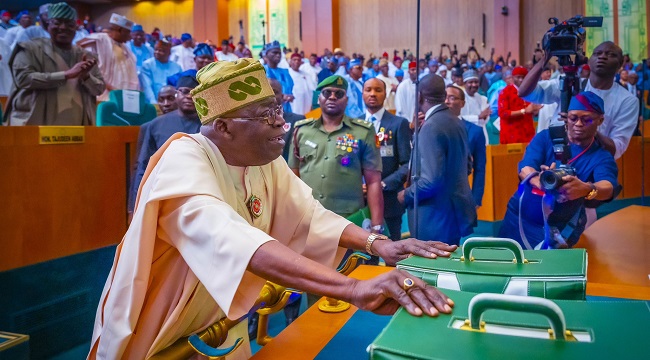

President Bola Ahmed Tinubu has presented a ₦58.18 trillion federal budget proposal for the 2026 fiscal year, setting out an ambitious spending framework aimed at accelerating economic growth, strengthening national security, and maintaining fiscal discipline amid ongoing macroeconomic challenges.
The proposed budget is built on conservative economic assumptions, including a crude oil benchmark price of $64.85 per barrel, average daily oil production of 1.84 million barrels, and an exchange rate of ₦1,400 to the US dollar. According to government officials, the assumptions reflect lessons learned from previous fiscal years, particularly the risks associated with volatile oil revenues and foreign exchange pressures.
Security, infrastructure, education, healthcare, and agriculture are identified as top spending priorities. The administration said increased investment in security is necessary to safeguard lives, protect economic assets, and create a stable environment for private sector investment. Infrastructure spending will focus on transport networks, power projects, and digital connectivity to improve productivity and lower business costs.
The budget also places strong emphasis on revenue mobilisation, with the government reiterating its commitment to broadening the tax base rather than increasing tax rates. Officials say improved compliance, digital tax administration, and efficiency in government-owned enterprises will play a key role in boosting non-oil revenue.
Fiscal authorities acknowledged that inflation, exchange rate volatility, and debt servicing costs remain major risks. However, they expressed confidence that ongoing reforms—particularly in the foreign exchange market and fuel subsidy removal—will gradually stabilise the economy and improve public finances.
Economic analysts say the credibility of the budget will depend on execution, oil output stability, and the government’s ability to manage inflationary pressures. They also note that capital expenditure implementation has historically lagged projections, a challenge the administration must address to achieve its growth targets.