
The United States government has approved $413 million in funding to support counter-insurgency and security operations in Nigeria and several West African countries in the 2026 fiscal year. This commitment comes as part of the National Defence Authorisation Act (NDAA) for 2026, a broad defence spending law that was signed into action in December 2025.
The $413 million allocation is included in the budget for the United States Africa Command (AFRICOM) and represents the full amount the command requested for its operations and maintenance across the African continent. Although the law does not provide a detailed breakdown of how much of the funding will go specifically to Nigeria or to other nations, the allocation reflects growing concern in Washington over rising insecurity in the region.
West Africa continues to face escalating threats from different violent groups and criminal networks. In Nigeria, authorities are battling a prolonged insurgency in the North-East and widespread armed banditry in the North-West. Meanwhile, piracy and other maritime crimes remain serious issues in the Gulf of Guinea. Across the region, countries like Mali are under persistent pressure from jihadist groups, and areas of northern Benin have experienced spillover violence from conflicts in the Sahel.
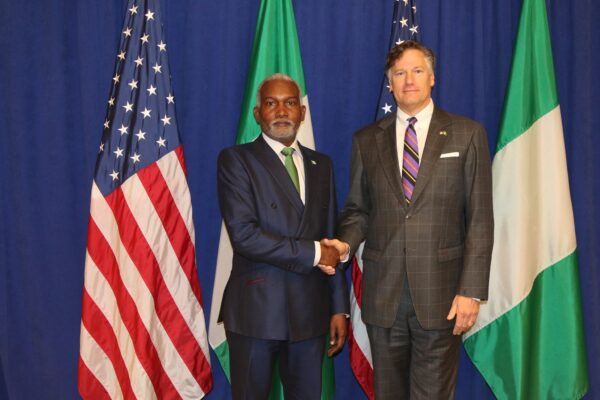
The decision to approve this funding comes amid a period of intensified military cooperation between the United States and Nigeria. In recent weeks, AFRICOM has delivered military equipment to Nigerian security forces in Abuja, underscoring a shared commitment to battling insecurity. The delivery of equipment is intended to support ongoing operations within Nigeria and enhance the country’s tactical capabilities.
This increased cooperation follows direct U.S. military actions last year. On Christmas Day 2025, U.S. forces conducted coordinated air strikes on suspected terrorist hideouts in Sokoto State in northwest Nigeria. These strikes targeted militants linked to violent extremist groups and were carried out alongside Nigerian authorities.
The broader 2026 defence authorisation bill that included the $413 million for Africa also sets the United States’ total military spending for the year at $901 billion. This defence package includes a four percent pay raise for U.S. service members and continues a long-standing practice of approving annual defence spending; this is the 65th consecutive year such a bill has become law.
Beyond military funding, the new law creates a Bureau of African Affairs within the U.S. State Department and establishes the position of Assistant Secretary for African Affairs. These changes are meant to improve coordination of U.S. foreign policy and assistance efforts across sub-Saharan Africa, reflecting Washington’s broader strategic interest in the continent.
The legislation also calls for a comprehensive review of Russian military activities and presence in Africa, a move likely tied to shifting global strategic interests and the evolving security landscape on the continent.
In summary, the funding is part of a larger U.S. effort to reinforce security partnerships, counter violent extremism, and respond to the complex threats facing Nigeria and its neighbours in West Africa.