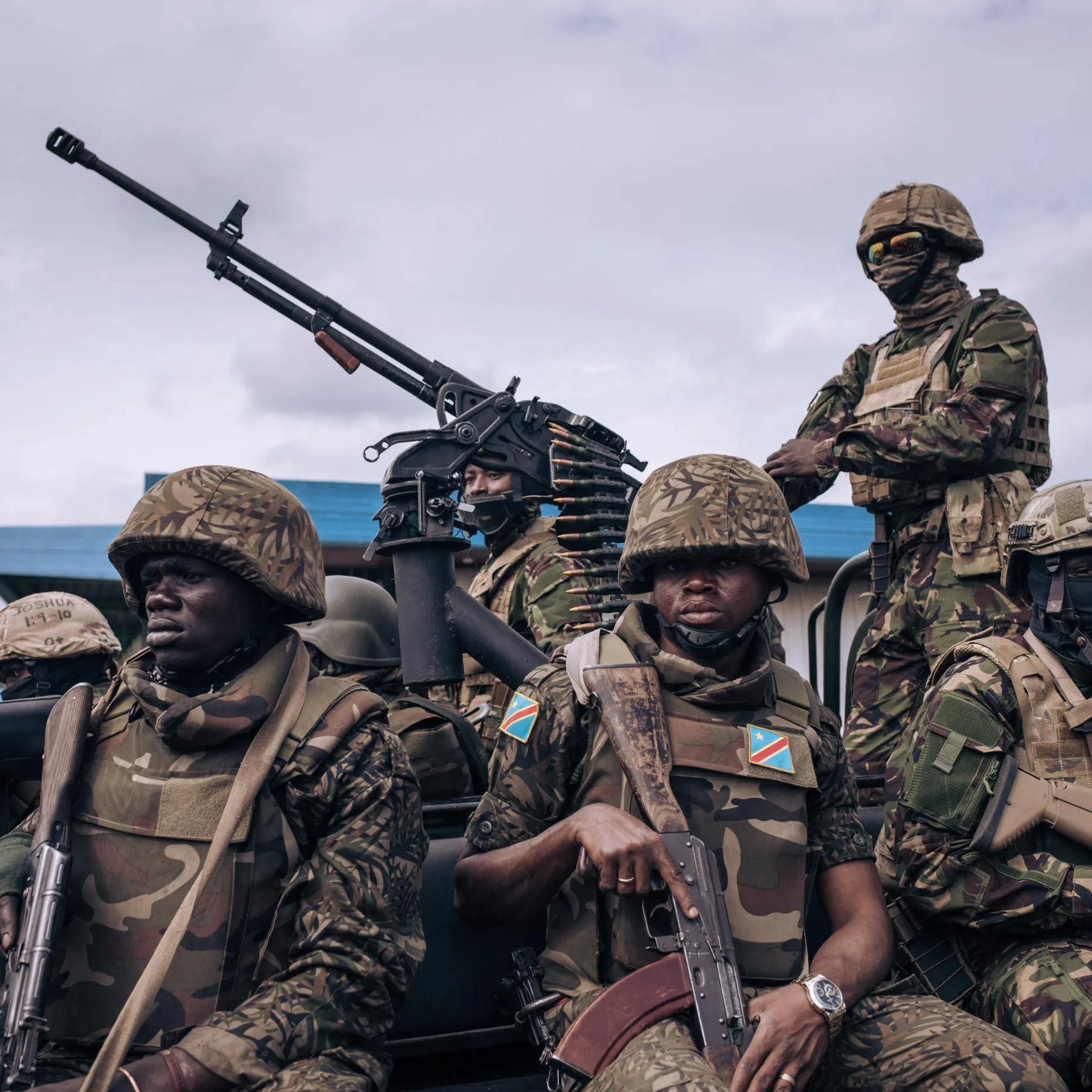

Rwanda-backed M23 rebels have said they will withdraw from the eastern Congolese town of Uvira, citing a request from the United States after Washington sharply criticised the group’s seizure of the strategic lakeside town as a threat to ongoing peace efforts.
The announcement follows days of heightened diplomatic tension after M23 fighters entered Uvira, which lies near the border with Burundi and is a key commercial and military hub in South Kivu province. The advance came shortly after the presidents of the Democratic Republic of Congo and Rwanda met U.S. President Donald Trump in Washington, where both leaders publicly reaffirmed their commitment to a U.S.-brokered peace framework known as the Washington Accords.
In a statement, M23 leader Corneille Nangaa described the planned withdrawal as a “unilateral trust-building measure” intended to support parallel peace talks hosted by Qatar. He said the group was responding to international concerns and seeking to demonstrate goodwill, though he stopped short of conceding control of the town to Congolese government forces.
The United States has taken an increasingly assertive stance in recent days. Secretary of State Marco Rubio said Rwanda’s actions were inconsistent with the Washington Accords, which call for de-escalation, respect for territorial integrity and disengagement from armed groups operating in eastern Congo. Rubio warned that Washington would take steps to ensure that commitments made under the agreement were honoured, signalling the possibility of diplomatic or economic consequences.
Rwanda has consistently denied backing the M23, arguing that the conflict in eastern Congo is driven by internal Congolese governance failures and the presence of hostile armed groups near its border. However, a report by United Nations experts has stated that Kigali exercises command and control over the rebels, including providing military support. Rwanda has rejected the findings as biased.
The developments underscore the fragility of peace efforts in eastern Congo, where decades of conflict have been fuelled by ethnic tensions, competition over mineral resources and interference by neighbouring states. M23, which re-emerged in 2021 after nearly a decade of dormancy, has captured large swathes of territory in North Kivu and South Kivu, displacing hundreds of thousands of civilians and worsening an already severe humanitarian crisis.
While the rebels’ statement suggests a possible easing of immediate tensions in Uvira, Congolese authorities remain sceptical. Congo’s army said it was determined to retake the town and restore state authority, raising the risk of renewed clashes if the withdrawal is partial or temporary. Previous ceasefires and disengagement pledges have frequently collapsed, with both sides accusing each other of bad faith.
The episode also highlights the growing role of external actors in shaping the conflict’s trajectory. The United States has sought to position itself as a key broker, while Qatar has emerged as a host for backchannel negotiations. Whether coordinated international pressure can translate into lasting de-escalation remains uncertain.
For now, the planned pullback from Uvira offers a narrow diplomatic opening. But with deep mistrust between Congo and Rwanda, and armed groups entrenched across the east, the path to a durable settlement remains highly precarious.